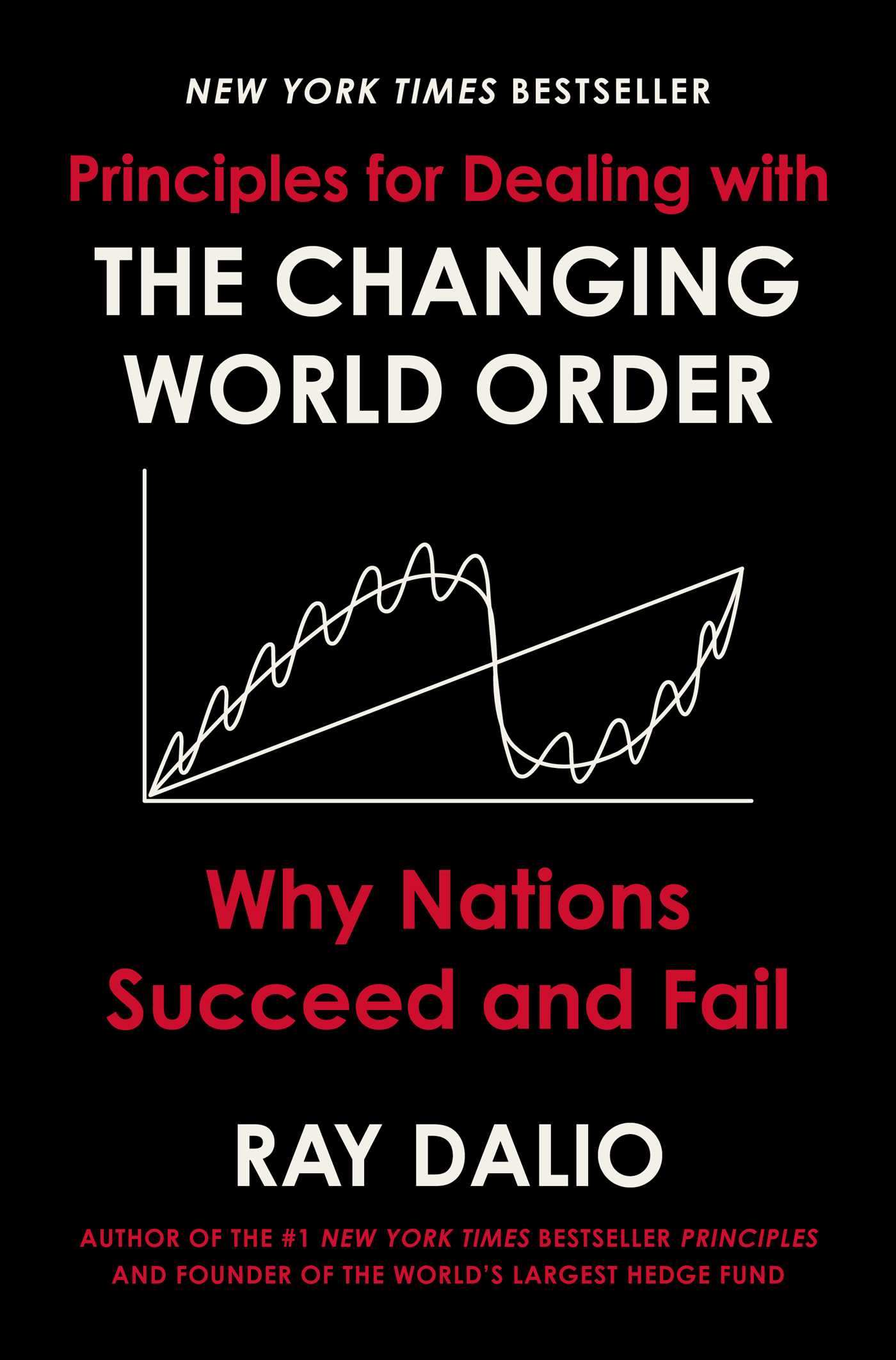
Principles for Dealing with the Changing World Order is Ray Dalio’s big, history-heavy book about how power moves around the world. In simple words: countries can grow strong, reach a peak, and then slowly weaken while another country rises. Dalio says these changes do not happen randomly. They follow patterns tied to debt, money, trade, education, productivity, and conflict. [1][2]
This book is not a quick money tip book. It is a wide-angle book. It tries to help readers see the long road, not just the next step. That makes it useful for investors, business owners, and anyone who wants to understand why the world sometimes feels calm and sometimes feels shaky.
The main idea is simple: history often rhymes, and big money changes often come with big power changes.
Book facts
| Author | Ray Dalio |
|---|---|
| First published | 2021 |
| Publisher | Simon & Schuster / Avid Reader Press [1][2] |
| Main topic | Long-term economic history, world power shifts, debt, and macro investing [1][2][3] |
| Best for | Readers who want a simple framework for thinking about countries, markets, and risk |
What the book is about
Dalio looks at several hundred years of history, including the Dutch, British, and American eras, and asks a big question: why do some countries become powerful while others fade? His answer is that the same forces show up again and again. Things like debt, war, education, innovation, and trust in money all matter.
He also links this to today’s world. He argues that the United States and China are part of a larger shift, and that people should pay attention to the signs instead of assuming the future will look exactly like the recent past.
Main ideas, explained simply
- Big Cycle: a long pattern where a country rises, gets rich and powerful, and later weakens.
- Debt: money borrowed now that must be paid back later. Too much debt can make a country fragile.
- Reserve currency: the money the world trusts most for trade and saving. Today that is mostly the U.S. dollar.
- Productivity: how much useful work people can do with the time and tools they have.
- Internal order: how stable a country feels at home. If people fight too much inside, it can weaken the whole system.
What it gets right
The book is strong at showing that money and power are connected. It reminds readers that markets do not live in a vacuum. Wars, trade fights, inflation, and debt problems can all affect investing.
It also pushes readers to think in decades, not just days. That is a useful habit. Many people make bad decisions because they only look at the next headline. Dalio’s book encourages a slower, wider view.
What to be careful about
This book is a framework, not a law of nature. Dalio gives a strong theory, but the future still has surprises. History can guide us, but it cannot predict every turn.
The book is also dense. It uses charts, data, and many examples. That helps serious readers, but it can feel heavy if you want a quick answer. The best way to read it is to look for the big pattern, not every tiny detail.
Kid-simple version: the book is like a giant map. A map helps, but it is not the same as walking the road.
Why investors may care
Investors care because country strength can affect stocks, bonds, currencies, inflation, and safe-haven assets like gold. If a currency weakens or debt rises too far, prices and returns can change in ways that surprise people.
That does not mean you should panic. It means you should stay aware, diversify, and avoid pretending the current setup will last forever.
Bottom line
Principles for Dealing with the Changing World Order is a serious book about long-term change. It is less about quick money and more about learning how history, power, and markets move together. If you want to understand why the world sometimes shifts under your feet, this book is worth the time.