More Than You Know by Michael J. Mauboussin is an investing book with an unusual method. Instead of looking only at finance, it borrows useful ideas from psychology, poker, horse racing, biology, science, and business strategy. The goal is not to make investing mysterious. It is to help readers make better decisions when the future is unclear.
Mauboussin’s central message is that good investing is less about having a clever prediction and more about using a sound process. A process is the set of steps you use before making a decision. A good process can still produce a disappointing result because luck affects markets. But a poor process can sometimes look successful for a while simply because luck went its way.
What the book is about
Columbia University Press describes the book as a multidisciplinary guide to investment thinking. The updated and expanded edition is arranged around four broad areas: investment philosophy, psychology of investing, innovation and competitive strategy, and science and complexity theory.
That sounds difficult, but the idea is simple. Money decisions are made by people, companies compete with one another, and markets are made from many people reacting to each other. Looking at those subjects together can reveal mistakes that a narrow spreadsheet might miss.
Main ideas
Separate skill from luck
Imagine two people flipping coins. One person wins five times in a row. That does not prove the winner is a better coin flipper. Investing is more complicated, but the same warning applies. A good outcome does not always mean a good decision.
The book encourages investors to ask, “Was the decision sensible when I made it?” rather than judging only by what happened afterward. This is especially important over short periods, when luck can be loud.
Think in probabilities
A probability is a way of describing how likely something is. It is not a promise. An investor might believe a company has a 70% chance of doing well, but the other 30% still matters. Expected value means adding up possible results while considering how likely each result is. A small chance of a very large loss may matter more than a large chance of a small gain.
Focus on process, not excitement
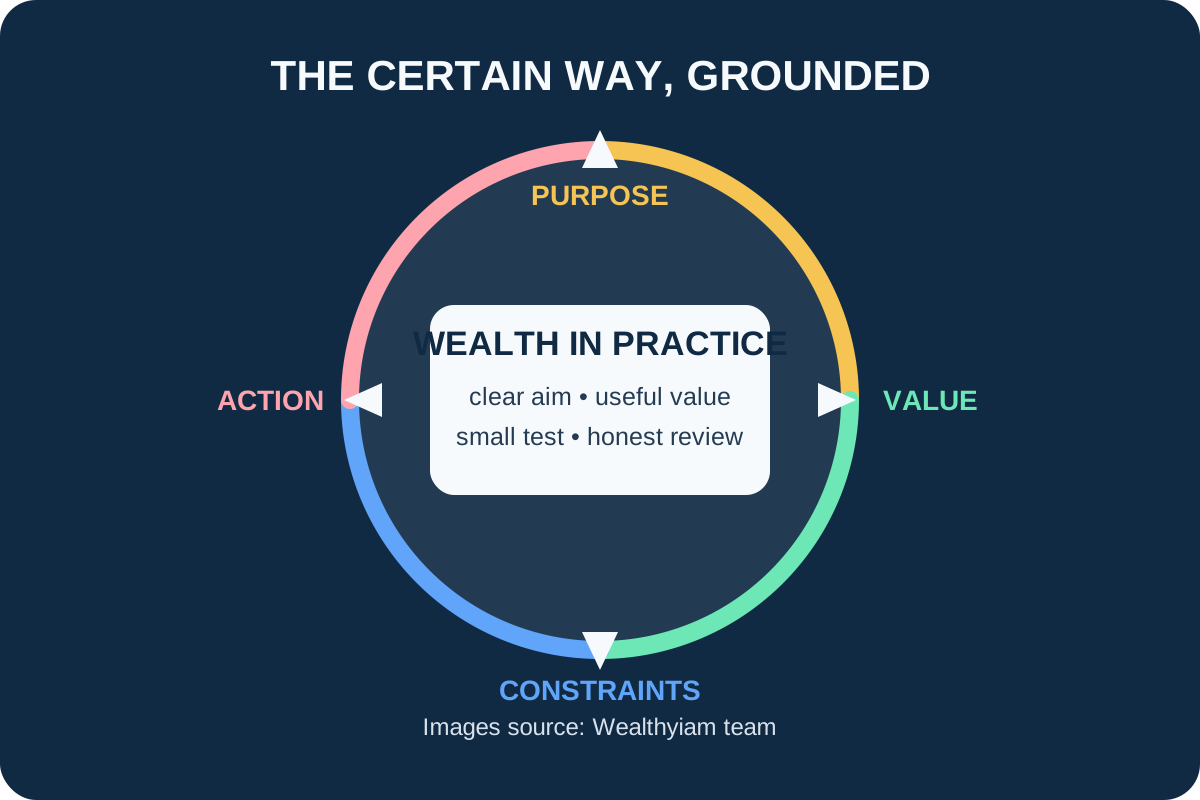
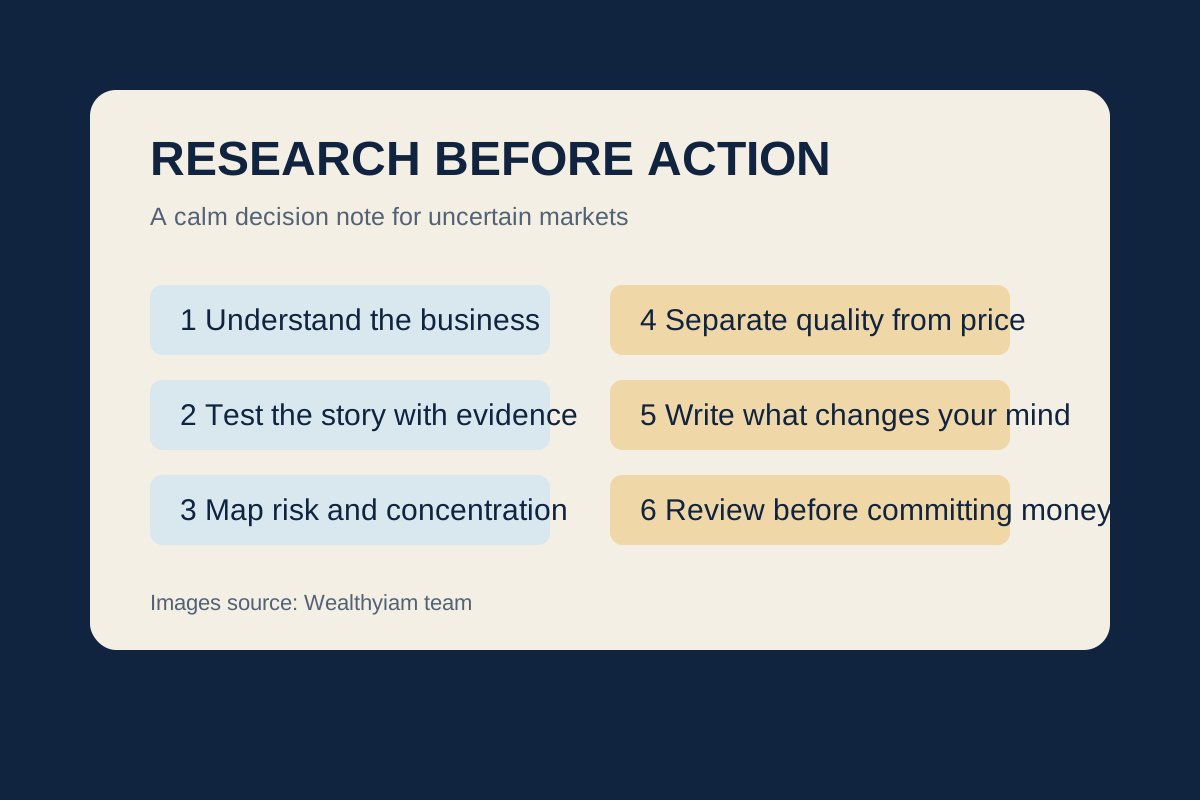
Markets reward discipline more reliably than excitement. A process might include studying a company, writing down the reasons for buying it, estimating what could go wrong, and deciding how much money to risk. These steps make it harder for fear or greed to take over.
Watch for mental shortcuts
People use mental shortcuts to make choices quickly. These shortcuts are useful, but they can also create biases. A bias is a repeated leaning that can push our judgment away from the facts. We may prefer information that agrees with us, copy a crowd, or feel too confident after a few wins.
Knowing about a bias does not automatically remove it. The practical answer is to slow down, use checklists, seek opposing evidence, and record decisions before the outcome is known.
Look outside finance
Poker teaches that a smart choice can lose and a foolish choice can win. Horse racing teaches the importance of comparing odds with the price of a bet. Biology teaches that systems adapt. Business strategy teaches that a company’s profits depend on competitors and customers, not just on last year’s numbers. These comparisons are thinking tools, not perfect copies of investing.
Simple explanations of key terms
- Risk: the chance that the result will be worse than you want, including losing money permanently.
- Uncertainty: not knowing exactly what will happen or even how likely each outcome is.
- Valuation: an estimate of what an investment is worth based on its future cash and profits.
- Competitive advantage: something that helps a company keep customers or earn good profits against rivals.
- Complex system: a system where many parts interact, so the final result is hard to predict from one part alone. A market is an example.
- Base rate: what usually happens in similar cases before looking at the special story in front of you.
What it gets right
The book’s greatest strength is its humility. It reminds readers that markets are not machines with one easy answer. Even careful analysis has limits. That is a useful defense against overconfidence, especially when a rising price makes someone feel like a genius.
It also explains why a long-term investor should care about behavior. A brilliant plan is not useful if an investor abandons it during a frightening week. By connecting finance with psychology and decision science, Mauboussin makes the reader examine how choices are actually made.
Finally, the book gives a strong reason to diversify. When the future is uncertain, owning a range of investments can reduce the damage caused by being wrong about one company or one forecast.
What to be careful about
This is not a step-by-step list of stocks to buy. Its examples and research can improve your thinking, but they do not remove the need to study an investment yourself. A lesson from poker is an analogy, not proof that markets behave exactly like a card game.
The book is also more demanding than a beginner’s budgeting guide. Readers may need to pause over ideas such as valuation, probability, and competitive strategy. No single framework can predict markets reliably. Keep costs low, match risk to your time horizon, and do not invest money you need soon.
Bottom line
More Than You Know teaches a valuable investing habit: widen your view. Better results may come not from finding a secret forecast, but from understanding luck, human behavior, business competition, and uncertainty. Use a careful process, think in probabilities, question your confidence, and let time—not excitement—do more of the work.