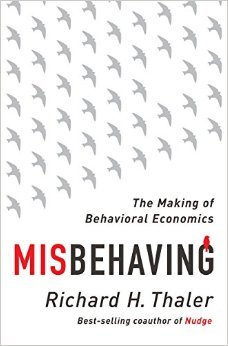
Misbehaving: The Making of Behavioral Economics by Richard H. Thaler explains why real people do not always act like perfectly logical people in economics textbooks. The book helped bring psychology into the study of money and markets.
What the book is about
Traditional models imagine an “Econ”: someone with complete information who thinks perfectly and always chooses the best option. Real people forget, follow habits, dislike losses, care about fairness, and make mistakes. Thaler calls these departures from the model “misbehavior.” It is a playful word, not a moral judgment.
Main ideas
- Limited attention: we cannot study every price, fee, or investment choice, so we use shortcuts.
- Loss aversion: losing €100 often feels worse than winning €100 feels good. This can make investors hold losers too long.
- Mental accounts: people put money into imaginary boxes and treat a tax refund differently from salary.
- Fairness matters: people may reject a price they see as unfair.
- Choice architecture: the way choices are arranged can make saving easier without removing freedom.
Key terms in simple language
Behavioral economics
The study of money and choices using economics and psychology. It asks what people actually do, not only what they should do.
Bias
A predictable tilt in thinking, such as focusing too much on recent information or valuing something more because we own it.
Nudge
A gentle change that makes a helpful action easier without taking away choice, such as automatic retirement saving.
What it gets right
The strongest lesson is that money advice must fit human behavior. A perfect budget nobody follows is less useful than a simple system that runs automatically. Investors should expect fear and excitement, then use rules that limit the damage.
What to be careful about
Behavioral economics explains common mistakes; it does not make every market movement predictable. Knowing that investors can panic does not tell you exactly when prices will rise or fall. Nudges should be clear, easy to refuse, and aimed at the user’s interests.
Bottom line
Misbehaving teaches that money decisions are made by human beings, not logical robots. Make good choices easier, automate important habits, and accept that your own behavior needs safeguards.