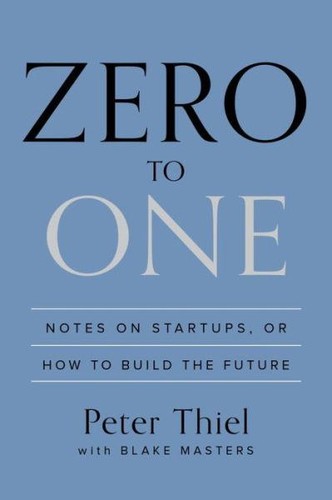
Zero to One: Notes on Startups, or How to Build the Future by Peter Thiel and Blake Masters is a book about creating new value. It asks whether a company should copy something that already works or make something meaningfully new.
The authors call copying and expanding an existing idea going from 1 to n. Creating something new is going from 0 to 1. The book connects that idea to entrepreneurship, technology, competition, profits, and long-term economic progress.
What the book is about
The book grew from notes Blake Masters took in Peter Thiel’s Stanford course on startups. It is not a budget guide or a promise that every new business will succeed. Instead, it offers questions about how founders can find a valuable problem, build a distinct solution, and create a business that can last.
Thiel argues that the best companies do not win only by fighting harder in a crowded market. They create something different enough to serve a group of customers better. Making a useful thing is only half the job; a company must also capture enough value to survive.
Main ideas
- Go from zero to one. A new product, process, or business model can create value that did not exist before.
- Start with a small market you can serve well. A young company may have a better chance when it becomes excellent for a narrow group before trying to serve everyone.
- Look for a durable advantage. A good business needs something competitors cannot quickly copy, such as unique technology, trust, data, brand, or distribution.
- Technology should be much better, not just slightly different. Ask whether a new solution is dramatically better for a specific job.
- Sales and distribution matter. Distribution means getting a product into customers’ hands. A wonderful product that nobody finds may still fail.
- Plan for the long term. A clear plan is better than hoping luck solves everything.
Simple explanations of key terms
Startup
A startup is a young company searching for a repeatable way to solve a problem and earn money. It usually has more uncertainty than an established company.
Monopoly
In the book, a monopoly means a company has a strong position because its product is hard to replace. In real life, businesses must also follow competition law and protect customers.
Proprietary technology
This is technology a company owns or controls. It may give an advantage because others cannot easily copy it.
Network effect
A network effect happens when a product becomes more useful as more people use it. A messaging service is a simple example.
Distribution
Distribution is the path from a company to its customers. It includes salespeople, stores, websites, partnerships, advertising, and delivery systems.
Questions the book encourages founders to ask
- Can we make a product substantially better for a particular customer?
- Why is this the right time to build it?
- Can we become very strong in a small starting market?
- Does the team have the skills and trust needed to work together?
- How will customers hear about us and buy from us?
- Will our advantage still matter years from now?
- What important truth do we understand that many people miss?
What it gets right
The book correctly reminds entrepreneurs that a product is not a business by itself. A business needs customers, pricing, distribution, cash, and a reason it can keep winning. It is also useful to separate growth from progress: selling more copies of an old idea may grow a company, while a new invention may change what customers can do.
Its emphasis on independent thinking is valuable. Before spending money or quitting a job to build something, ask what you believe, what evidence supports it, and what would prove you wrong. That habit can prevent expensive excitement from replacing research.
What to be careful about
Zero to One is intentionally opinionated. Its praise of monopoly can sound too simple if read without context. A protected position may help a company invest and plan, but lack of competition can also harm customers through high prices, weak service, or less choice. Seek a real advantage, not permission to ignore customers or the law.
The book focuses more on strategy than bookkeeping, hiring details, compliance, or daily operations. A new business still needs accurate accounts, enough cash, honest marketing, and careful tests of demand. Not every company must invent a new industry; many durable businesses improve an existing service and serve customers exceptionally well.
Bottom line
Zero to One is a sharp introduction to entrepreneurial thinking. Its central lesson is to look for a valuable problem that is not being solved well, build a distinct answer, and plan how that answer reaches customers. Read it as a source of questions—not a guarantee. Innovation can create wealth, but only when it becomes useful, financially sustainable, and responsibly delivered.