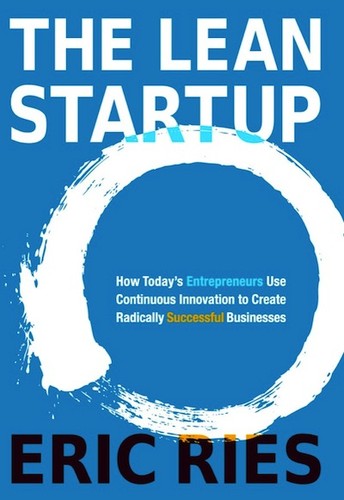
The Lean Startup by Eric Ries is a guide to building a new business when you do not yet know exactly what customers want. Its central message is simple: do not spend years making a product in secret. Make a small test, watch what people do, learn from the evidence, and improve.
Although the book is about startups, its money lesson is broad. Time, staff, and cash are limited. The most expensive mistake is often building something nobody needs. Ries offers a practical way to reduce that risk.
What the book is about
Ries developed his ideas from experience with technology companies, including IMVU. He argues that a startup is not simply a small version of a big company. It is an organization searching for a business model that can work repeatedly. That search is full of guesses: Who is the customer? Which problem matters? What will people pay for? How can the company grow without running out of money?
The book replaces some traditional planning with disciplined experiments. Planning still matters, but early forecasts can be built on guesses. A startup learns more by putting a small version of an idea in front of real customers and measuring the response.
Main ideas
- Build–Measure–Learn. Create the smallest useful test, measure customer behavior, and use the result to decide what to do next.
- Validated learning. Progress is not just writing code, hiring people, or collecting attention. Progress means gaining reliable evidence about how to build a sustainable business.
- Minimum viable product. An MVP is the simplest version of a product that can test an important assumption. It is a learning tool, not an excuse to release something careless or unsafe.
- Pivot or persevere. A pivot is a meaningful change in strategy. To persevere is to continue the current direction because the evidence supports it.
- Innovation accounting. When a new company has few sales, ordinary reports can mislead. Teams need clear measures that show whether experiments are improving the business.
- Reduce waste. Waste includes features nobody uses, meetings that create no decision, and months of work based on an untested belief.
Simple explanations of key terms
Assumption
An assumption is something you believe is true but have not proved. For example: “Parents will pay for this app every month.” Good founders list assumptions so they can test the riskiest ones first.
MVP
A minimum viable product is the smallest experiment that can produce useful customer learning. It might be a basic product, a manual service, or even a demonstration of how the product would work. “Minimum” does not mean dishonest or broken.
Vanity metric
A vanity metric looks impressive but does not guide a decision. Total website visits may rise while nobody buys. A useful metric connects an action to an outcome, such as the share of trial users who become paying customers.
Cohort
A cohort is a group of customers who started at about the same time. Comparing cohorts can show whether newer customers stay longer or buy more than earlier customers.
Steps to apply the book’s ideas
- Write the business hypothesis. State who the customer is, what problem you solve, and why that customer will pay. Keep it specific enough to test.
- Find the riskiest guess. Test the belief that could destroy the idea if it is wrong. Do not begin with the easiest feature just because it is comfortable to build.
- Choose a small experiment. Create the least expensive fair test that can reveal customer interest. Define what people must do, not only what they must say.
- Set a decision rule. Before seeing the result, write what evidence would make you continue, change direction, or stop. This reduces the temptation to explain away bad news.
- Measure behavior and money. Track actions such as activation, repeat use, conversion, price paid, and cost to serve. Attention alone does not pay the bills.
- Learn, then change one important thing. Use the evidence to improve the product or pivot. Keep the experiment understandable so you know what caused the result.
- Repeat carefully. Short learning cycles are useful only when the team keeps quality, privacy, safety, and customer trust intact.
What it gets right
The book correctly identifies uncertainty as the special problem of a startup. A large company can often use past sales to make a reasonable forecast. A new company has little history, so a beautiful spreadsheet may hide a pile of guesses. Testing those guesses early can save months of work and protect scarce cash.
Ries also makes a valuable distinction between activity and learning. A team can be busy every day and still move backward if it keeps adding features without discovering what customers value. Small experiments make decisions cheaper and make failure more informative.
What to be careful about
The method is not permission to launch a poor product or to treat customers as laboratory subjects. If a product involves health, money, safety, or personal data, the first test must respect laws and basic duty of care. A fast experiment that harms trust can cost more than a slow one.
Customer feedback is useful, but it is not perfect. People may say they like an idea and then fail to use it. Some important products need time before their value is clear. A founder should combine interviews and experiments with technical judgment, market research, accounting, and patience.
Finally, not every improvement needs a dramatic pivot. The choice is not always “change everything” or “do nothing.” Sometimes the right move is a smaller change to the customer, price, feature, or sales channel.
Bottom line
The Lean Startup teaches a disciplined way to turn guesses into knowledge. Build the smallest responsible test, measure real behavior, learn what the evidence says, and change direction when necessary. For an entrepreneur, that process can protect money and attention while improving the odds of creating something people truly value. The goal is not to move quickly for its own sake; it is to learn quickly enough to avoid making a large, expensive mistake.