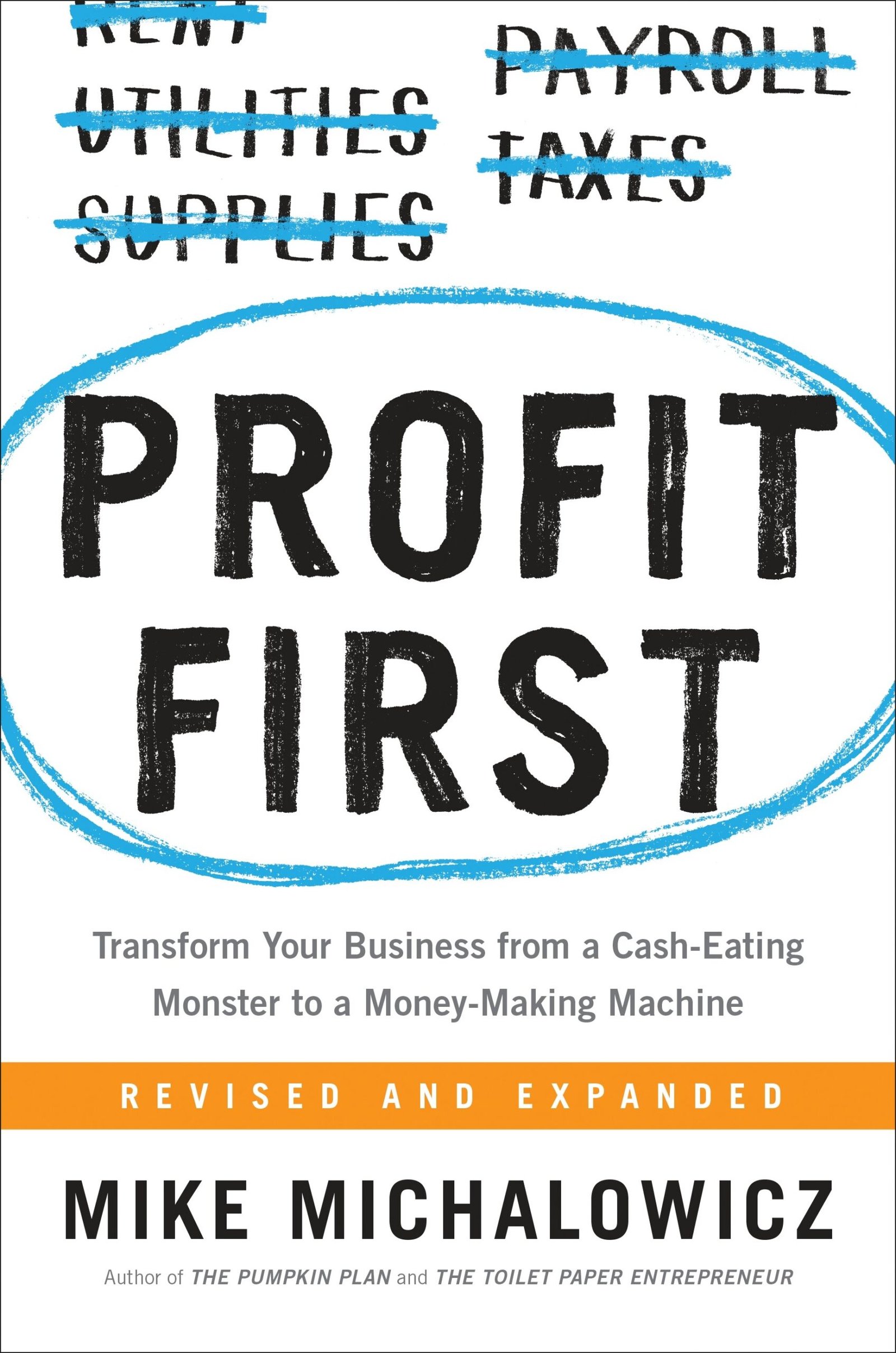
Profit First by Mike Michalowicz is a business finance book about making sure a company actually keeps money. Its central idea is simple: instead of waiting to see whether profit is left over, take a planned amount of profit first, then run the business on what remains. The method is aimed mainly at small-business owners and entrepreneurs, but its lessons about cash, limits, and behavior are useful for anyone who wants a business that supports real life. [1][2]
What the book is about
Traditional accounting often uses this formula:
Sales − Expenses = Profit
Michalowicz flips it:
Sales − Profit = Expenses
That change is not just a math trick. It is a behavior trick. When all the money sits in one account, it is easy to spend too much because the balance looks bigger than the business can safely afford. Profit First separates the money into different places, so the owner sees a smaller amount available for everyday spending.
Think of a lunchbox with several compartments. One space holds the owner’s pay, another holds taxes, another holds profit, and another pays the bills. The business still has one total amount of money, but each part has a job. This makes the company’s limits easier to see.
Main ideas explained simply
1. Profit is a habit, not a surprise
The book says profit should happen regularly, not only at the end of the year if everything goes perfectly. A small, planned amount taken consistently can build discipline and show whether the business model really works.
2. Smaller amounts encourage smarter choices
Michalowicz compares separate accounts to using a smaller plate when trying to eat less. If the operating account contains less money, the business must find simpler ways to work. That may mean reducing waste, negotiating costs, improving a service, or stopping work that earns little.
3. Revenue is not the same as money kept
Revenue is the money customers pay the business. Profit is what remains after the business pays its costs. A company can have impressive sales and still be unhealthy if its expenses, debt, taxes, and owner pay consume everything.
4. Growth can hide a problem
More customers can also bring more staff, equipment, advertising, support, and debt. If each sale loses money, growing faster can create a bigger problem. The book’s advice is to make the business profitable before chasing size.
Key terms in plain language
- Cash flow: money moving into and out of the business. A business can show a profit on paper and still run short of cash when bills are due.
- Operating expenses: regular costs such as software, rent, wages, supplies, and marketing.
- Owner’s pay: money set aside to compensate the owner for work. It is different from profit, the reward for owning a profitable business.
- Allocation: dividing incoming money into clear buckets or accounts for specific purposes.
- Tax reserve: money kept aside for taxes so a large bill does not become a crisis later.
Steps to apply the book’s system
- Draw a line in the sand. Look honestly at current sales, costs, debts, and cash. Do not start with a fantasy forecast.
- Open separate accounts. Create named accounts for income, operating expenses, taxes, owner’s pay, and profit.
- Choose a small starting percentage. Set aside an amount the business can survive. Check taxes, payroll, and obligations before choosing it.
- Move money on a schedule. On regular dates, allocate the money that came in. Automatic transfers can help, but check them.
- Run the business on the operating balance. Treat that balance as the true spending limit. If it is too small, improve efficiency instead of taking more from profit or tax accounts.
- Review carefully. Revisit percentages as revenue, costs, and tax rules change. A book’s method is not a substitute for an accountant.
What the book gets right
The strongest part of Profit First is its understanding of human behavior. People respond to what they can see. Separate accounts make hidden trade-offs visible, and regular allocations make profit harder to forget. A smaller company that pays its owner and produces steady cash can be healthier than a much larger company that is always short of money.
It also gives entrepreneurs a useful question: “What can this business afford now?” That is safer than spending based on hoped-for sales next month.
What to be careful about
Profit First is not a cure for a business with no customers, weak pricing, poor delivery, or too much debt. Moving money between accounts cannot create profit if the underlying service loses money. The method also needs careful tax and payroll planning. Taking cash at the wrong time can leave a business unable to pay its obligations.
Profit is not the only goal. A business must serve customers, pay workers fairly, maintain quality, and keep enough cash for emergencies. Use the system alongside sound bookkeeping and qualified local advice.
Bottom line
Profit First teaches entrepreneurs to stop treating profit as whatever happens to be left. By setting aside a reasonable share first and limiting spending to the rest, owners can see the truth about their business sooner. In simple words: give every dollar a job, protect the money that matters, and make the business live within its means.