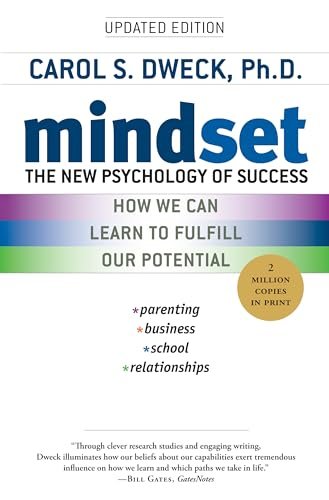
What if your current level of skill, income, or confidence is not a permanent verdict? In Mindset: The New Psychology of Success, psychologist Carol S. Dweck explains how beliefs about ability shape the way people respond to challenge, criticism, effort, and setbacks. Her distinction between a fixed mindset and a growth mindset is simple, but its practical consequences reach into learning, leadership, careers, entrepreneurship, and wealth building.
A fixed mindset treats talent as largely set: success proves you are capable, while difficulty threatens your identity. A growth mindset treats ability as developable through purposeful effort, useful strategies, feedback, and time. This does not mean that everyone starts with the same advantages or that effort guarantees any result. It means that your starting point is not the whole story. For anyone building a better financial life, that shift can change what you attempt and how long you stay engaged.
The central idea: ability can be developed
Dweck’s framework is not about repeating positive slogans. A genuine growth mindset accepts that improvement requires honest assessment, practice, and better methods. It also recognizes that people can have different mindsets in different areas. Someone may welcome feedback at work but avoid it with money, or persist in learning a skill while interpreting one business setback as proof that entrepreneurship is not for them.
The wealth connection is direct. Financial progress usually depends on skills that can be learned: managing cash flow, negotiating, selling, analyzing risk, communicating clearly, and making decisions under uncertainty. If you label yourself “bad with money,” the label may become an excuse to stop learning. If you treat financial competence as a trainable skill, a mistake becomes information and the next action becomes visible.
Lesson 1: Replace identity judgments with process questions
Fixed-mindset language turns an event into an identity: “I failed, so I am a failure.” Dweck shows why that response can produce defensiveness or avoidance. A growth-oriented response separates the person from the result and asks what can be learned.
Practice: whenever you catch yourself making a permanent judgment, rewrite it as a process question. Instead of “I cannot budget,” ask, “Which part of my budgeting system is unclear, and what tool or explanation would help?” Instead of “I am not entrepreneurial,” ask, “Which customer, marketing, or operations skill do I need to practice?” The question is not cosmetic. It points your attention toward an action.
Lesson 2: Set learning goals, not only performance goals
A performance goal focuses on looking successful: earn a particular amount, win the client, or avoid being wrong. A learning goal focuses on building capability: understand a sales conversation, study a financial statement, or test an offer with real customers. Performance matters, but learning goals are especially useful when the outcome is uncertain.
Step by step:
- Choose one result you want, such as increasing savings or growing revenue.
- Identify the capability behind it, such as expense awareness, pricing, or follow-up.
- Schedule a small weekly practice that develops that capability.
- Review what improved, what did not, and which method you will try next.
This approach keeps a disappointing short-term result from erasing valuable progress. A product test that does not sell can still teach you about the customer, message, price, or channel.
Lesson 3: Treat effort as a signal to improve strategy
Growth mindset is sometimes misunderstood as “work harder no matter what.” Dweck’s idea is more useful than that. Effort matters because it activates learning, but effort without feedback or strategy can simply repeat the same error. When progress stalls, the response should be neither instant surrender nor blind persistence.
Use this three-part review: What exactly did I try? What evidence did I receive? What will I change in the next attempt? A person trying to reduce spending might discover that willpower fails late at night, while an automatic transfer and a weekly meal plan work better. A founder might learn that the product is not the problem; the customer segment or distribution method is.
Lesson 4: Make feedback part of the system
People with a fixed mindset may avoid feedback because criticism feels like a threat to their ability. Yet feedback is one of the fastest ways to shorten the distance between intention and competence. The goal is not to accept every opinion. It is to create a process for finding signal in what others observe.
Ask for specific feedback rather than general approval. “What is one place this proposal is unclear?” is better than “Do you like it?” For personal finance, use account statements and monthly spending totals as feedback from reality. For a business, ask customers what nearly stopped them from buying. Receive the information without immediately defending the original plan, then decide what deserves a test.
Lesson 5: Praise useful behaviors
Dweck’s work also changes how leaders, parents, and teams should give recognition. Praising someone as “a genius” can make future difficulty feel dangerous because the person wants to preserve the label. Praising preparation, thoughtful strategy, persistence, and improvement reinforces the behaviors that produce durable capability.
Apply this to your own money habits. Do not celebrate only a higher account balance, which can be affected by circumstances. Also recognize that you reviewed your spending, asked a difficult question, avoided an impulsive purchase, or learned how a retirement account works. These behaviors are within your control and can compound.
Lesson 6: Use setbacks as data, not destiny
A setback is real, and a growth mindset does not require pretending otherwise. The difference is what the setback is allowed to mean. A failed interview may indicate a missing skill, a weak example, or poor fit. A market loss may reveal that risk was misunderstood. A debt relapse may show that the system relied on optimism instead of safeguards.
After a setback, write a short after-action review: What was under my control? What was not? What assumption proved wrong? What safeguard, skill, or support would improve the next attempt? Then choose one corrective action with a date. Reflection becomes useful only when it changes behavior.
Lesson 7: Build a growth-minded wealth routine
Turn the book’s ideas into a weekly practice. Spend 15 minutes on each of these prompts:
- Skill: What money or work skill am I developing?
- Evidence: What did my numbers, customers, or results teach me?
- Feedback: Whose informed perspective can help me see a blind spot?
- Experiment: What small change will I test this week?
- Recovery: What setback needs a lesson and a next step rather than self-criticism?
Keep experiments small enough to complete. Automate one saving action, practice one negotiation, read one financial statement, or speak with one potential customer. Repeated learning creates a stronger base for larger decisions.
What the mindset idea does not promise
A growth mindset is not magical thinking. Effort does not erase unequal circumstances, structural barriers, poor timing, or randomness. Positive beliefs cannot replace sound financial information, risk management, or professional advice when those are needed. Nor should the concept be used to blame people for every outcome. The practical value is narrower and stronger: it helps identify what can be learned and changed while keeping reality in view.
Bottom line
Mindset invites readers to stop treating ability as a fixed border around their future. For wealth builders, that means replacing “I am bad with money” with a learning plan; replacing embarrassment with useful feedback; and replacing one dramatic goal with repeated practice. Start with one financial skill, measure your behavior, adjust your strategy, and let improvement—not perfection—be the standard. Over time, a belief in developable ability becomes most powerful when it is attached to disciplined action.
Sources and credit
- Dweck, Carol S. Mindset: The New Psychology of Success. Ballantine Books / Random House, updated edition.
- Amazon.com product page — verified title, author, and edition listing; cover image credit.
- Google Books bibliographic record — publication and book-description reference.
- Research and author background reference — used for general framing of fixed and growth mindsets.