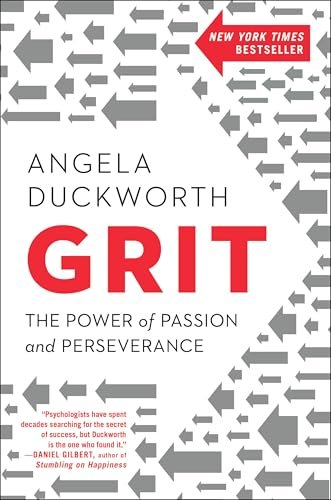
Building wealth is often described as a problem of knowledge: learn more, find the right strategy, and success will follow. Angela Duckworth’s Grit: The Power of Passion and Perseverance offers a more demanding and more useful view. Achievement depends not only on talent or intelligence, but on the ability to sustain effort toward a meaningful goal over time.
That idea matters financially because wealth is usually the result of repeated decisions: saving through uneven seasons, improving a valuable skill, serving customers when growth is slow, and resisting the temptation to abandon a sound plan after a disappointing month. Grit is not blind stubbornness or an excuse to keep pursuing a bad investment. It is a disciplined relationship with a long-term aim.
What Duckworth Means by Grit
Duckworth defines grit as passion and perseverance for long-term goals. Passion here does not mean constant excitement. It means developing a consistent direction: knowing what kind of work, contribution, or life you want to pursue and allowing that direction to guide your choices. Perseverance is the willingness to continue practicing and working after novelty fades.
One of the book’s central distinctions is between talent and effort. Talent can make learning faster, but effort is what turns ability into skill. Effort also turns skill into achievement. In a wealth context, this reframes the question from “Am I naturally good with money or business?” to “What useful capability can I practice long enough to become dependable?”
The book also emphasizes that grit can grow. It is influenced by interest, deliberate practice, purpose, and hope. Supportive environments matter as well: high standards work best when paired with encouragement. For adults, that means designing systems and communities that make steady progress more likely rather than relying on willpower alone.
Lesson 1: Choose a Direction Worth Sustaining
Long-term effort needs a destination. A vague ambition such as “be richer” may produce short bursts of activity, but it rarely tells you what to do on an ordinary Tuesday. Choose a wealth objective that connects money to a real outcome: owning a resilient business, creating flexibility for family, funding meaningful work, or reaching a defined level of financial independence.
This does not require predicting your entire future. It requires a direction clear enough to filter decisions. If your aim is to build a service business, learning sales and customer research may deserve more attention than chasing every new asset class. If your aim is financial independence, a savings rate and diversified investment plan may matter more than exciting speculation.
Lesson 2: Separate Interest from Commitment
Interest often arrives first as curiosity. Commitment develops when you keep exploring after the initial excitement disappears. Duckworth’s examples suggest that passion is frequently cultivated rather than discovered fully formed. You can apply that principle by giving a promising skill a fair trial instead of demanding instant certainty.
Pick one capability with economic value—writing, negotiation, coding, analysis, marketing, or a trade—and schedule a twelve-week experiment. Define what “practice” means, produce visible work, and review your results weekly. You are not promising to do the same thing forever. You are giving interest time to mature into informed commitment.
Lesson 3: Practice Deliberately, Not Merely Repeatedly
More hours do not automatically create expertise. Deliberate practice targets a specific weakness, requires concentration, and produces feedback. For a founder, that might mean reviewing why prospects decline rather than simply making more calls. For an investor, it might mean writing a thesis before buying and later comparing the thesis with what actually happened.
Use a simple loop: choose one subskill, work just beyond your current comfort zone, get feedback, and adjust. Keep a brief practice log. The log is not a badge of productivity; it is evidence that you are improving the process that creates future value.
Lesson 4: Build a Hard-Thing Rule
Duckworth describes the value of intentionally committing to a demanding activity and staying with it for a defined period. Adapt that idea without turning it into punishment. Choose one “hard thing” that strengthens your financial future: completing a professional certification, shipping a minimum viable offer, having weekly sales conversations, or maintaining a monthly money review.
Set the rule in advance. Decide the frequency, duration, and conditions for reassessment. A rule protects important work from daily mood swings. At the same time, reassessment matters: quitting a poor strategy after learning from evidence is different from quitting a sound strategy merely because progress is slow.
Lesson 5: Use Systems That Make Perseverance Easier
Grit is personal, but it is not purely mental. Automatic transfers, a written investment policy, calendar blocks, a recurring customer pipeline review, and a low-friction learning environment all reduce the number of times you must make the same decision.
Start with one system for money and one for work. On payday, automate a transfer toward an emergency reserve or long-term investment, subject to your own circumstances and risk tolerance. For income growth, reserve a recurring block for the single activity most connected to value creation. Review both systems monthly and improve them rather than abandoning them after one imperfect result.
Lesson 6: Connect Effort to Purpose and Hope
Persistence becomes stronger when effort serves someone beyond the self. A business can be a vehicle for solving a customer’s problem. A career can support people you love or fund work you consider worthwhile. Purpose does not eliminate difficulty, but it can make difficulty intelligible.
Hope, in Duckworth’s framework, is the belief that your actions can influence the future. Make that belief practical by tracking leading indicators you control: hours of deliberate practice, proposals sent, expenses reviewed, or savings contributions made. Outcomes still depend on markets and circumstances, but controllable evidence keeps one setback from becoming a verdict on your identity.
Step by Step: A 30-Day Grit Plan for Wealth
- Write the direction. Describe the financial outcome you want, why it matters, and the time horizon. Keep it specific enough to guide choices.
- Select one high-value capability. Choose a skill that could increase income, improve business results, or help you make better decisions.
- Schedule four deliberate-practice sessions. Each session should address one weakness and include feedback or a concrete output.
- Create your hard-thing rule. Pick a recurring commitment and define when you will review it. Do not change the rule in the middle of a difficult day.
- Automate one financial behavior. Set up a transfer, bill payment, debt payment, or investment contribution that fits your plan.
- Track leading indicators. Record the actions that create progress, not just your account balance or revenue.
- Hold a weekly review. Ask what improved, what failed, and what the next small adjustment should be.
- Run a 30-day decision. Continue, change, or stop based on evidence. Ending an experiment can be gritty when it frees you to pursue a better long-term goal.
What Success Looks Like
Applying Grit does not guarantee a particular income, market return, or business outcome. Its value is in strengthening the behaviors that remain useful across changing conditions: purposeful direction, patient skill-building, honest feedback, and consistent execution. You become less dependent on motivation and less likely to confuse a temporary obstacle with permanent failure.
The practical wealth lesson is simple: choose a worthwhile direction, then build the routines and feedback loops that let you stay engaged long enough to learn. Talent may influence the starting point. Grit influences how much value you can create from the journey.
Sources and Credit
- Duckworth, Angela. Grit: The Power of Passion and Perseverance. Scribner, 2016.
- Publisher information: Simon & Schuster.
- Book and cover reference: Amazon.com.
Book notes are for educational purposes and are not individualized financial advice.