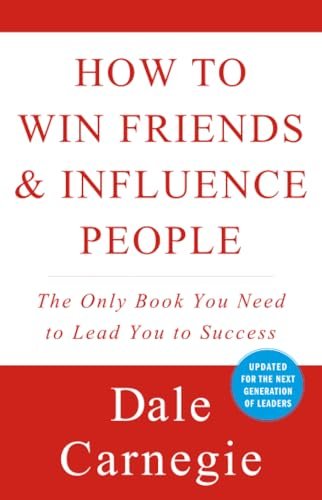
Wealth is rarely built by spreadsheets alone. It is built through trust: a customer deciding to buy, a colleague choosing to collaborate, a manager giving someone responsibility, or a friend opening a door to an opportunity. Dale Carnegie’s How to Win Friends and Influence People is a classic guide to the human side of success. Published in 1936, it argues that influence is not about clever manipulation; it is about understanding what people value, treating them with dignity, and making cooperation easier.
For anyone building a career, business, or network, that message remains practical. Money follows value, and value is delivered through relationships. The book’s principles can help you communicate more clearly, earn goodwill, handle disagreement, and lead without creating unnecessary resistance. The goal is not to become agreeable at all times. The goal is to become a person others can trust, understand, and work with.
What Carnegie Understands About Success
Carnegie begins with a simple observation: people are motivated by their own needs, hopes, fears, and sense of importance. That does not make them selfish villains; it makes them human. If you want someone to consider an idea, begin by understanding the situation from their point of view. A proposal framed only around what you want will feel like a demand. The same proposal connected to the other person’s priorities can feel like a useful invitation.
This is especially relevant to wealth creation. A business grows when it solves a real problem for a real person. A professional advances when others can see the value of their contribution. An investor, founder, or team leader needs technical ability, but also the capacity to listen, explain, negotiate, and preserve long-term relationships. Carnegie’s interpersonal principles are therefore not a substitute for competence. They are the social infrastructure that allows competence to produce results.
Step by Step: Applying the Book to Work and Wealth
1. Replace criticism with curiosity
Before correcting someone, pause and ask what they were trying to accomplish. Carnegie warns that direct condemnation usually makes people defensive rather than reflective. In practice, this means replacing “That was a bad decision” with a question such as “What information led you there?” You may discover a constraint, assumption, or missing fact that was invisible to you.
Action: In your next disagreement, write down the other person’s likely goal before stating your own objection. If you cannot describe their goal fairly, you are not ready to persuade them.
2. Give honest appreciation
The book distinguishes genuine appreciation from empty flattery. People work harder and collaborate more willingly when their specific contribution is noticed. Generic praise is easy to dismiss; precise recognition shows attention. Tell a team member which behavior improved a project, or tell a customer exactly what insight made their feedback useful.
Action: Each week, send three short messages of specific appreciation. Mention the action, its effect, and why it mattered. This builds a reputation for noticing value rather than merely requesting more work.
3. Listen for the interest beneath the request
One of Carnegie’s most practical lessons is to become genuinely interested in other people. Listening is not a pause while you prepare your reply. It is a form of research. A prospect may ask about price while really worrying about risk. An employee may resist a deadline because they fear being set up to fail. A partner may want more control because past commitments were not honored.
Action: In an important conversation, ask two follow-up questions before offering a solution. Repeat the central concern in your own words and ask whether you understood it correctly. Better listening often reveals a cheaper and more durable solution.
4. Make the other person’s benefit visible
Carnegie advises presenting ideas in terms of what the other person wants. This is not permission to disguise a harmful proposal. It is a reminder that a benefit must be meaningful to the person receiving it. When asking a colleague to adopt a process, explain how it reduces rework. When selling a service, connect its features to a measurable customer outcome. When requesting investment, clarify the problem, economics, and risk—not only your enthusiasm.
Action: Rewrite one current pitch, email, or proposal. Replace at least half of the sentences about your company or preferences with sentences about the recipient’s desired result.
5. Let people retain dignity during correction
Influence becomes fragile when people feel publicly humiliated. Carnegie recommends beginning with areas of agreement, acknowledging your own mistakes, and asking questions instead of issuing commands. These habits lower the emotional cost of changing course. They also make it safer for people to surface problems early, before small mistakes become expensive ones.
Action: Deliver difficult feedback privately and describe the observable behavior, its consequence, and the next standard. End with a question: “What support would make that change realistic?” Accountability and respect can coexist.
6. Turn cooperation into a shared decision
People are more committed to an idea when they have helped shape it. Carnegie repeatedly returns to the power of inviting participation. In business, this can mean asking customers to help refine an offer, involving employees in a workflow redesign, or allowing a negotiation partner to suggest implementation details. You still need clear boundaries, but collaboration often produces stronger execution than one-sided instruction.
Action: For one project, define the non-negotiable outcome and invite the people doing the work to design the route. Record their suggestions and explain which ones you adopt. Participation without follow-through is not influence; it is theater.
7. Build habits that compound trust
The book’s ideas work through repetition. Remembering names, keeping promises, admitting mistakes, and following up after a conversation may seem small, but they create a pattern people can rely on. Trust lowers friction: customers need less convincing, partners spend less time protecting themselves, and teams move faster because fewer interactions require defensive checking.
Action: Create a simple relationship dashboard with three columns: promises made, follow-ups due, and useful information learned. Review it every Friday. The purpose is not to turn people into transactions; it is to prevent good intentions from disappearing into a crowded schedule.
Where to Use the Principles—and Where Not To
Carnegie’s approach is most powerful when it is sincere. Do not use appreciation as a trick to extract unpaid labor, or “seeing the other side” as a way to avoid setting boundaries. A respectful conversation can still end in “no.” You can listen to a customer and decide the request is outside your strategy. You can acknowledge an employee’s constraints and still hold them accountable. The standard is mutual benefit, not universal approval.
There is also a useful wealth lesson here: relationships are assets, but people are not assets to be exploited. Sustainable success comes from creating value that others willingly choose. If your communication skills improve but your product, service, or judgment remains poor, the improvement will not last. Pair Carnegie’s human-relations principles with real competence, ethical conduct, and measurable delivery.
A 30-Day Practice
For the first week, focus only on listening and asking better questions. In week two, practice specific appreciation and reliable follow-up. In week three, rewrite proposals around the recipient’s desired outcome. In week four, handle one disagreement by acknowledging your own contribution, finding common ground, and inviting a shared next step. At the end of each week, note one conversation that became easier and one that still needs work.
The point is not to perform a personality makeover. It is to make your everyday interactions more observant, generous, and effective. Those qualities improve the odds that your ideas will be heard and your commitments will be trusted. Over time, that can lead to better opportunities, stronger businesses, and a more durable form of wealth: the ability to create value with and for other people.
Sources and Credit
- Dale Carnegie, How to Win Friends and Influence People (originally published 1936).
- Amazon.com book/product page and cover source (edition ISBN-13: 9780671027032).
- Encyclopaedia Britannica: How to Win Friends and Influence People (publication and book reference).