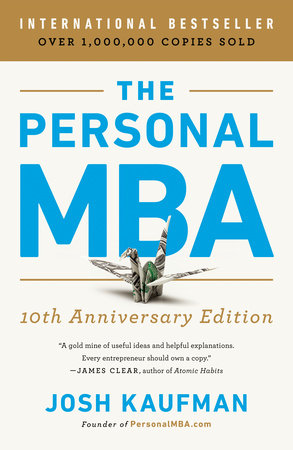
Many people want to build a business, earn more, or turn a useful idea into lasting wealth, but they feel they are missing some secret business-school knowledge. The Personal MBA: Master the Art of Business by Josh Kaufman offers a more practical starting point. Its central argument is that most business is understandable when you learn a small set of useful models and apply them repeatedly.
That does not mean every business is easy. It means you can replace vague anxiety with better questions: Who is being helped? What value is being created? How does money move through the system? What can be tested before more time and capital are committed? Those questions are valuable whether you are a founder, employee, freelancer, or investor.
What The Personal MBA is about
Kaufman’s book is a broad, self-directed introduction to business. It brings together ideas from entrepreneurship, marketing, sales, negotiation, finance, accounting, operations, psychology, productivity, and systems thinking. Rather than presenting business as a collection of intimidating departments, it shows how the parts connect.
The five parts of every business
One of the book’s most useful organizing ideas is that every business must do five things: create something valuable, deliver it to people who want it, persuade those people to pay, deliver the promised value, and manage the money coming in and going out. Kaufman describes these as value creation, marketing, sales, value delivery, and finance.
When a business struggles, this checklist gives you a place to look. A product may be excellent but poorly explained. Marketing may attract attention without attracting the right customers. Sales may work, but delivery may be unreliable. Revenue may look healthy while costs quietly consume the cash. A simple model is useful because it prevents you from treating every problem as mysterious.
Lesson 1: Diagnose before you expand
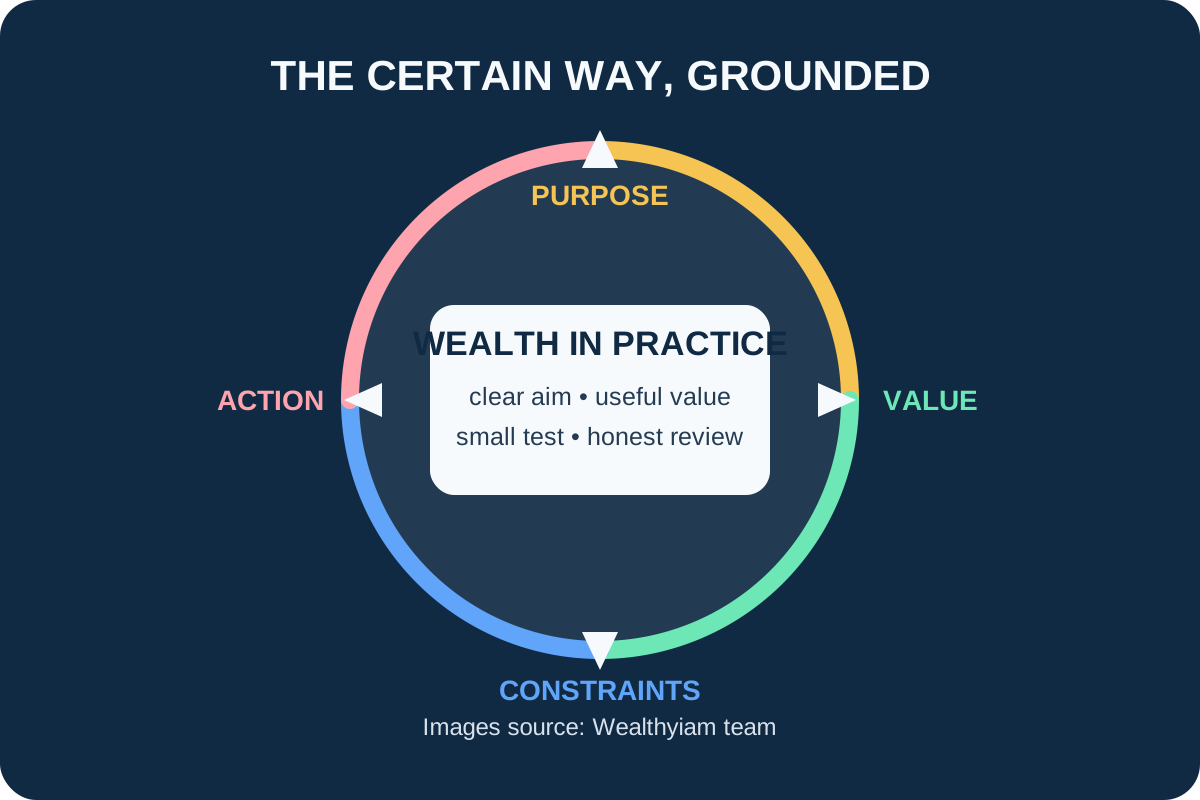
Write down the five parts for your own work or business. For each one, identify the biggest current weakness. Do not begin by adding a new platform, hiring, or borrowing money. First decide whether the real constraint is demand, pricing, delivery, or cash management. Improving the bottleneck is usually more valuable than making every area slightly busier.
Create value before chasing attention
This is a powerful filter for wealth-building projects. Before investing months in an idea, describe the customer and the problem in plain language. Then find evidence that the problem matters. Conversations, preorders, small paid tests, or a basic service can teach more than a polished presentation built on assumptions.
Lesson 2: Turn an idea into a test
Choose one specific customer group and one painful problem. Interview five people without pitching first. Ask what they do now, what the problem costs them, and what they have already tried. Then offer the smallest useful version of a solution. Track actions—replies, trials, payments, repeat use—not compliments. Let evidence shape the next version.
Understand the forms of value
Kaufman explains that value can take many forms. A product is only one possibility. A service, a shared resource, a subscription, information, access, or a way to save time can also be valuable. This wider view helps entrepreneurs avoid copying the same business model they see everywhere.
For an individual, the idea suggests several ways to increase earning power. You might improve a scarce technical skill, package your knowledge into a service, build a trusted audience, or create a repeatable process that produces a consistent result. The goal is not to chase novelty for its own sake. The goal is to connect your abilities with a problem that matters to a defined group of people.
Lesson 3: Build a value inventory
List your skills, experience, relationships, tools, and interests. Next to each, write the problem it could help solve and who might pay for that outcome. Circle the ideas that combine genuine capability with a clear customer need. Pick one small experiment for the next two weeks instead of trying to monetize everything at once.
Learn the language of money
The Personal MBA makes finance less mysterious by treating it as feedback. Revenue is money received. Costs are resources consumed. Profit is what remains after costs. Cash flow is the timing of money entering and leaving. These are related, but they are not interchangeable.
A profitable business can still fail if it runs out of cash before customers pay. A growing sales number can hide poor margins. Personal wealth follows the same logic: earning more helps, but spending, debt payments, taxes, reserves, and investing determine what actually compounds. You do not need to become an accountant to benefit from looking at the numbers regularly.
Lesson 4: Install a monthly money review
For a business or side project, record revenue, direct costs, operating costs, cash on hand, and money owed to you. For personal finances, track income, essential spending, discretionary spending, debt, savings, and investments. Compare the last three months. Choose one improvement—raise a weak price, remove a recurring cost, shorten collection time, or automate saving—and measure the result.
Use leverage carefully
Leverage allows one unit of effort to create more than one unit of result. In modern work, software, media, capital, and coordinated teams can all extend your reach. A useful tutorial can help thousands of people; a well-designed process can reduce repeated work; ownership can let you participate in the value you help create.
Leverage is not magic, and it is not a reason to take reckless debt or make grand promises. It magnifies both good and bad decisions. The safe sequence is to learn the work, prove that it creates value, document the process, and only then add tools or capital. Start with reversible experiments and protect your ability to continue.
Lesson 5: Make one process repeatable
Pick a task you perform often. Write the desired result, the steps, the quality standard, and the common errors. Use a template, checklist, or simple automation to reduce friction. Review the output personally until it is reliable. This creates modest leverage without sacrificing judgment or customer trust.
Make better decisions with opportunity cost
Every choice uses time, attention, money, or credibility that cannot be used elsewhere. The book encourages readers to think in terms of opportunity cost: what valuable alternative are you giving up? This question is especially useful when an attractive project competes with a proven one.
Before saying yes, define the expected benefit, the total cost, the downside, and the point at which you will review the decision. A decision journal can help. Record why you chose an action, what you expect to happen, and what evidence would change your mind. Over time, this separates good reasoning from lucky outcomes.
Lesson 6: Create a weekly decision filter
For each major commitment, ask: Does it create customer value? Does it strengthen a rare skill or asset? Is the downside survivable? What will I stop doing to make room? If the answer is unclear, delay the commitment for 24 hours and gather one useful piece of evidence.
A practical 30-day reading-and-action plan
- Week one: Map the five parts of your business, career, or project and identify the bottleneck.
- Week two: Speak with potential customers, employers, or users and test one specific problem.
- Week three: Review the numbers. Find the activity, offer, or cost with the greatest effect on cash or useful output.
- Week four: Document one repeatable process and set a small metric for the next month.
Keep the experiments small enough to finish. The point is not to imitate every idea in the book. It is to use the models as tools for seeing reality more clearly and acting with less waste.
Final takeaway
The Personal MBA is most valuable as a business-thinking toolkit. It teaches that wealth begins with useful value, improves through clear communication and reliable delivery, and compounds when decisions are supported by ownership, cash discipline, and repeatable systems. Read it actively: underline the models that clarify your situation, test one idea at a time, and let results—not excitement—guide the next move.
Sources and credits
Book facts and concepts were checked against the publisher record and the author’s official site. This article is an original educational summary and is not affiliated with Josh Kaufman or the publisher.