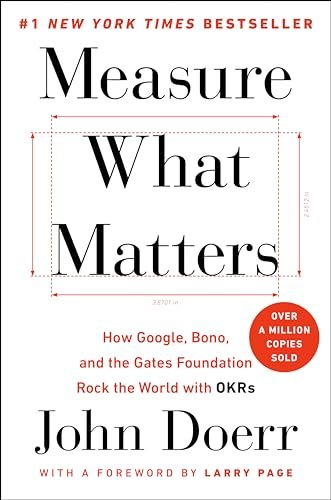
Many people set goals that sound inspiring but are too vague to guide a Tuesday afternoon. “Grow the business,” “earn more,” or “build wealth” can point in the right direction, yet none tells you what to do next or how to know whether you are making progress. In Measure What Matters: How Google, Bono, and the Gates Foundation Rock the World with OKRs, venture capitalist John Doerr presents a system for turning ambition into visible, measurable action.
The book’s central tool is the OKR: Objectives and Key Results. An objective describes the meaningful outcome you want. Key results define the evidence that would show you are getting there. For a wealth-building reader, this framework is valuable because it connects long-term hopes—higher income, a profitable business, financial independence—with the weekly behaviors and numbers that move them forward.
The book’s big idea: ambition needs a scoreboard
Doerr argues that organizations often fail not because they lack ideas, but because priorities are unclear and execution is difficult to see. OKRs create a shared language for deciding what matters now. The objective supplies direction and energy; the key results supply specificity. A strong key result is observable and time-bound, not a list of activities.
For example, “publish more content” is an activity. “Generate 500 qualified email subscribers by September 30” is a result. The first may keep you busy; the second tells you what success looks like and invites you to test whether your work is effective.
Lesson 1: Turn a wish into one clear objective
Step by step
- Write the outcome you want in plain English.
- Give it a deadline or planning period.
- Make it important enough to focus attention, but narrow enough to remember.
- Use a motivating verb: build, reach, improve, launch, reduce, or protect.
A personal objective might be: “Build a stronger financial foundation this quarter.” A business objective could be: “Create a reliable customer-acquisition engine for the new service.” Neither is a complete plan, and that is fine. The objective is the heading under which the measurable proof will sit.
Lesson 2: Choose key results that prove progress
Key results should answer, “How will we know?” They are not merely tasks such as attending meetings, reading books, or working ten hours. Those actions may help, but they do not prove that the desired outcome happened. Choose two to four indicators that capture meaningful movement.
Build your key results
- Start with a baseline: current revenue, savings rate, debt balance, conversion rate, or number of customers.
- Set a realistic target for the period.
- Define the date and measurement method.
- Check that the result is influenced by your actions and connected to the objective.
For the financial-foundation objective, key results might be: increase the monthly savings rate from 8% to 15%; pay down $2,000 of high-interest debt; and build a one-month emergency reserve. These numbers are not universal prescriptions. They are examples of turning a broad aspiration into a small set of signals you can review.
Lesson 3: Separate outcomes from the actions that support them
One reason OKRs are useful is that they keep results and initiatives distinct. A key result might be “close five profitable clients.” Initiatives might include interviewing ten prospects, improving the proposal, and making three sales calls each weekday. Initiatives are the experiments and commitments that may produce the result. If the result does not improve, you can change the initiatives instead of pretending that activity equals achievement.
This distinction is especially important in wealth creation. Tracking hours worked can be encouraging, but income, profit, ownership, and retained cash are usually closer to the economic outcome. Review both: actions explain what you are trying, while results tell you whether the attempt is working.
Lesson 4: Focus your resources on what matters most
Doerr’s approach is not a license to create a longer task list. A useful OKR system limits priorities so people can make trade-offs. When everything is urgent, attention is diluted. Pick the few outcomes that deserve your best time and say what will not receive equal attention during the cycle.
Weekly focus ritual
- Read your objective aloud.
- Score each key result from 0 to 1, or use a simple percentage.
- Identify the one stalled result that needs a decision.
- Schedule the next concrete initiative in your calendar.
- Remove or postpone one lower-value commitment.
For an entrepreneur, this may mean protecting customer conversations over endless logo revisions. For an employee, it may mean prioritizing a scarce skill that improves future earning power. For a household, it may mean automating savings before discretionary spending begins.
Lesson 5: Use transparency and check-ins without turning goals into punishment
OKRs work best when progress is visible and conversations are frequent. A missed target can reveal that the goal was ambitious, the strategy was weak, or circumstances changed. Treat the score as information, not as a verdict on someone’s worth. Honest feedback makes it possible to adapt early.
That mindset matters for personal money goals too. If you miss a savings target, examine the system: Was the target based on an unrealistic cash-flow assumption? Did a recurring expense surprise you? Can income be increased, or must the goal be resized? A calm review is more productive than shame.
Lesson 6: Connect today’s numbers to long-term wealth
OKRs are usually set for a quarter or another short cycle, while wealth compounds over years. The bridge is to choose short-term measures that build durable assets. Examples include improving a valuable skill, creating a repeatable sales channel, reducing expensive debt, increasing a diversified investment contribution, or documenting a business process that can scale.
Do not optimize a metric that harms the larger aim. Chasing revenue without margin can weaken a company. Increasing investment risk to hit a short-term return can damage financial security. A good key result is both measurable and strategically healthy. Pair growth measures with guardrails such as cash reserves, customer quality, profit, or maximum acceptable risk.
A practical 12-week OKR plan
- Week 1: Write one wealth-related objective and record each baseline.
- Week 2: Select two to four key results and define the source of every number.
- Weeks 3–4: Choose initiatives and run the smallest useful experiments first.
- Weeks 5–10: Hold a 15-minute weekly review; update scores and change tactics when evidence demands it.
- Weeks 11–12: Close the cycle, record what worked, and choose the next objective based on learning.
Keep the system visible in a notebook, spreadsheet, or shared document. The tool is less important than the discipline of looking at the same priorities regularly and making decisions from evidence.
Final takeaway
Measure What Matters teaches that goals become powerful when they are concrete enough to manage and meaningful enough to inspire. OKRs can help you direct time, money, and attention toward outcomes that compound: stronger skills, healthier cash flow, durable ownership, and better execution. Start with one objective, measure a few results, review them honestly, and let the numbers improve your decisions rather than replace your judgment.
Sources and credits
This original article discusses the book’s concepts for educational purposes and is not affiliated with John Doerr, the publisher, or Amazon.