Rich Dad Poor Dad is one of the best-known books about money. It tells the story of two father figures and uses that story to explain a simple idea: your money habits matter. The book says many people work hard for money, but wealthy people learn how to make money work for them.
That is why the book has stayed popular for so long. It is not just about getting rich fast. It is about changing how you think about work, spending, saving, and owning things that can bring in money over time.
What the book is about
Robert T. Kiyosaki says he learned from two very different men: his own father, whom he calls his poor dad, and his friend’s father, whom he calls his rich dad. One man believed in school, job security, and steady pay. The other believed in building assets, learning money skills, and creating income from investments and business.
The book uses short stories and plain talk. It is meant to feel like a lesson from a mentor, not a textbook.
Main ideas in simple words
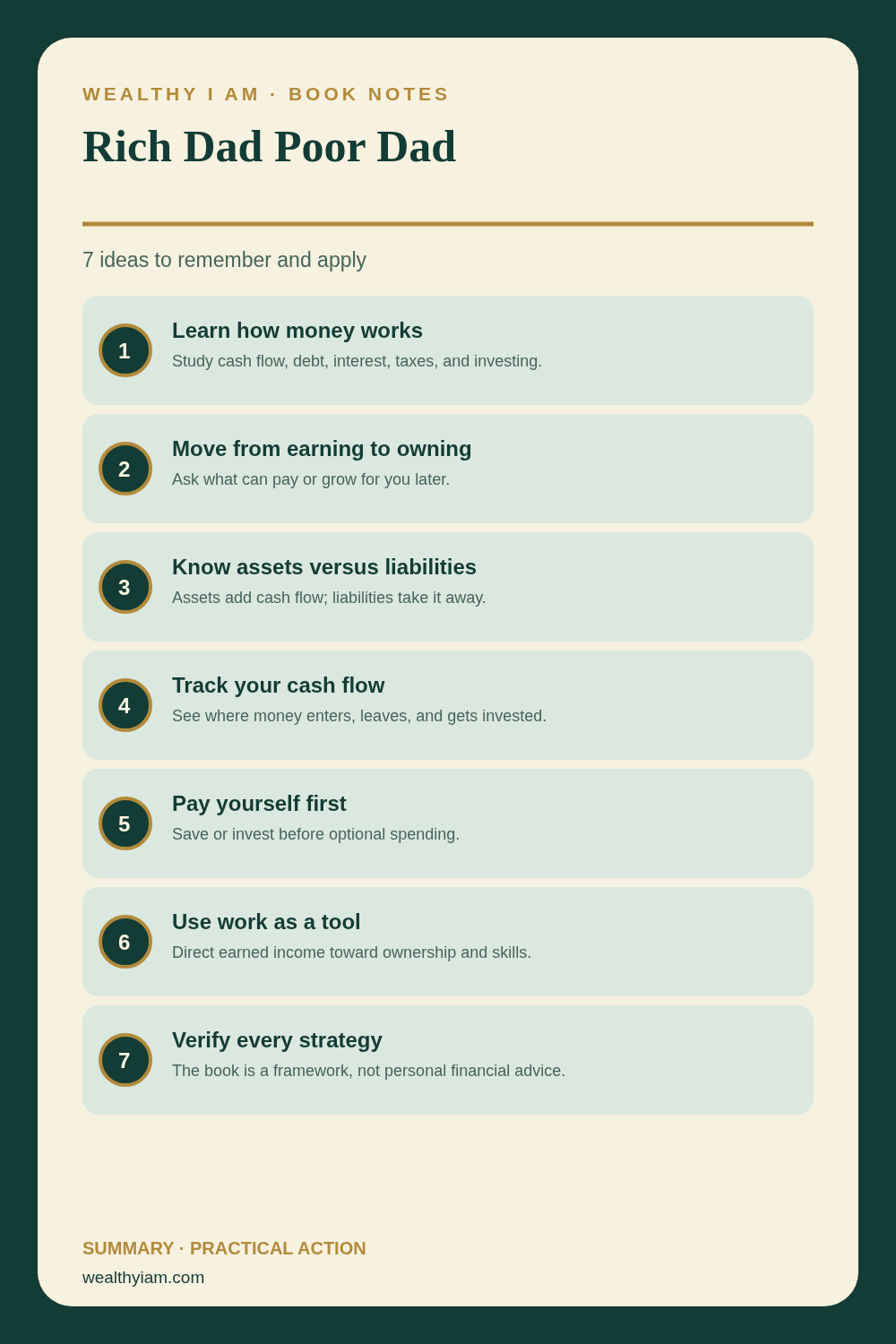
- Assets are things that put money in your pocket, like a business, shares, or rental property.
- Liabilities are things that take money out of your pocket, like debt or expensive things that do not earn money.
- Cash flow is the money moving in and out of your life each month.
- Financial education means learning how money really works, not just how to earn a paycheck.
- Pay yourself first means saving or investing before you spend on extras.
Why people like it
The book is popular because it makes money feel less scary. It tells readers that they do not need to be experts in math or business to start learning. It also gives people a simple frame for thinking about wealth: do not only ask, “How much do I earn?” Ask, “What do I own that can grow or pay me later?”
For many readers, that idea is a big wake-up call. It can help people move from spending first to building first.
What it gets right
The book is strongest when it pushes readers to learn the difference between income, spending, saving, and investing. It also does a good job of reminding people that a job alone may not create real freedom. A paycheck can be helpful, but it can also keep you stuck if you never build anything of your own.
It is also right that money knowledge is a life skill. Schools often teach reading and math, but not enough about budgets, debt, interest, taxes, or investing.
What to be careful about
Some parts of the book are too simple. Real life is messier than the story suggests. Not every person can start a business quickly. Not every investment is safe. And not every expensive home is a bad choice for every family.
The book can also make wealth sound easier than it is. Building assets takes time, skill, patience, and often luck. Readers should use the book as a starting point, not as a full plan.
Another thing to remember: some of the book’s stories and claims have been debated for years. So it is smart to read it with an open mind and compare it with other solid personal finance books.
Bottom line
Rich Dad Poor Dad is a simple, motivating book that teaches a useful message: do not let money control you, and do not stop at earning money. Learn how to own assets, understand cash flow, and build financial habits that can last.
If you are brand new to money topics, this book can be a strong first step. Just remember that real wealth is built slowly, with discipline and good judgment.
Sources
- Rich Dad Store
- Wikipedia: Rich Dad Poor Dad
- Goodreads: Rich Dad Poor Dad
- Open Library: Rich Dad Poor Dad
Wealthy I AM Action Card
Wealthy I AM Pinterest Copy
TITLE
Rich Dad Poor Dad: Simple Lessons on Money, Assets, and Freedom
DESCRIPTION
A clear, simple look at Rich Dad Poor Dad — what it teaches about money, assets, liabilities, cash flow, and the risks to keep in.
KEYWORDS
Rich Dad Poor Dad book summary, Rich Poor lessons, personal development, wealth building, productivity books
ALT TEXT
Wealthy I AM visual summary of Rich Dad Poor Dad: Simple Lessons on Money, Assets, and Freedom
ARTICLE URL
https://wealthyiam.com/rich-dad-poor-dad-simple-lessons-money-assets-freedom/