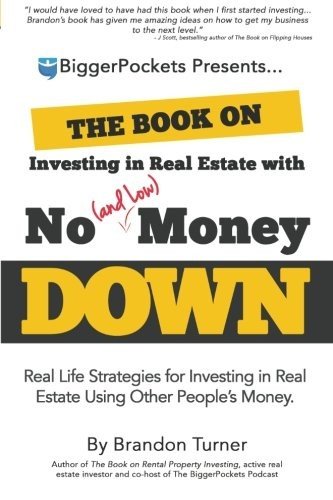
The Book on Investing in Real Estate with No (and Low) Money Down is a practical real estate book by Brandon Turner. Its big promise is simple: you do not need a huge pile of cash to start learning real estate deals. Instead, the book shows how investors can use creativity, trusted partners, and different kinds of financing to get property deals done. The idea is not magic. It is about learning how deals work and how money can move through them. [1][2][3]
Plain-English version: you do not always need to bring all the money yourself if you know how to structure the deal.
Book facts
| Author | Brandon Turner |
|---|---|
| Original publication | 2014; revised edition later released by BiggerPockets |
| Publisher | BiggerPockets Pub / BiggerPockets Publishing |
| Main topics | Real estate investing, creative financing, private money, partnerships, wholesaling, flipping, rentals, and deal analysis. |
| Why it matters | It helps new investors see that cash is only one tool, not the only tool. [1][2][4] |
What the book is about
The book is about buying property when you do not have a lot of money saved up. That can mean using a seller who agrees to finance part of the deal, teaming up with a partner, bringing in private money, or using a loan program that fits your situation. Turner’s point is that a smart investor thinks about the whole deal, not just the money in a checking account.
The book also makes one important warning very clear: no-money-down does not mean no-risk. You can still lose money if you buy a bad property, overpay, or fail to leave room for repairs and vacancies. The book is strongest when it reminds readers that creativity needs discipline.
Main ideas explained simply
Creative financing
This means finding a different way to pay for a property instead of only using a standard bank loan. The money can come from a seller, a partner, a private lender, or a mix of sources.
Leverage
Leverage means using borrowed money to control a bigger asset. If the deal is good, leverage can help you grow faster. If the deal is bad, leverage can make losses hurt more.
Private money
Private money is money from a person, not a big bank. That person might want steady interest, a share of the profit, or both.
Cash flow
Cash flow is the money left after rent comes in and bills go out. Positive cash flow means the property is putting money in your pocket instead of draining it.
Step by step: how to use the book’s ideas
- Learn one deal type first. Start with one path, like house hacking, seller financing, wholesaling, or a small rental deal. Do not try to learn every strategy at once.
- Study the numbers. Look at price, rent, repair costs, taxes, insurance, and vacancy risk. A deal is only good if the numbers still work after the excitement fades.
- Find the money path that fits the deal. Ask whether a bank loan, partner, seller financing, or private money makes the most sense. The best choice depends on the property and your own finances.
- Build trust. If you want other people’s money, you need to look safe and organized. That means clear paperwork, honest communication, and a plan for the worst case.
- Keep reserves. Even a low-money deal needs a safety cushion for repairs, empty months, and surprise bills.
- Have an exit plan. Know what you will do if the deal gets ugly. You may sell, refinance, rent longer, or bring in another partner.
What the book gets right
- Money is a tool. Cash helps, but it is not the only thing that matters.
- Skill can beat fear. Many beginners are stuck because they think they need everything perfect before starting.
- Relationships matter. Real estate often moves faster when people trust you.
- Good deals matter more than fancy talk. If the numbers are weak, no clever phrase can save the deal.
What to be careful about
The phrase “no money down” can sound easier than it really is. In real life, you often still need money for inspections, closing costs, repairs, insurance, and reserves. You may also need good credit, a strong income, or a trusted partner who believes in you.
Another thing to watch is hype. Some people talk about creative financing as if it is a shortcut to easy wealth. It is not. It is a way to solve a funding problem, not a way to skip hard work. If you do not understand the deal, borrowing more money will not fix it.
Kid-simple version: a low-money deal is not free money. It is just a different road to the same house.
Bottom line
The Book on Investing in Real Estate with No (and Low) Money Down is a useful read for anyone who wants to learn how property deals can be funded in smarter ways. Its best lesson is that starting small does not mean thinking small. If you understand the numbers, protect yourself, and stay honest about risk, creative financing can open doors that a normal savings account would keep closed.
Sources
- [1] BiggerPockets store page
- [2] Google Books
- [3] Goodreads
- [4] Amazon
- [5] AbeBooks