Building wealth is often presented as a dramatic event: a breakthrough business, a perfect investment, or a sudden change in income. The Slight Edge by Jeff Olson, written with John David Mann, offers a quieter and more useful explanation. Lasting results usually come from small choices that are easy to repeat, even when they seem too ordinary to matter.
The book’s central idea is that daily disciplines compound. A modest action can feel insignificant today, yet repeated over months and years it can change your skills, health, relationships, savings, and earning power. The same is true of small neglect. This is not a promise of instant riches; it is a framework for choosing behaviors that move your life in a better direction.

What The Slight Edge is about
Olson describes success and failure as the results of small, repeated decisions. Reading a few pages, saving a little money, making one useful call, or preparing for tomorrow may not produce a visible reward immediately. But those actions create a direction. Over time, direction becomes a pattern, and patterns become outcomes.
The reverse is also true. A small unnecessary purchase, a skipped commitment, or an hour lost to distraction is rarely catastrophic by itself. The danger is allowing the exception to become the routine. The book therefore asks readers to make success-oriented actions simple enough to continue and to judge progress over a long horizon rather than by one day’s result.
Lesson 1: Respect the power of small actions
Wealth is built through behaviors such as earning useful skills, spending less than you earn, protecting cash, investing consistently, and creating value for other people. None needs to be heroic. The practical advantage comes from lowering the barrier to action. A fifteen-minute financial review is more valuable than an elaborate plan you never use. A small automatic transfer is more reliable than a large intention repeated without a system.
Try this
Choose one daily action that supports your financial future. It might be tracking spending, studying a marketable skill, contacting a prospect, or reading a few pages of a serious book. Make it so easy that you can complete it on a difficult day. Record each completion for thirty days.
Lesson 2: Choose disciplines that are easy to repeat
A discipline is not a punishment. In this book’s sense, it is a small behavior that keeps a valuable result moving toward you. The best discipline is clear, measurable, and connected to a goal you genuinely care about. “Get better with money” is vague. “Review my accounts every Friday and transfer a fixed amount on payday” is actionable.
Design the environment around the behavior. Put the savings transfer on autopilot. Keep a notebook beside your computer. Schedule the sales block before lower-value tasks. Remove friction from the action you want and add friction to the habit you are trying to reduce. Willpower can start a change, but a well-designed routine helps it survive.
Lesson 3: Understand the hidden cost of inconsistency
The slight edge works in both directions. A small positive choice repeated consistently can compound into confidence and capability. A small negative choice repeated consistently can compound into debt, lost health, or missed opportunities. This does not mean one mistake ruins a future. It means patterns deserve more attention than isolated events.
Use a weekly reset instead of self-criticism. If you overspent, review what triggered it and adjust the system. If you missed a learning session, make the next session smaller rather than abandoning the goal. A quick return to the path is more powerful than waiting for perfect motivation.
Lesson 4: Think in years, not weekends
Many financial decisions are distorted by short-term emotion. A purchase feels rewarding now; an investment plan feels slow. A new skill may take months before it improves income. The Slight Edge encourages a longer view: ask what a choice will look like after one year, five years, or a decade.
Long-term thinking does not mean ignoring today. It means choosing today’s actions for the future they make more likely. Before taking on debt, ask whether it expands productive capacity or only funds consumption. Before changing an investment plan, ask whether the change is based on evidence or discomfort. Before quitting a useful practice, ask whether it has had enough time to compound.
Lesson 5: Let philosophy guide behavior
Olson emphasizes that philosophy shapes attitude, attitude shapes action, and action shapes results. In plain language, the beliefs you repeatedly carry into decisions influence what you do. If you believe wealth requires luck, you may ignore skills and systems. If you believe financial progress is learnable, you are more likely to study, experiment carefully, and keep improving.
A useful philosophy is not positive thinking detached from reality. It is a set of principles for responding to reality. For example: “I can improve my earning power,” “I will not risk money I cannot afford to lose,” and “I will measure progress by consistent behavior as well as account balances.” Write principles that make good decisions easier when emotions are loud.
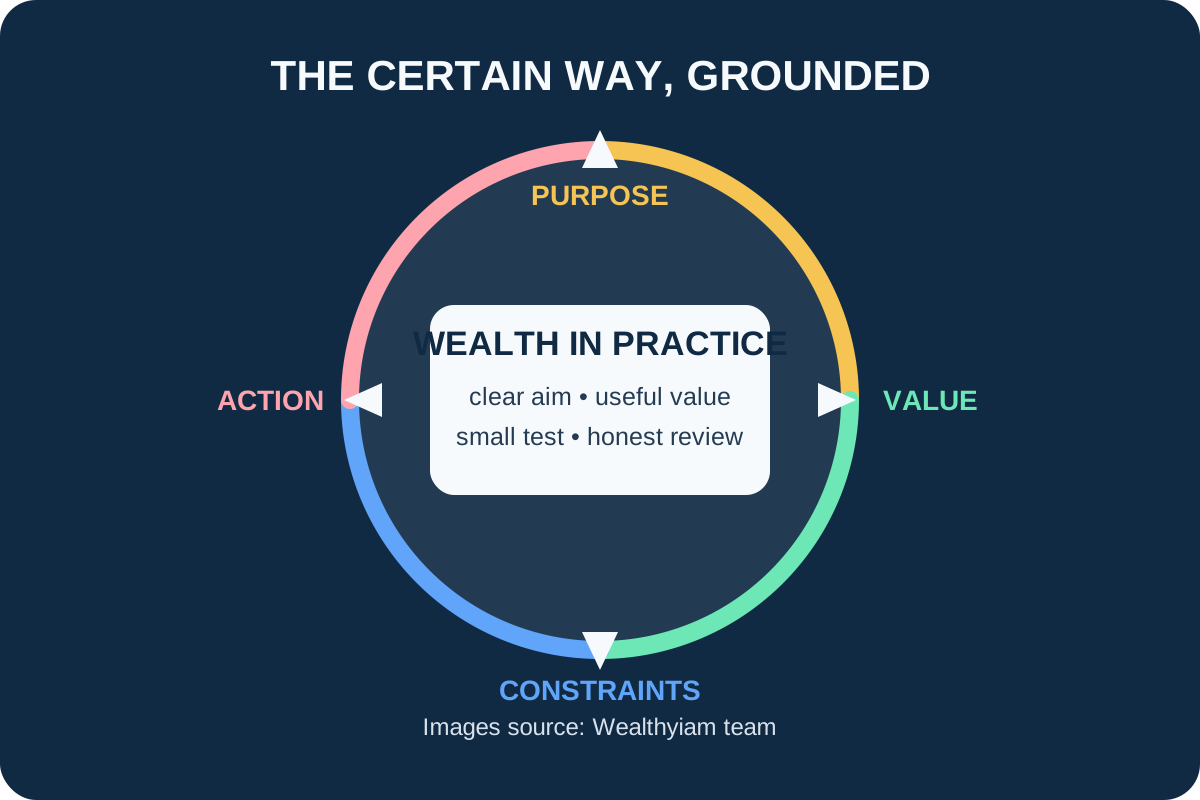
A practical seven-step wealth application
- Define the target. Describe what wealth means to you: an emergency reserve, freedom from high-interest debt, growing investments, business ownership, or more control over your time.
- Pick one keystone habit. Select the behavior with the greatest likely effect, such as a weekly money review or a daily skill-building block.
- Make it tiny. Start with a version that takes ten to fifteen minutes. The first goal is continuity, not intensity.
- Attach it to a cue. Link the action to an existing event such as morning coffee, payday, or closing your laptop.
- Track the behavior. Use a calendar or simple spreadsheet. Measure completion before measuring dramatic results.
- Increase value gradually. After four consistent weeks, improve the quality or size of the action: save a little more, study a harder topic, or contact better prospects.
- Review monthly. Keep what works, remove friction, and restart quickly after interruptions. Let the system evolve without losing the core discipline.
Applying the idea to earning and business
The slight edge is especially useful for income because skills and trust compound. A professional who learns a little each day can become unusually capable in a niche. A business owner who follows up reliably, documents processes, and improves the customer experience can create a reputation that brings repeat business. A creator who publishes useful work consistently builds a library that can keep attracting attention.
Focus on actions that create value for someone else. Ask which problem you can solve better, faster, or more reliably. Then build a repeatable practice around learning the problem, serving the customer, and reviewing the results. Wealth grows more sustainably when it is connected to genuine usefulness rather than appearance.
What to be careful about
This book is motivational and philosophical, not a complete investing or personal-finance manual. Small actions matter, but they do not erase structural issues such as inadequate income, high-interest debt, emergencies, taxes, or investment risk. Use the philosophy alongside sound financial information and professional advice when appropriate. Compounding is powerful, but it needs time, a reasonable starting point, and decisions that protect against ruin.
Bottom line
The Slight Edge offers a practical antidote to all-or-nothing thinking. You do not need to transform your entire life this week. You need a small, valuable action that you can repeat, a way to measure it, and the patience to let it accumulate. Make saving automatic, keep learning, create useful work, and return quickly when you slip. Those quiet choices may be the most dependable path toward a wealthier life.
Sources and credits
This original article interprets the book’s themes for educational purposes and is not affiliated with the authors, publisher, Books-A-Million, or Amazon.
- The Slight Edge: Turning Simple Disciplines into Massive Success and Happiness — Amazon.com product page, matched ISBN 9781626340466
- The Slight Edge official website
- Books-A-Million bibliographic and cover record for the matched edition
- Cover credit: Open Library image for the matched 2013 hardcover edition, ISBN 9781626340466.