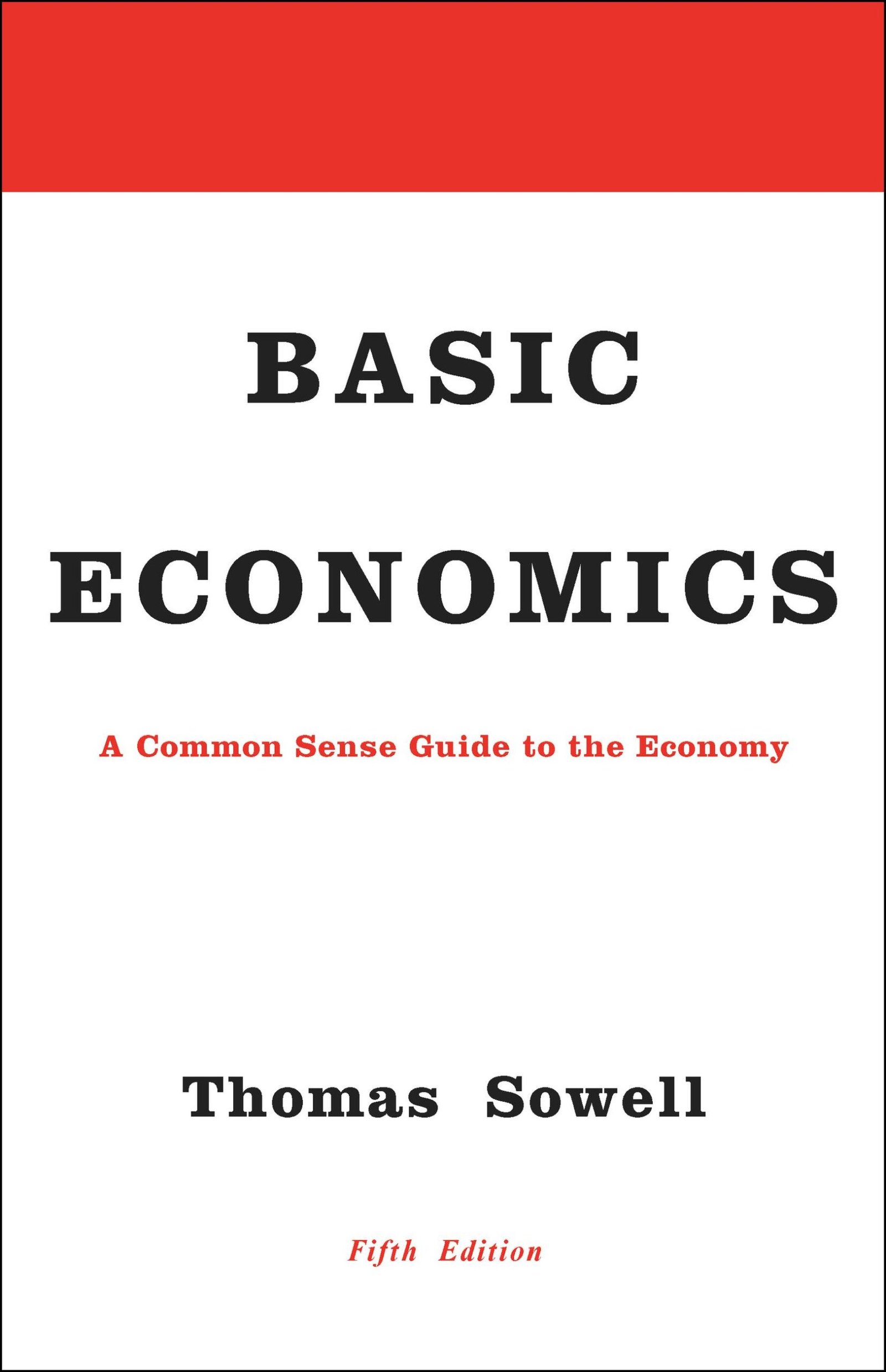
Basic Economics by Thomas Sowell is a plain-language guide to the choices behind prices, jobs, wages, business decisions, and government policies. Its central lesson is simple: resources are limited, so every choice has a cost.
What the book is about
Sowell explains how prices coordinate millions of separate decisions. A price is more than a number: it carries information about how much of something is available and how strongly people want it. The book covers markets and economic systems, profits and losses, productivity and pay, investment, money and banking, government finance, international trade, and differences in wealth between countries. [1]
Main ideas
- Scarcity creates choices. There is not enough time, money, land, labor, or materials to satisfy every want.
- Prices share information. A rising price can signal that something is scarce or in high demand. Buyers may use less while sellers try to provide more.
- Incentives change behavior. An incentive is a reward or penalty that pushes people toward a choice.
- Good intentions are not enough. A policy should be judged by what it causes people to do, not only by its goal.
- Productivity supports pay. Productivity means how much useful output a worker creates in a given time.
- Trade can help both sides. People and countries can benefit by specializing and exchanging.
Key terms in simple language
Opportunity cost
The next-best thing you give up. If you spend an evening working, the cost may be rest, family time, or study.
Supply and demand
Supply is how much sellers offer. Demand is how much buyers want. Many buyers chasing a small supply usually push prices up.
Price ceiling
A legal maximum price. If set below the balancing price, it can cause a shortage because more people want the product while fewer sellers provide it.
Price floor
A legal minimum price. If set above the balancing price, it can create a surplus because sellers offer more than buyers want.
Capital
A tool used to produce things, such as a machine, building, computer system, or training. It is not only cash.
What it gets right
The book’s strongest feature is its focus on cause and effect. A policy can sound kind yet change incentives, prices, production, and access in ways nobody intended. This habit of asking “what happens next?” is useful for families, investors, businesses, and citizens.
It also makes economics practical. A family deciding whether to borrow, a company deciding whether to expand, and an investor deciding where to put savings all face trade-offs.
What to be careful about
Sowell has clear views about markets and government, and many examples support those views. Readers should compare his arguments with other economists and current evidence. Real economies mix private decisions, public services, laws, and institutions. Markets can fail when pollution harms outsiders, information is missing, or competition is weak.
Historical examples also need updating. Housing, technology, labor markets, climate risks, and financial systems change. The principles are useful, but no single example is a complete answer to every modern problem.
Bottom line
Basic Economics is a long but accessible introduction to the forces behind prices, work, trade, investment, and public policy. Its most useful habit is to look past slogans and ask: what are the limits, what choices will people make, and what results will follow?