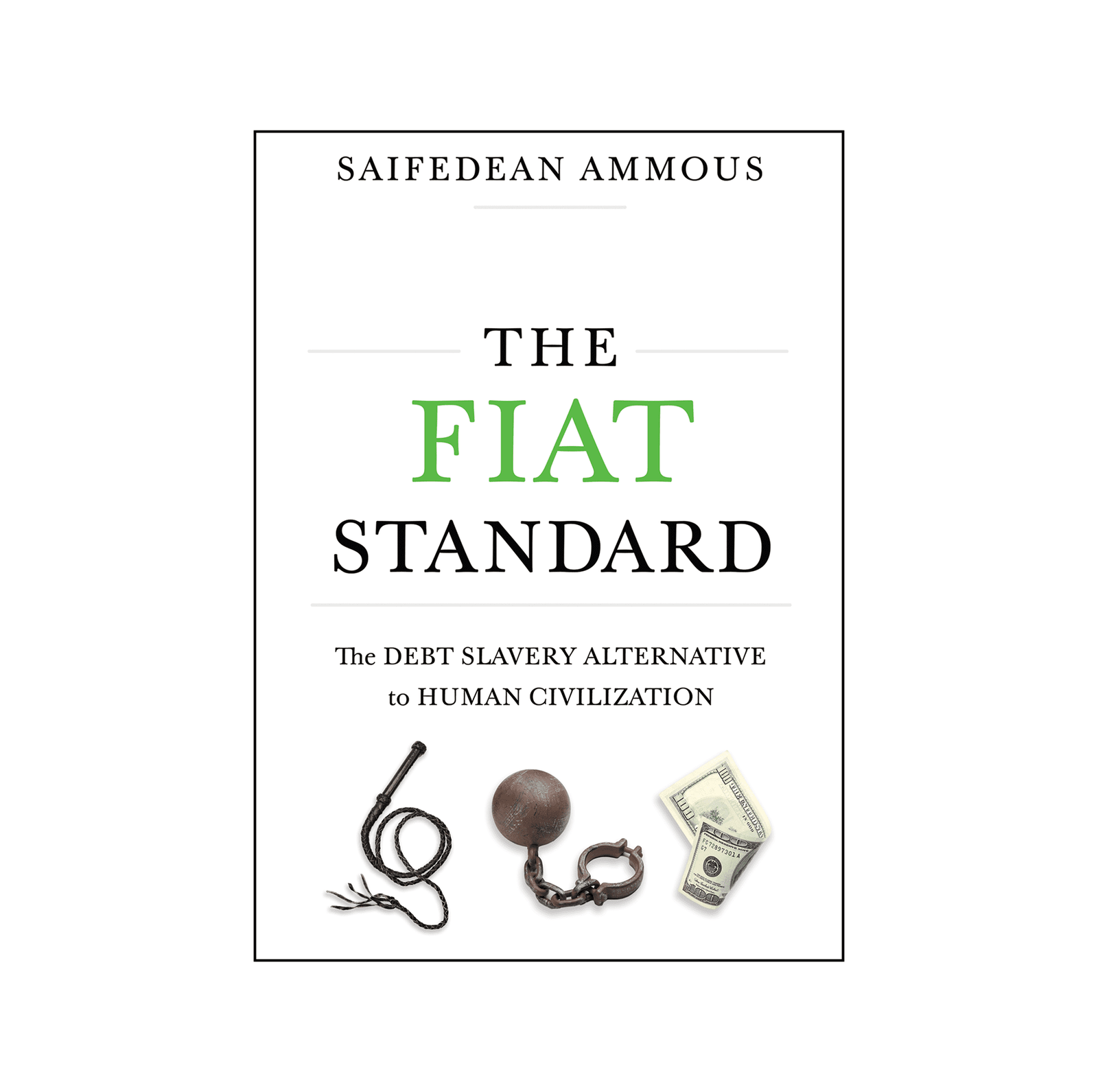
The Fiat Standard by Saifedean Ammous is a forceful book about how modern government money works. It compares today’s system of national currencies with gold and Bitcoin. The author argues that money created through government-backed credit can grow too quickly, encourage borrowing, and distort decisions across the economy.
This is a book with a clear point of view. Ammous strongly favors what he calls “sound money”—money that is difficult to create in unlimited amounts—and presents Bitcoin as a possible alternative. It is useful to understand that viewpoint, while also checking its claims against mainstream economics and real-world evidence.
What the book is about
The book starts with a basic question: What is money? Ammous treats money as a tool people use to trade, save, and compare prices. He then describes fiat money, such as dollars, euros, and yen, as money whose value does not come from being exchangeable for a fixed amount of gold or another physical thing. Its use is supported by law, institutions, taxes, banks, and public trust.
According to the publisher’s description, the book examines the move away from the gold standard, the workings of government-backed money, the growth of debt, and the possible role of Bitcoin. Ammous uses an engineering analogy: just as a machine has strengths and weaknesses, a monetary system has design choices and trade-offs.
Main ideas
Money is a shared measuring tool
Imagine every shop used a different ruler. Buying anything would be confusing. Money works partly like a common ruler for prices. If the ruler changes size quickly, it becomes harder to plan. Ammous argues that when the supply of money and credit expands rapidly, people may struggle to tell whether a price rose because an item became scarcer or because money became less valuable.
Fiat money is linked to credit
A central idea is that modern money is closely connected to lending. When a bank makes a loan, it normally creates a deposit in the borrower’s account. The borrower can spend that deposit, while owing the bank principal and interest. This is not the same as a government simply printing notes, but it does mean the money supply can expand as credit expands.
Credit means money lent with a promise to repay later. Credit can help a family buy a home or a business build a factory. But too much borrowing can make the system fragile. If borrowers cannot repay, banks and investors can face losses, and spending can fall.
“Fiat mining” is the book’s analogy
Bitcoin is created through a process called mining, in which computers compete to record transactions and receive new coins. Ammous uses “fiat mining” as a comparison for the way banks and government-connected institutions create new credit and money. His point is that Bitcoin has a programmed limit on new supply, while fiat systems can change their rules and expand when authorities or banks decide to do so.
This analogy is the author’s framework, not a standard term used by every economist. It helps explain his argument, but readers should not mistake a metaphor for a universally accepted definition.
Inflation changes incentives
Inflation is a broad rise in prices over time. A little inflation can occur for many reasons, including strong demand, supply problems, or changing costs. Ammous focuses on the danger that continuing inflation can make saving in cash less attractive and can push people toward borrowing, speculation, or spending quickly.
Inflation is not identical to every price increase, and it does not affect every person in the same way. Wages, debts, pensions, and asset prices can all change at different speeds. The book’s warning is that money losing buying power makes long-term planning harder, especially for people who cannot easily protect their savings.
Bitcoin is presented as scarce digital money
Bitcoin is a digital payment network with a fixed maximum number of coins in its design. It can be sent across borders without using one central bank to approve every transaction. Ammous argues that this makes Bitcoin attractive as money that is scarce and easy to move across space.
That does not make Bitcoin risk-free. Its market price can move sharply, transactions can be complicated, private keys can be lost, and governments can regulate exchanges and payments. Scarcity alone does not guarantee stable value or everyday usefulness.
Key terms in simple language
- Fiat money: money used because laws, institutions, and public trust support it, rather than because it can be exchanged for a fixed amount of gold.
- Central bank: a public institution that helps manage a country’s money system and interest rates and often supports the banking system.
- Interest rate: the price paid for borrowing money, usually shown as a percentage.
- Debt: money borrowed now that must be repaid later.
- Sound money: a term used by the author for money that is difficult to create in large, unexpected amounts.
- Salability: how easily something can be exchanged for something else. The author distinguishes salability across time, space, and scale.
- Centralization: control concentrated in one institution or a small group instead of spread across many independent participants.
Step by step: how to use the book’s ideas
- Separate cash from wealth. Cash is a payment tool; wealth also includes productive businesses, skills, property, and other assets.
- Measure your buying power. Do not look only at the number in your account. Ask what that money can buy today compared with last year.
- Understand every loan. Write down the interest rate, total repayment, fees, and what could happen if your income falls.
- Spread risk. Do not put all savings in one currency, company, property, or cryptocurrency. Diversification means using several baskets instead of one.
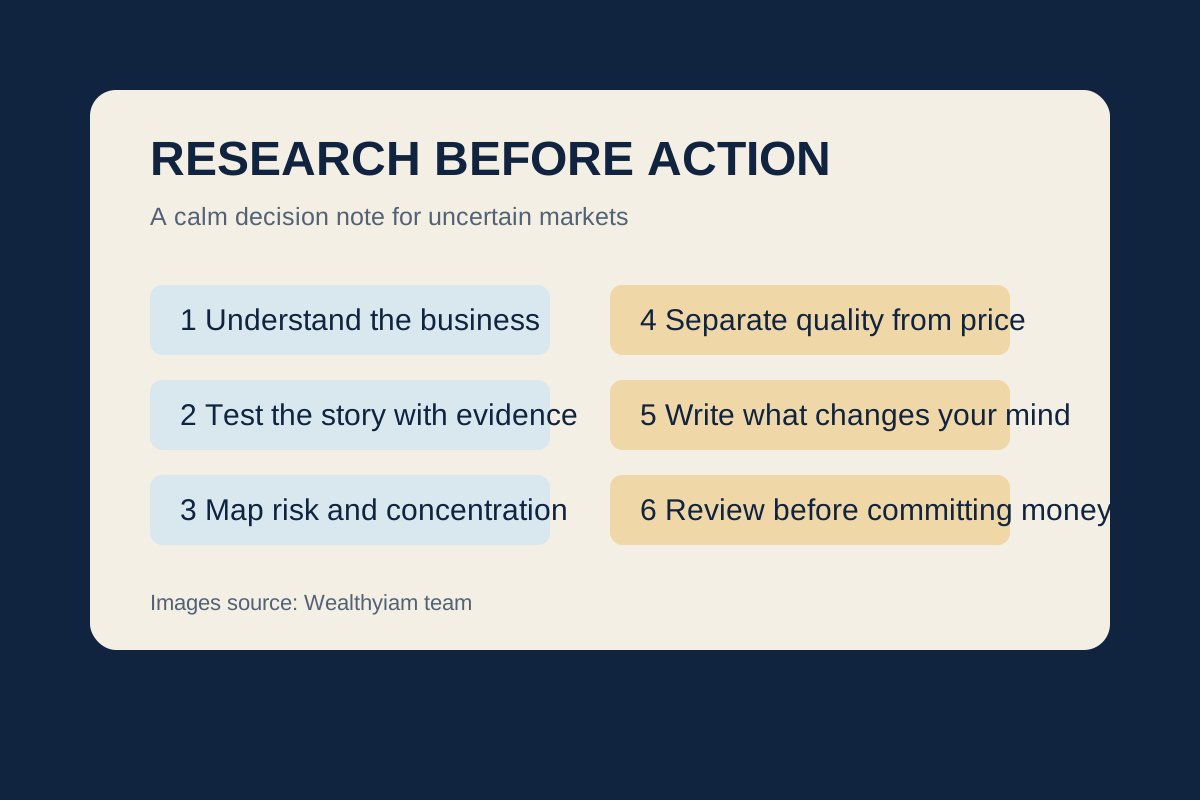
- Check the source before acting. A book can offer a useful lens, but money decisions should also use current data and advice suited to your country and situation.
- Keep an emergency reserve. Money needed for rent, food, or near-term bills should not depend on a volatile investment rising at the right time.
What it gets right
The book makes an important point about incentives. When borrowing is cheap or credit is plentiful, people and companies may take more risk. When money loses buying power, savers may feel pressure to seek investments they do not fully understand. Looking at these behavior changes is useful for anyone managing a household budget.
It also explains why monetary systems matter beyond the bank account. Interest rates, credit, and payment rules influence housing, business investment, government budgets, and international trade. The book encourages readers to ask who gets access to new credit first and who bears the later costs.
What to be careful about
Ammous writes from an Austrian-school and Bitcoin-focused perspective. He is skeptical of central banking and many mainstream economic policies. Other economists argue that flexible money and central banks can help economies respond to bank runs, recessions, wars, and financial panics. They also point out that gold and Bitcoin have their own limits: supply cannot quickly respond to emergencies, prices can be unstable, and payment systems need security and governance.
The book sometimes presents complicated history as a clean story with one main cause. Real inflation and financial crises usually have several causes, including supply shocks, wars, fiscal policy, bank failures, expectations, and changes in demand. Readers should treat the book as a strong argument to examine—not as the final word.
Bottom line
The Fiat Standard is a detailed critique of government-backed money and debt, paired with a case for Bitcoin as a scarce digital alternative. Its most useful lesson is to understand the rules behind money: how it is created, who can access it, what borrowing encourages, and how inflation affects choices. Read it alongside sources that disagree, and use its questions to become a more careful saver and investor—not as a promise that any single asset will make you rich.