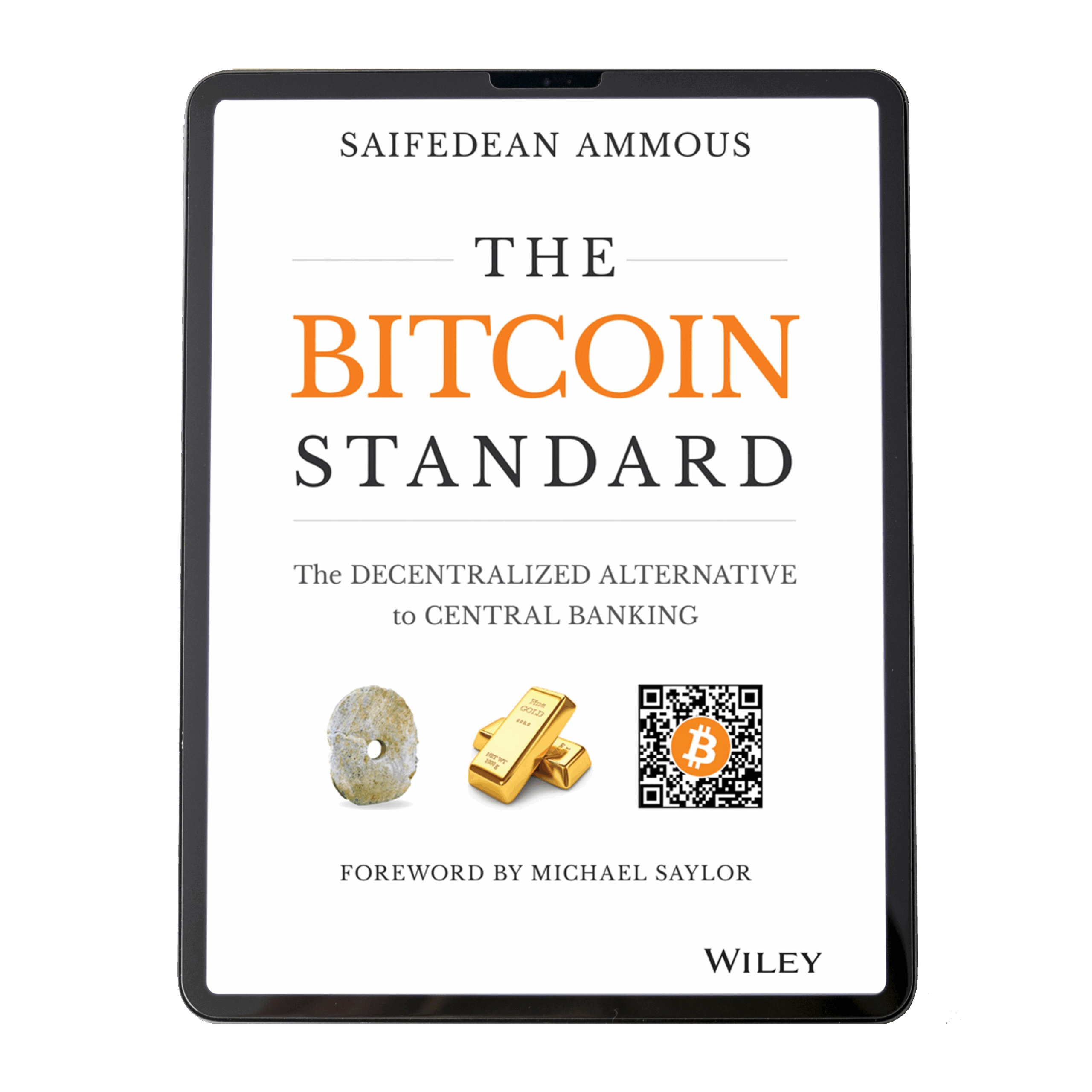
The Bitcoin Standard by Saifedean Ammous is a book about money and why people choose some things to use as money instead of others. It tells the story of money from shells and metals to government currencies, then explains why the author believes Bitcoin could become a new kind of money.
The book is written from a strong “sound money” point of view. That means Ammous prefers money that is difficult to create quickly and is not easily changed by one government or institution. The book is useful because it makes readers ask basic questions: What gives money value? Why do prices rise? What makes one form of money more durable than another?
What the book is about
Ammous begins with monetary history. He discusses early forms of money, precious metals, the gold standard, and modern fiat money. Fiat money is currency that has value mainly because people accept it for payment and governments recognize it, rather than because each note can be exchanged for a fixed amount of gold or another physical asset.
He then presents Bitcoin as a digital monetary network. Bitcoin is not just a coin in an app. It is software run by many computers around the world. These computers keep a shared record of transactions, called a blockchain. No single bank owns the whole record, so changing it is difficult.
Main ideas
- Money must be saleable. In the book, “saleability” means how easily something can be exchanged. Good money should be easy to carry, divide, check, and save for later.
- Scarcity matters. If new units can be created very easily, the existing units may buy less over time. Bitcoin’s software limits its eventual supply to 21 million coins, although a fixed supply does not guarantee a fixed price.
- Time matters in saving. The book uses time preference to describe how much people prefer rewards today over rewards later. When money holds value better, people may find it easier to save for the future.
- Trust can be replaced by rules. Traditional money depends on institutions such as banks and central banks. Bitcoin tries to use public rules, cryptography, and economic incentives so users do not need to trust one central operator.
- Settlement is important. Settlement is the final recording of who owns what. Bitcoin can move value across borders without asking a traditional bank to approve every transfer.
Simple explanations of key terms
Sound money
Sound money is money whose supply and rules are hard to change unexpectedly. Supporters say this makes it safer to save. Critics point out that stable money is only one part of a healthy economy; jobs, productivity, banking, and public policy matter too.
Inflation
Inflation is a broad rise in prices. When prices rise, the same amount of money buys fewer goods and services. Inflation can come from several causes, including supply problems, strong demand, and changes in money and credit.
Proof of work
Proof of work is Bitcoin’s security method. Miners use computers and electricity to compete at solving a difficult puzzle. The winner gets to add a new block of transactions and may receive a reward. This makes attacking the network costly, but it also means Bitcoin uses significant energy.
Self-custody
Self-custody means holding the secret key that controls your Bitcoin yourself. It can reduce dependence on an exchange, but it also creates responsibility: if the key is lost or stolen, recovery may be impossible.
What it gets right
The book’s strongest feature is its focus on first principles. Instead of beginning with price charts, it asks what money is supposed to do. Money is commonly described as a way to pay, a measuring stick for prices, and a tool for saving value. Looking at all three jobs helps readers understand why different forms of money can succeed in one role and struggle in another.
It also correctly warns that scarcity alone does not create a good investment. A rare object can still be unwanted. Bitcoin needs users, security, liquidity, reliable software, and functioning markets. Its network effect — the way a network becomes more useful as more people use it — is central to the book’s argument.
Finally, the book gives a clear explanation of why Bitcoin is different from a company’s digital points or a normal bank balance. Bitcoin is designed to operate without one central issuer, and its public transaction history lets anyone verify the network’s rules.
What to be careful about
Ammous makes strong claims about central banking, fiat money, and the gold standard. Those claims represent a particular economic school of thought, not a universal agreement. Other economists argue that flexible money and central banks can help economies respond to recessions, banking crises, and changing demand.
Bitcoin also has real risks. Its market price can move sharply. A wallet can be lost, an exchange can fail, scams are common, and regulation can change. Proof of work has an environmental cost, although the exact impact depends on the energy sources miners use and what alternative uses that energy has. Bitcoin transactions are also not automatically private: the blockchain is public, and activity can sometimes be linked to people.
Most importantly, the book’s case for Bitcoin is not a promise that its price will rise. Readers should separate learning about a technology from deciding whether to buy it. Never invest money needed for rent, emergencies, or essential bills.
Steps to apply the book’s ideas
- Learn what money does. Ask whether a currency is easy to spend, easy to measure with, and useful for saving.
- Track purchasing power. Notice how your regular costs change over time instead of looking only at the number printed on your bank balance.
- Build a safety base. Keep an emergency fund and control expensive debt before taking major investment risk.
- Study custody and security. If you explore Bitcoin, learn the difference between an exchange account, a wallet, a private key, and a recovery phrase.
- Use a position size you can survive. A volatile asset should never be large enough to threaten your basic financial plan.
- Compare viewpoints. Read both supporters and critics before forming a conclusion about monetary policy or Bitcoin.
Bottom line
The Bitcoin Standard is best read as an argument about the nature of money, not as a guaranteed investment guide. It offers a memorable history of monetary systems and a strong case for thinking about scarcity, incentives, and personal control. It is also one-sided in places, so readers should test its conclusions against evidence and opposing views.
The practical lesson is simple: understand what you own, know who controls it, protect your savings, and do not confuse a powerful idea with a risk-free asset.