The Little Book of Common Sense Investing by John C. Bogle makes a case for a calm, low-cost way to invest. Instead of guessing which stocks will win next, Bogle says most people should own a broad basket of companies, keep fees small, and stay invested for a long time.

What the book is about
Bogle founded Vanguard and helped make index funds widely available to everyday investors. An index fund is a fund that follows a list of investments, such as a broad stock-market index. It does not need a manager to keep guessing which company will be best.
The central idea is simple: the market’s return belongs to investors as a group, but costs are taken away from that return. If you own the market cheaply and avoid unnecessary activity, you have a better chance of receiving your fair share.
Main ideas
- Own many businesses: a broad index fund can give you small pieces of hundreds or thousands of companies.
- Keep costs low: fund fees, trading costs, and taxes reduce what remains in your account.
- Stay the course: selling in fear after a fall can turn a temporary decline into a permanent loss.
- Invest for the long term: history suggests patient ownership can be rewarded, but history is not a promise.
- Choose a sensible mix: stocks can grow but move sharply; bonds and cash are usually steadier.
Key terms in plain language
Index fund
An index fund is like a basket that copies a market list. A total-market fund may hold small pieces of many companies, so you are not betting everything on one company.
Expense ratio
This is the small percentage a fund charges each year for running the fund. A 0.10% expense ratio is 10 cents per year for every $100 invested.
Active investing
Active investing means trying to choose investments that will beat the market. Some investors succeed, but choosing winners is difficult, and active funds often cost more.
Compounding
Compounding means returns can earn returns of their own. If gains remain invested, money can grow on an increasingly larger base. Fees can compound against you too.
What Bogle gets right
The book puts the investor’s real result ahead of exciting predictions. A fund that earns the market return but charges very little can beat a more expensive fund that looks clever on paper. Bogle also treats behavior as part of investing: a plan is not useful if you abandon it during the first scary market drop.
What to be careful about
“Buy the whole market” does not mean “there is no risk.” A stock index can fall a great deal, and money needed soon usually should not face large stock-market swings. Check what a fund owns, its fees, and its tax treatment. You still need an emergency fund, insurance, debt management, and a stock-and-bond mix suited to your goal.
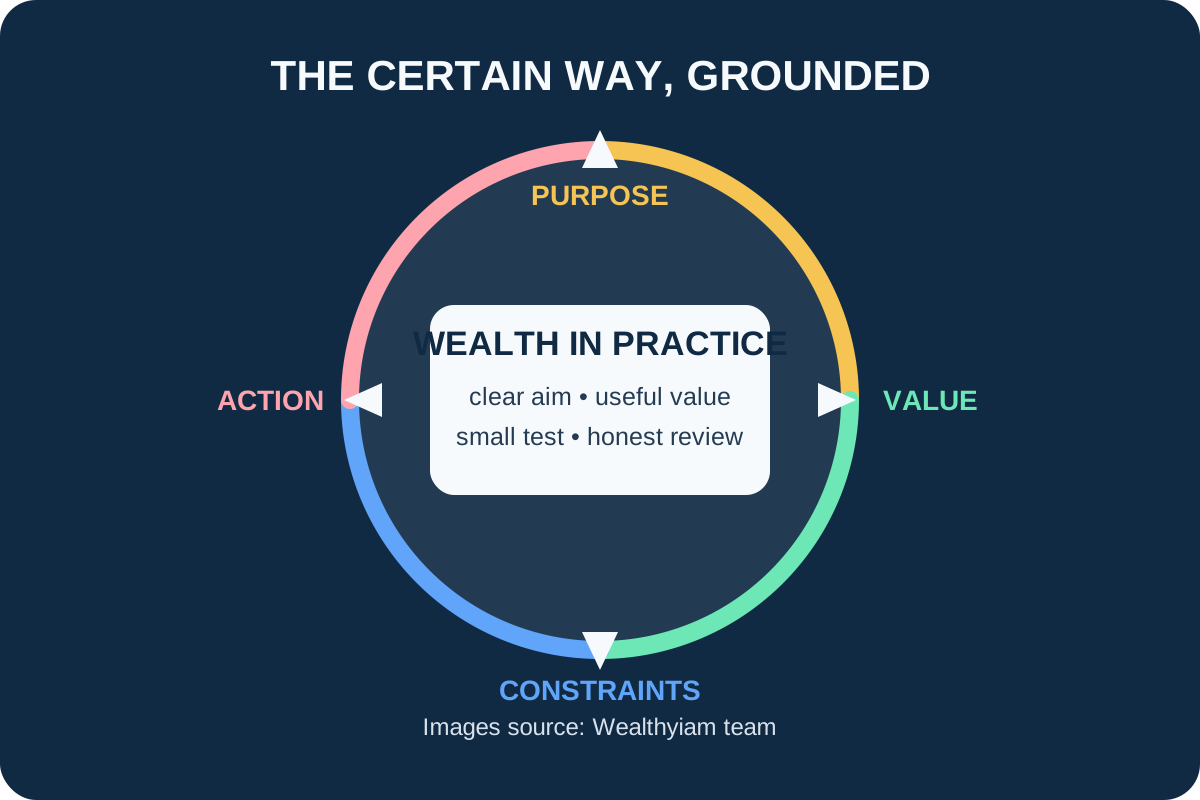
A simple way to use the lesson
- Build an emergency fund.
- Pick a broad, diversified fund or small group of funds.
- Compare expense ratios and other charges.
- Invest regularly instead of waiting for a perfect day.
- Review your mix occasionally, then ignore daily noise.
Bottom line
Successful investing does not need to be complicated. Own a broad slice of productive businesses, pay as little as practical, control your emotions, and give compounding time to work. That is not a guarantee of profit, but it is a clear framework for avoiding common mistakes.
Sources
Related reading: For a fuller beginner roadmap, see Investing Basics.