Think and Grow Rich by Napoleon Hill is a famous 1937 book about turning a clear goal into organized action. Although its title sounds like a promise of instant riches, the useful part is more practical: decide what you want, make a plan, learn useful skills, work with other people, and keep going when progress is slow.

What the book is about
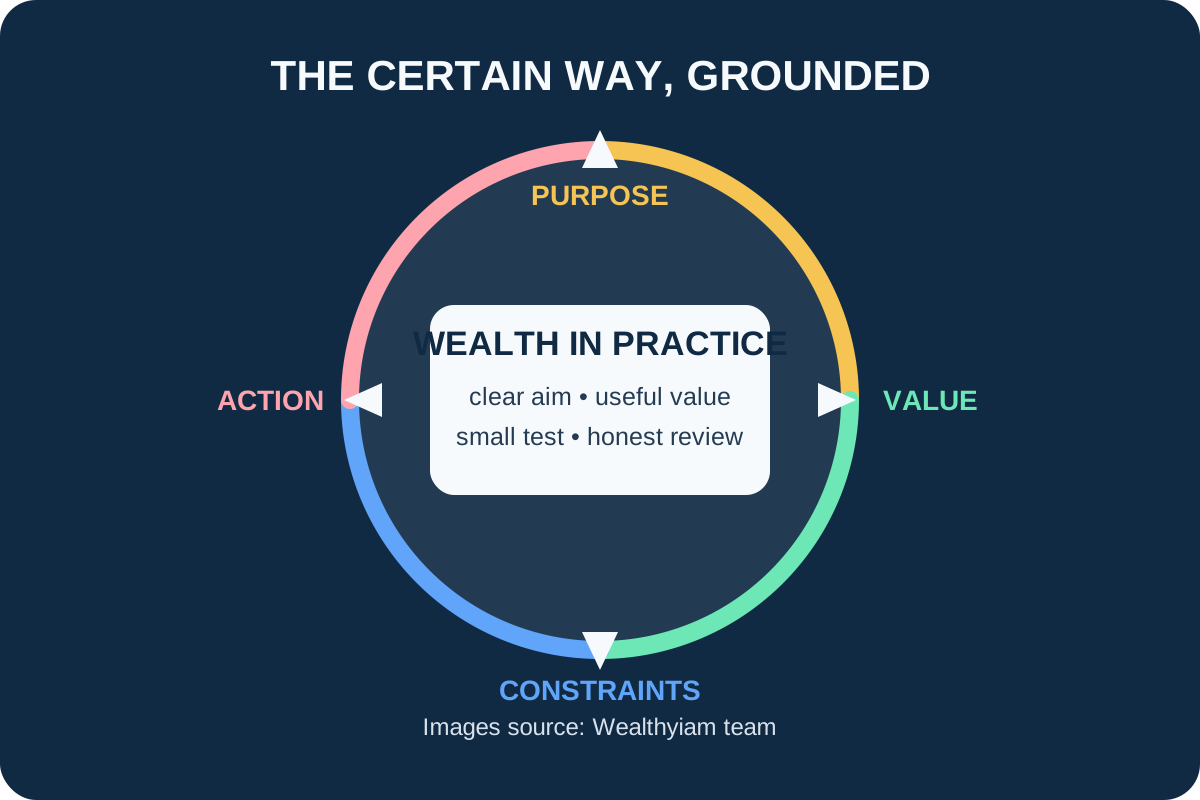
Hill presents a philosophy of achievement built around a small set of repeated habits. He says that a strong desire gives a person direction, belief gives the effort energy, and a written plan turns a wish into something that can be tested.
The book is not a personal budget or an investing manual. It is closer to a guide about goals, work, business, and the mental habits that can support wealth building. Hill says he studied successful people and drew lessons from them. Readers should treat some of those historical claims carefully, but the action-oriented framework can still be useful.
Main ideas
- Have a definite desire. A vague wish such as “I want more money” is hard to act on. A specific target gives you something to measure.
- Write a plan. A plan is a list of steps, deadlines, and resources. It does not need to be perfect; it needs to be improved as you learn.
- Gain specialized knowledge. Useful knowledge is knowledge you can apply to solve a real problem or create value for someone else.
- Decide promptly. Endless waiting can protect you from mistakes, but it can also stop you from learning. Good decisions can be reviewed and changed.
- Persist. Persistence means continuing intelligently, not repeating the same bad move forever.
- Build a strong team. Hill calls this a “Master Mind”: people who share knowledge, challenge your thinking, and help a project move forward.
Simple explanations of key terms
Desire
In the book, desire means a clear goal that matters enough to motivate action. It is not magic. It is a way to choose what deserves your time and attention.
Autosuggestion
Autosuggestion means repeating an idea to yourself so it stays in your attention. Today, this can be understood as a reminder or written statement of your goal. Repetition may improve focus, but it cannot replace skill, effort, or good decisions.
Specialized knowledge
This is practical know-how in a particular area, such as accounting, coding, sales, construction, or investing. Knowing facts is helpful; knowing how to use them is more valuable.
Compound growth
Compound growth happens when gains produce more gains. For example, money invested for the long term can earn returns, and those returns can remain invested. Compounding works over time, but returns are never guaranteed.
What it gets right
Hill is right that wealth usually starts with behavior before it shows up in an account. Clear goals make trade-offs easier. A written plan turns motivation into tasks. Learning, cooperation, and persistence are important in both entrepreneurship and a career.
The book also understands that opportunity often appears after preparation. Someone who has useful skills, savings, and relationships may be better able to notice and act on a good opportunity than someone who only hopes for one.
What to be careful about
Positive thinking is not a guarantee of wealth. Income, health, family circumstances, education, luck, laws, and the economy all affect results. A person can work hard and still face setbacks. It is unfair to suggest that every financial problem comes from the wrong attitude.
Some of Hill’s stories and claims about interviews with wealthy figures have been questioned by later researchers. The book also gives less attention than a modern reader may need to emergency savings, expensive debt, diversification, fees, and risk. Use its goal-setting ideas alongside sound financial basics, not instead of them.
A practical way to use the ideas
- Choose one measurable financial goal.
- Write why it matters and when you want to reach it.
- Break it into weekly actions, such as learning a skill, applying for better work, reducing costly debt, or investing a regular amount in a diversified fund.
- Review the plan each month and change what is not working.
- Keep a cash buffer so one surprise expense does not force you to sell investments or borrow at a high rate.
Bottom line
Think and Grow Rich is best read as an old book about focused action, not as a scientific formula for becoming rich. Its strongest lessons are simple: choose a clear direction, make a real plan, develop useful knowledge, work with capable people, and persist while staying willing to learn. Those habits can support wealth, but they work together with careful saving, sensible investing, and a realistic understanding of risk.
Sources
- Wikipedia, “Think and Grow Rich”
- Internet Archive, original 1937 edition record
- Audible, book overview and summary
Related reading: Personal Finance Fundamentals is a useful next step for beginners who want to build a simple money system.