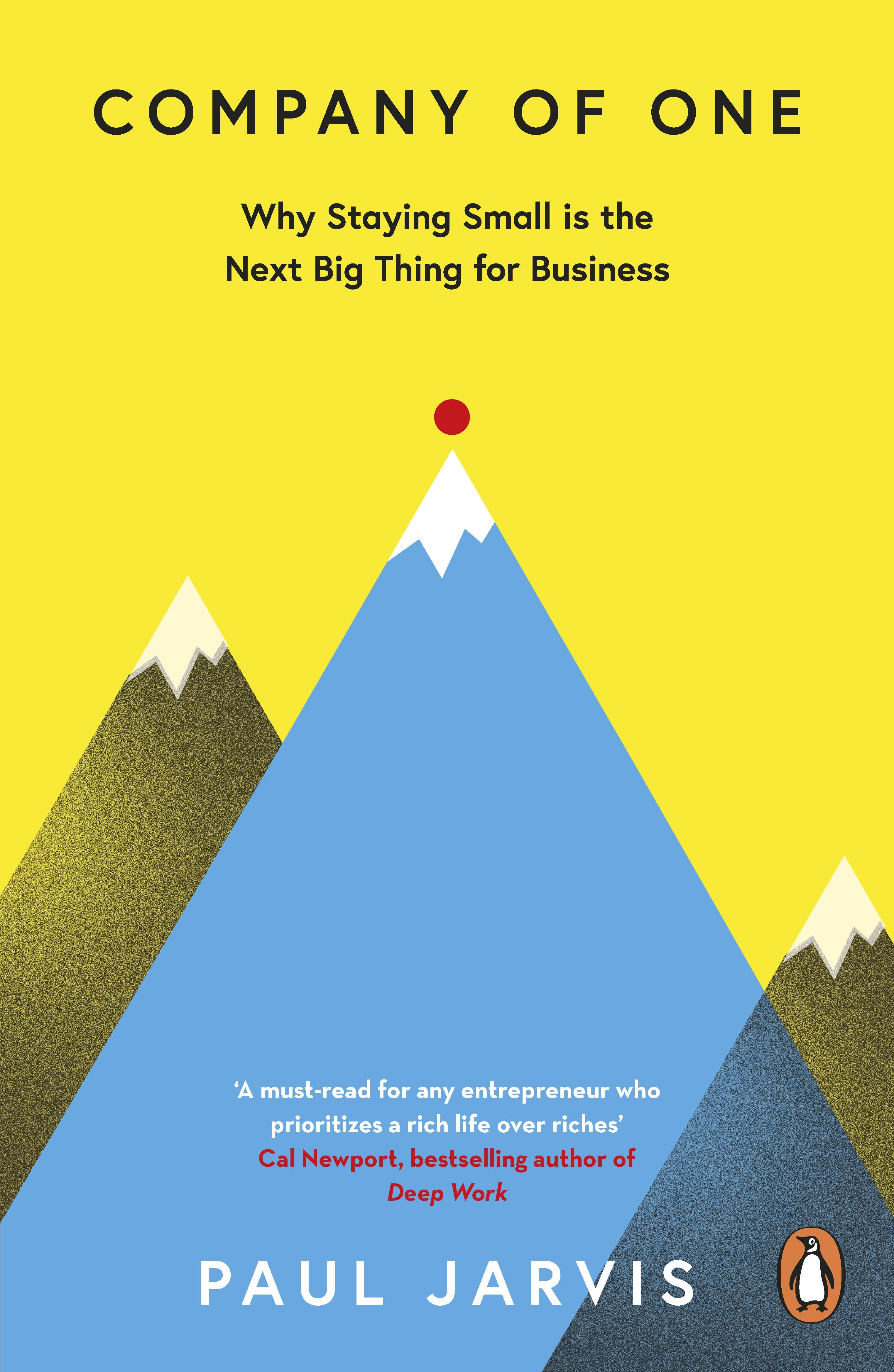
Many people treat business growth as an unquestionable good. More employees, more customers, more revenue, and more locations are supposed to mean more success. But growth can also bring heavier costs, complicated decisions, and less control over the life the business was meant to support. In Company of One: Why Staying Small Is the Next Big Thing for Business, entrepreneur and author Paul Jarvis asks a useful question: what if a business became better, more profitable, and more independent without becoming much bigger?
That question matters for wealth. Wealth is not only a large top-line number. It can also mean dependable cash flow, ownership of your time, low financial stress, and the ability to choose your work. Jarvis presents a deliberate small-business model for people who want sustainable income rather than expansion for its own sake. The ideas can help a freelancer, consultant, creator, shop owner, or employee planning a side business make growth serve life instead of consuming it.
What the book is about
Company of One challenges the default assumption that every healthy business should scale as quickly as possible. Staying small is not the same as being passive or unambitious. It is a choice to define “enough,” build a strong base, and improve the quality of the business before adding complexity. A company of one can still be highly profitable; its success is measured by resilience and fit, not by headcount alone.
Jarvis focuses on practical foundations: knowing the revenue you actually need, creating recurring or repeatable value, maintaining close customer relationships, and using technology carefully. A smaller operation may have fewer layers between the owner and the customer, which can make it faster to learn and easier to adapt. The central principle is intentionality: choose the size and pace that support your goals rather than copying a venture-funded company’s ambitions.
Lesson 1: Define enough before chasing more
Write a clear personal and business target. Estimate the monthly amount needed for operating costs, taxes, savings, investing, and your desired lifestyle. Then add a sensible buffer. This number is not a ceiling on your potential; it is a decision filter. When an opportunity promises more revenue but also adds disproportionate risk or time, compare it with the life and financial target you actually want.
Build a business around value, not vanity
Revenue, followers, website visits, and team size can look impressive while hiding weak economics. The better test is whether customers receive a result they value and whether the business keeps enough of the proceeds after costs. A small business becomes more financially useful when its offer is specific, its delivery is dependable, and its pricing reflects the value and effort involved.
Start with a narrow customer problem. Talk to real customers and ask what they are trying to accomplish, what they have already tried, and what a successful outcome is worth to them. A focused offer is easier to explain and improve than a menu of unrelated services. It also makes marketing more efficient because the message is aimed at a recognizable need.
Lesson 2: Make the offer easy to understand
Describe your offer in one sentence using this pattern: “I help [specific customer] achieve [specific result] without [important frustration].” Test the sentence in five real conversations. Record the questions people ask. Use those questions to improve the offer, the onboarding process, and the proof that supports your pricing.
Use customer relationships as an advantage
Small companies can compete through attention and trust rather than trying to outspend larger rivals. A founder who understands a customer’s context can often notice problems earlier, personalize service, and make improvements quickly. That closeness is not merely a pleasant feature; it can reduce churn, create referrals, and reveal opportunities for products or services that customers will actually use.
Customer focus does not mean saying yes to every request. Keep a record of the work that creates the best results and the relationships that are both valuable and healthy. If a client repeatedly demands custom work that destroys your margin, the relationship may not be an asset. Choose customers who value the promise you can consistently keep.
Lesson 3: Measure contribution, not just sales
For each major customer or product, estimate revenue, direct costs, hours required, repeat potential, and stress or operational complexity. Review the results quarterly. Invest more in the relationships that create durable contribution, and redesign or politely exit work that consumes resources without building profit, reputation, or learning.
Grow through systems and restraint
Staying small does not mean relying forever on memory and heroic effort. Document recurring tasks, create checklists, automate routine administration, and make delivery consistent. Systems protect quality and make time available for selling, learning, serving customers, or resting. They also make the business less dependent on one frantic day of effort.
At the same time, every new tool, employee, channel, or product adds a cost of coordination. Add complexity only when a real constraint justifies it. Before hiring, ask whether the problem is persistent, whether the work can be simplified, and whether the additional capacity will produce enough reliable contribution. Before launching a new offer, test demand with a small paid pilot.
Lesson 4: Run small experiments
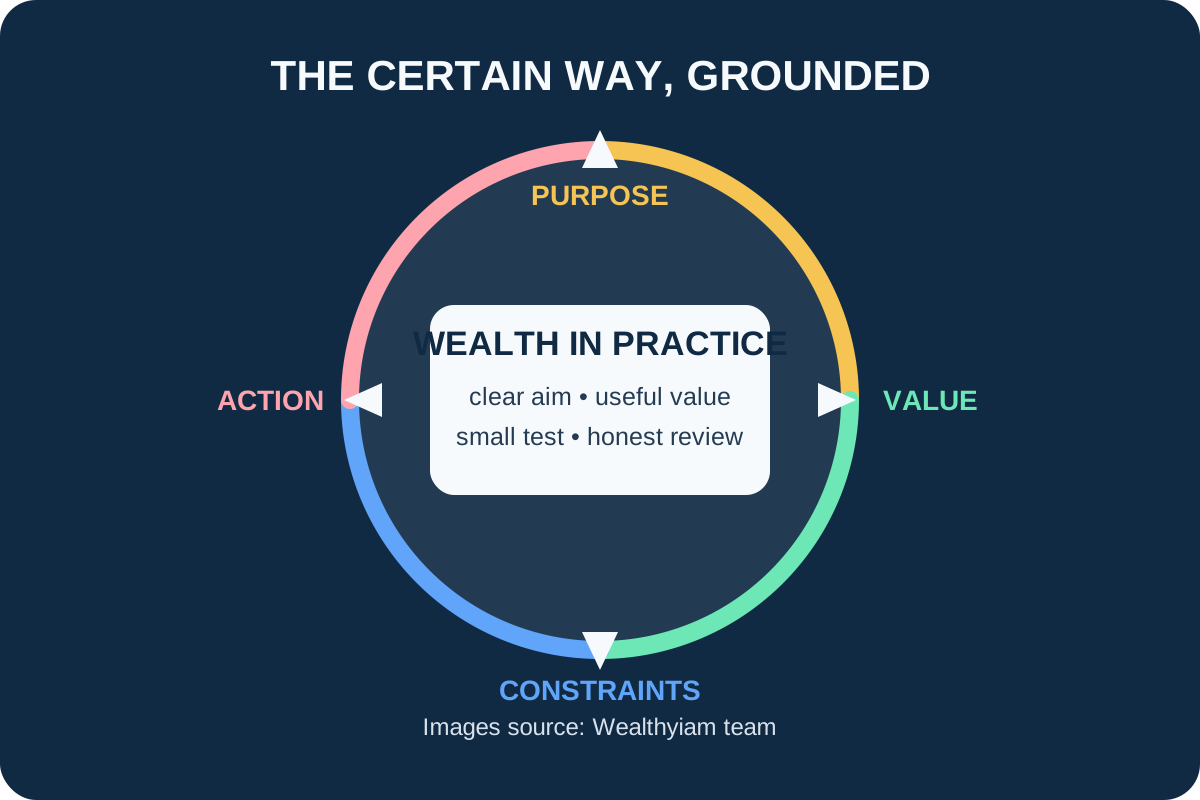
Choose one improvement and define a two-week test: a new price, a clearer service package, a customer follow-up sequence, or an automated admin task. Set a success measure before starting. Keep the change if it improves customer outcomes or profit without creating unacceptable risk; otherwise, learn from it and stop.
Step by step: apply the company-of-one model
- Set your personal definition of wealth. Include time, health, family, security, and autonomy alongside money.
- Calculate the required revenue. Include operating expenses, taxes, owner pay, emergency savings, and long-term investing.
- Choose one valuable problem. Focus on a customer group you can understand and serve well.
- Validate before expanding. Sell a small version of the offer and collect evidence before investing heavily.
- Track simple economics. Monitor cash received, costs, hours, repeat business, and customer outcomes each month.
- Build a cash buffer. Keep business and personal money separate and create reserves appropriate to the volatility of your income.
- Improve the best channel. Concentrate on the source of qualified customers that produces results, rather than adding every possible platform.
- Review the size decision. If growth improves the mission and economics, pursue it deliberately. If it mainly adds pressure, say no.
Cautions and limitations
The small-business model is not automatically safer. A company dependent on one client, one platform, or one person can be fragile. Staying small should be paired with diversification of customers, documented processes, adequate insurance where relevant, tax compliance, and a realistic emergency reserve. Owners should also price in unpaid administration, benefits, downtime, and the possibility that revenue will vary.
There is no universal ideal size. Some businesses need scale to serve customers efficiently, and some founders genuinely want to build a large organization. Jarvis’s argument is best used as a challenge to automatic growth, not as a command to reject every expansion opportunity. Make decisions from evidence, values, and risk capacity. This book offers a business framework, not individualized financial, tax, or legal advice.
Conclusion
Company of One offers a refreshing wealth lesson: bigger is only better when it produces a result you actually value. A deliberately small business can turn expertise into cash flow, protect control, and leave more room for a rich life. Define enough, solve a real problem, understand the economics, strengthen customer trust, and add complexity only when it earns its place. Sustainable wealth often grows from improving the engine you already own—not from endlessly building a larger machine.
Sources and credits
This is an original educational article about the book’s ideas and is not affiliated with Paul Jarvis, the publishers, or Amazon.
- Company of One by Paul Jarvis — Penguin Books UK bibliographic and publisher page
- Penguin Books Australia edition page — ISBN 9780241470466 and official cover source
- Amazon.com product page — US edition reference for Company of One
- Cover credit: Penguin Books Australia cover image for the matched 2020 paperback edition, ISBN 9780241470466.