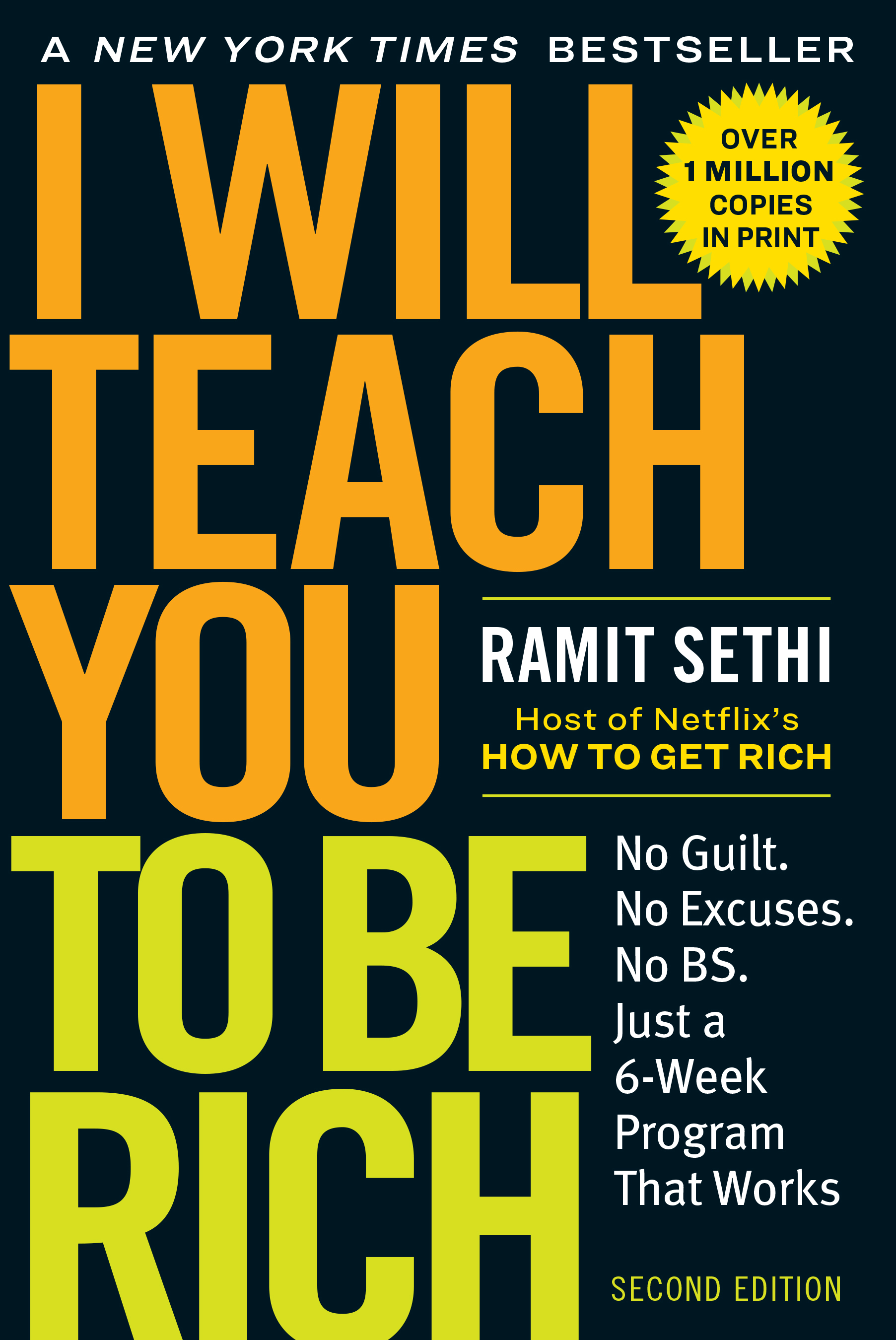
I Will Teach You to Be Rich is not a book that tells you to live like a monk. Ramit Sethi’s big idea is simpler: build a money system that runs mostly on autopilot, then spend happily on the things you actually love. The book is practical, direct, and a little blunt, which is part of why it became so popular. [1][2][3]
Instead of treating money like a list of tiny punishments, Sethi treats it like a tool. He wants readers to save, invest, and pay bills without drama. Then he wants them to enjoy life on purpose. That mix of discipline and freedom is the heart of the book. [1][2]
The simple message: make money boring in the right places, so life can be fun in the right places.
Book facts
| Title | I Will Teach You to Be Rich: No Guilt. No Excuses. Just a 6-Week Program That Works (Second Edition) |
|---|---|
| Author | Ramit Sethi |
| First published | 2009; revised 2nd edition in 2019 [1][2][3] |
| Publisher | Workman Publishing Company / Hachette Book Group [1] |
| Length | 352 pages in the revised paperback edition [1] |
| Main topic | Personal finance, money habits, automation, investing, and salary negotiation. [1][2][3] |
What the book is about
Sethi says most people do not need to become money experts. They need a few good systems. His book walks readers through a six-week plan that covers debt, bank accounts, investing, spending, and the bigger life choices that cost money, like cars, homes, weddings, and kids. [1][2]
The book is famous for one more thing: it tells people to spend freely on the things they love, but cut hard on the things they do not care about. That idea is called conscious spending. It means you decide what matters to you instead of letting random habits drain your money. [1][2]
Main ideas, explained simply
1. Automation beats willpower
Automation means money moves by itself on a schedule. Bills get paid, savings get filled, and investing happens without you remembering every little step.
2. Use the right accounts
The book pushes no-fee bank accounts, high-interest savings, and simple investing accounts. Fewer fees means more of your money stays with you.
3. Pay off debt fast
Debt is borrowed money that charges you extra. High-interest debt is like a leak in a bucket; the faster you stop it, the faster you can build wealth.
4. Invest early and simply
The book favors a boring, set-it-and-forget-it approach. That usually means low-cost diversified funds instead of trying to guess the next hot stock.
5. Spend on what you love
You do not have to say no to everything. The point is to cut the stuff you do not care about so you can enjoy the stuff you truly value.
6. Earn more when you can
Sethi also talks about negotiating pay and finding ways to bring in more income. Saving matters, but income growth matters too.
Step by step: how the book says to get your money in order
- List what is happening now. Write down your income, debt, bank accounts, and monthly bills so you can see the whole picture.
- Stop waste and fees. Cancel charges you do not need, avoid late fees, and make sure your credit cards are helping you, not hurting you.
- Set up automatic savings. Move part of every paycheck into savings before you can spend it.
- Open investing accounts. If your employer offers a retirement plan, start there. If not, use the closest local equivalent. The book’s point is to start early and keep going.
- Create a conscious spending plan. Give each dollar a job: fixed costs, savings, investing, and fun money.
- Make bills and investing boring. The less you have to think about money each week, the more likely you are to stick with the plan.
- Ask for more income. Practice asking for a raise or looking for better-paid work so your money engine grows from both sides.
Simple explanations of key terms
- High-yield savings account: a savings account that pays a little more interest than a basic one. Interest is the extra money a bank pays you for keeping money there.
- Index fund: a basket that holds many stocks at once. It is a simple way to own a piece of lots of companies without picking each one by hand.
- Interest: the extra cost of borrowing money, or the extra reward for saving money, depending on the direction it goes.
- Automation: a rule you set once so money moves by itself again and again.
- Conscious spending: spending money on purpose, not by accident.
What the book gets right
One big strength is that it respects real human behavior. People do not fail because they are stupid. They fail because money is emotional, confusing, and easy to ignore. Sethi’s system tries to make good habits simple enough to survive real life. [1][2][3]
The book also does a good job of showing that wealth is not only about cutting coffee or skipping every meal out. It is about building a system that works for years, not just days. That is a better lesson than guilt. [1][2]
What to be careful about
This book is very U.S.-focused. It talks about American bank accounts, retirement accounts, and tax tools. Readers in other countries may need local versions of those ideas.
The tone can also feel sharp or pushy. Some people love that. Some do not. Still, the core advice is useful even if the voice is not your favorite. And like any personal finance book, it should not be treated as personal legal or tax advice. [1][2]
Bottom line
I Will Teach You to Be Rich is a strong starter book for anyone who wants a clear money plan without a lot of fuss. It teaches readers to automate the boring parts, spend on purpose, invest steadily, and ask for better pay. It is not magic, but it is practical, and practical is what most people need. [1][2][3]
Sources
- [1] Workman / Hachette Book Group: I Will Teach You to Be Rich
- [2] Wikipedia: I Will Teach You to Be Rich
- [3] Goodreads: I Will Teach You to Be Rich
- [4] Official site books page: I Will Teach You to Be Rich books
Related reading: Personal Finance Fundamentals is a useful next step for beginners who want to build a simple money system.