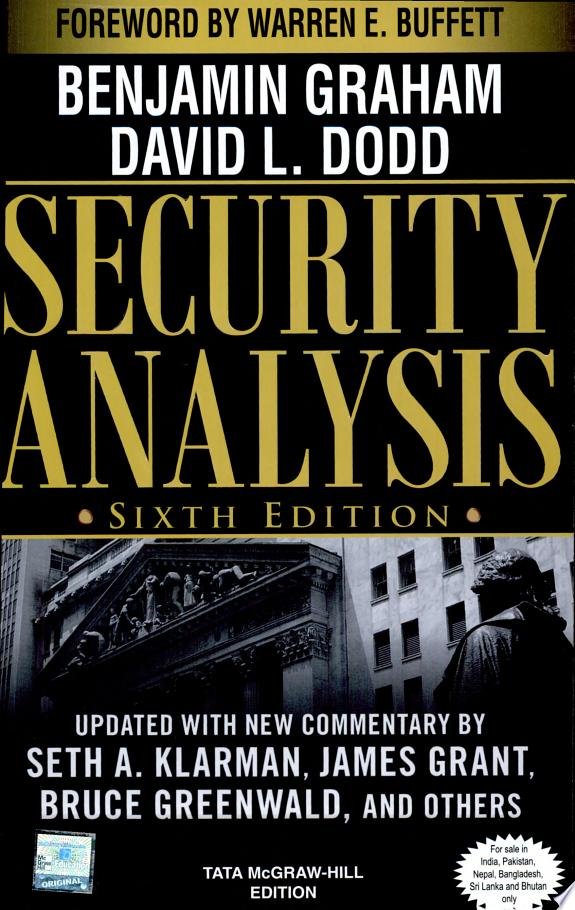
Security Analysis is one of the most important books ever written about investing. It is not a quick tips book. It is a slow, careful book about how to judge whether a stock is truly worth buying. Benjamin Graham and David Dodd teach a simple but powerful idea: do not guess. Study the facts, compare price with value, and leave yourself room for mistakes.
In plain words: buy a business only when you understand what it is really worth and the price gives you a safety cushion.
What the book is about
The book is a guide to looking at stocks and bonds with discipline. Graham and Dodd wanted investors to stop acting like gamblers. They wanted them to act like careful buyers. A good investor, in their view, looks at the business behind the security, checks the numbers, and decides whether the price is fair.
This is why the book is often called the foundation of value investing. That phrase simply means buying something for less than it is really worth. If a stock is worth $100 but can be bought for $70, the gap is the margin of safety.
Main ideas
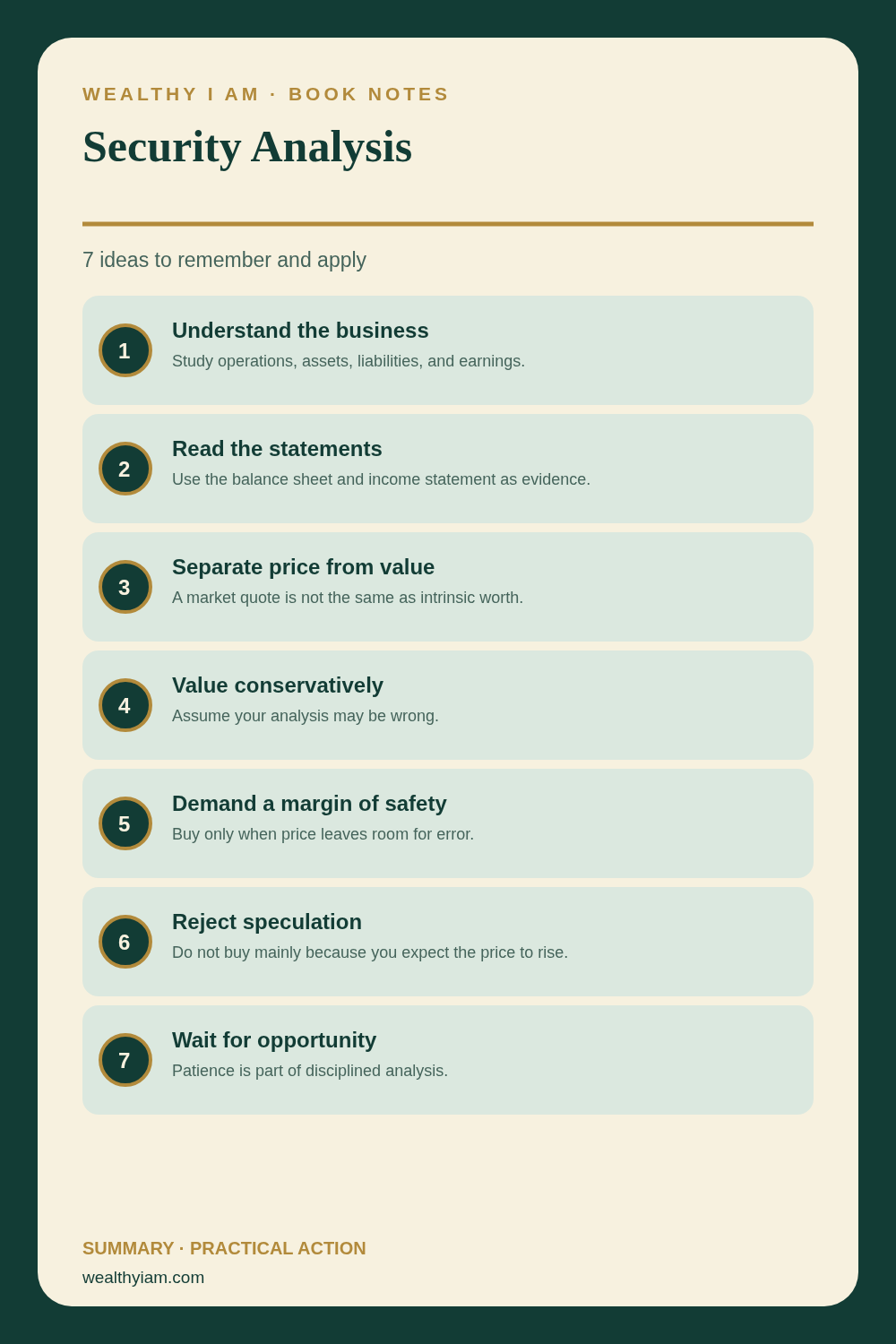
- Price is not the same as value. A thing can be expensive, cheap, or fair.
- Margin of safety matters. This is a cushion that helps protect you if your estimate is wrong.
- Know the business. Read financial statements and ask what the company owns, owes, and earns.
- Avoid speculation. Speculation means buying mainly because you hope the price will rise.
- Be patient. Good opportunities do not appear every day.
Simple explanations of key terms
- Intrinsic value means what a business is really worth after careful study.
- Margin of safety means a built-in cushion, like wearing a helmet on a bike.
- Financial statements are the company’s report cards.
- Balance sheet shows what a company owns and owes on one date.
- Income statement shows how much it earned and spent over time.
What it gets right
- It teaches calm thinking instead of crowd-following.
- It reminds readers that good investing is about avoiding big losses, not just chasing big wins.
- It focuses on facts, not hype.
- It gives investors a framework that still works: understand the business, estimate value, and buy with a buffer.
What to be careful about
The book is old and dense. Some examples feel dated, and the market is different now. Accounting rules have changed. Companies today often have more software, data, and brand value than factories and machines. Also, many modern investors use index funds instead of picking individual stocks.
So the book should not be treated like a magic formula. It is better seen as a school for judgment. The big lesson is not “use one ratio and you are done.” The big lesson is “think deeply, stay humble, and demand a cushion before you buy.”
Bottom line
Security Analysis is a hard book, but its core idea is simple: do not buy a security just because its price looks exciting. Buy only when careful study shows real value and enough room for error. If you want to understand value investing at its roots, this book is a classic.
Sources
- McGraw Hill Higher Education, Security Analysis: The Classic 1934 Edition
- Google Books, Security Analysis 6E
- Wikipedia, Security Analysis (book)
Related reading: For a fuller beginner roadmap, see Investing Basics.
Wealthy I AM Action Card
Wealthy I AM Pinterest Copy
TITLE
Security Analysis: Why Margin of Safety and Patience Matter Most
DESCRIPTION
A clear, original guide to Security Analysis, the classic Benjamin Graham and David Dodd book on value investing, margin of safety, and careful stock.
KEYWORDS
Security Analysis book summary, Security Analysis lessons, personal development, wealth building, productivity books
ALT TEXT
Wealthy I AM visual summary of Security Analysis: Why Margin of Safety and Patience Matter Most
ARTICLE URL
https://wealthyiam.com/security-analysis-why-margin-of-safety-and-patience-matter-most/