Money skill and leadership are often taught as different subjects, but they start with the same question: what does this work mean to you? Simon Sinek’s Start with Why: How Great Leaders Inspire Everyone to Take Action argues that purpose is not a slogan; it is the belief that shapes decisions, customer relationships, and long-term results.
The book’s central idea can improve the way wealth looks: building earning power is more sustainable when it is connected to values, a problem that matters, and a clear promise to others. The pages below turn Sinek’s framework into practical steps for your career, business, or current project.

The Golden Circle: WHY, HOW, and WHAT
Sinek organizes communication into three layers. WHY is the belief or cause. It answers, “Why does this exist?” HOW is the principles or methods that make the belief real. WHAT is the actual product, service, or behavior. Many messages begin with the WHAT: we sell a course, manage a team, or build an app. The framework asks you to reverse the order: start with the belief that gives the work meaning.
Lesson 1: Write a one-sentence WHY
Avoid vague phrases such as “be the best” or “grow faster.” Ask what change you want to make in other people’s lives, and why you are willing to do the work. A good WHY can guide hard choices when profit and purpose seem to collide.
Step by step: write a draft with “We believe … so that …” Remove any word that could appear on a competitor’s website. Test the sentence with someone who knows your work: can they tell what you care about before you explain what you sell?
Lesson 2: Step into the customer’s world
A purpose is strongest when it understands a real human need. What problem does your customer want solved? If you are building a side business, do not start with what you can sell. Start with the outcome you want to help people reach.
Practice: interview three potential customers or teammates. Ask what frustrates them, what they have tried, and what a really good solution would look like. Use their language to improve your offer or product. This is purpose translated into value.
Lesson 3: Connect the WHY to daily actions
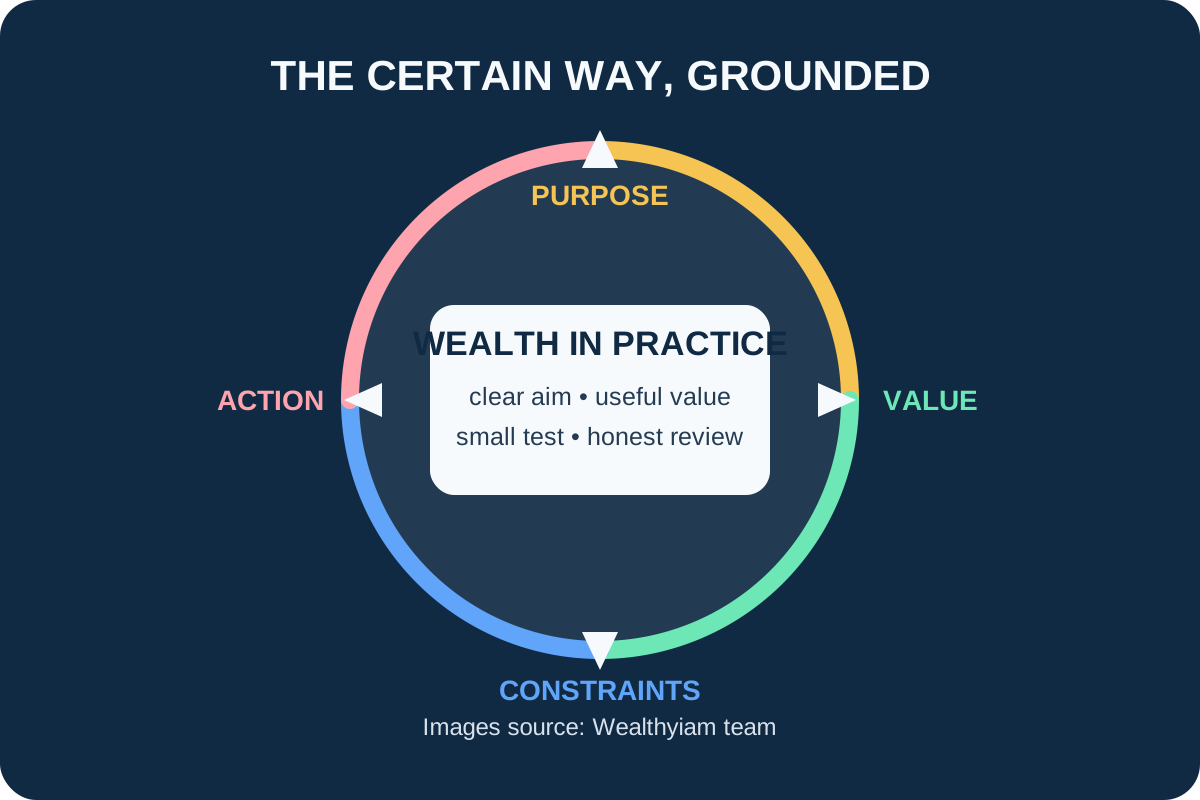
Purpose is not proved by words alone. The HOW is the set of principles that makes the WHY credible: quality standards, pricing rules, customer service, and the way a team makes decisions.
Audit your promises: list five commitments your organization makes, and put one to the test. If you value transparency, show where prices come from. If you never sacrifice quality, create a check for that before launch. Purpose becomes financially useful when it produces reliable behavior and repeatable value.
Lesson 4: Let the WHY filter opportunities
A useful WHY does not make every opportunity look good. It helps you say no to projects distant from your values, even if they promise quick money. This protects focus and preserves trust.
Use the filter: for a new job, client, or investment in your skills, ask, “Will this move still make sense if it creates no immediate profit?” If not, identify the trade-off before committing. Purpose cannot replace financial analysis, but it can stop short-term excitement from controlling every decision.
Lesson 5: Tell the story consistently
Sinek argues that a purpose does not become inspirational just because it appears on a page. Leaders need to repeat the same core idea through decisions, stories, hiring, rewards, and product choices. Consistency turns words into trust.
Weekly exercise: write down one project that made your WHY tangible and one that did not. Use the contrast to find a process change. Over time, the story guides action, and action proves the story.
Lesson 6: Build a wealth engine around purpose
Purpose and wealth are not opposites. A business earns durable revenue when it solves a problem well enough that people choose it repeatedly. An employee builds career capital by becoming unusually useful at work that matters to a real organization. An investor can ask whether a company’s purpose is reflected in its products, culture, and economics.
Start with one valuable skill, one clearly defined audience, one offer that solves a meaningful problem, and one system for saving a portion of the resulting income. Track money—revenue, margin, savings rate—and meaning—customer outcomes, quality, and energy. If one rises while the other collapses, the model needs adjustment.
Lesson 7: Lead from the inside out
Leadership is not limited to a job title. You can lead a household budget, a freelance project, a small team, or your own professional development. Explain the reason for the goal, describe the method, and then assign the task. People contribute more intelligently when they understand the destination.
For a personal goal, put a short purpose statement where you make decisions. Before accepting extra work, buying a status purchase, or abandoning a long-term plan, ask whether the choice supports the person you are trying to become. This turns purpose into a daily financial guardrail.
A useful caution
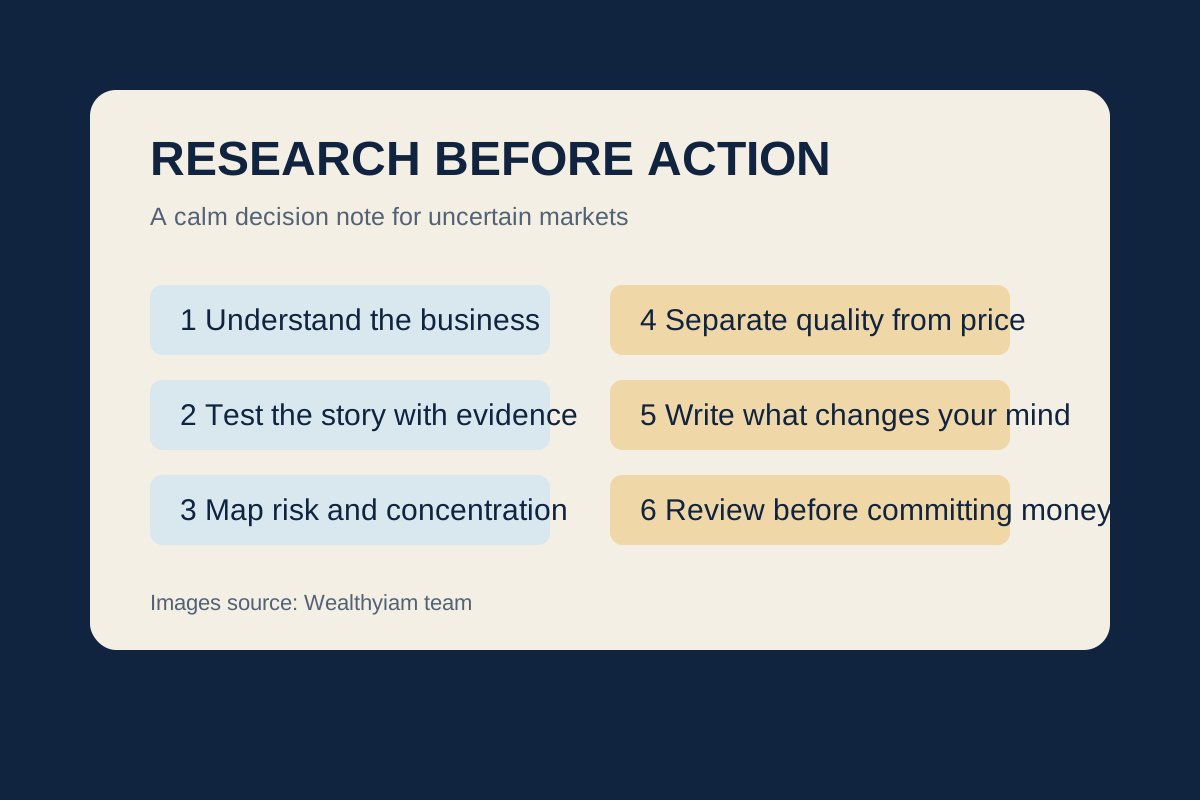
Start with Why is a framework for clarity and communication, not a guarantee of sales, investment returns, or organizational success. A compelling mission still needs a sound product, honest market research, competent execution, cash-flow discipline, and humility to change tactics. Purpose should clarify reality, not hide weak economics behind inspiring language.
Bottom line
Sinek’s practical lesson is that people commit more deeply when they can see the belief behind an action. For wealth builders, begin with the value you intend to create, express it in trustworthy systems, and allow it to shape opportunities and trade-offs. A clear WHY will not do the work for you. It can make the work more coherent, the message more memorable, and long-term choices easier to repeat.
Sources and credits
- Sinek, Simon. Start with Why: How Great Leaders Inspire Everyone to Take Action. Portfolio, 2009.
- Amazon.com product page — verified title, author, and cover image credit.
- Penguin Random House publisher page — author and publication reference.
- Simon Sinek official website — author background.