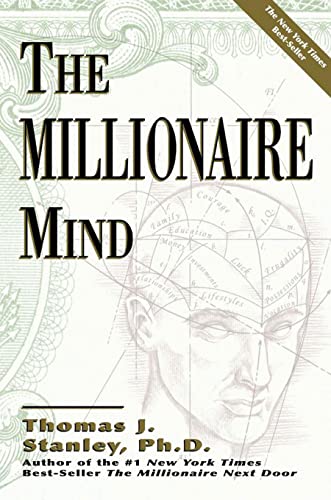
The Millionaire Mind by Thomas J. Stanley examines how affluent Americans think, work, spend, and make financial decisions. Drawing on surveys and interviews with more than 1,300 millionaires, Stanley challenges the popular image of wealth as constant luxury. His research points instead to habits, discipline, career choices, and a willingness to make decisions that may look ordinary—or even unfashionable—to other people.
The book is not a promise that copying a millionaire’s lifestyle will make you wealthy. It is an invitation to look behind the appearance of success and ask better questions: What creates lasting wealth? Which choices protect it? And how can your work, spending, and relationships support your long-term financial goals?
What the book is about
Stanley’s study focuses on people who have accumulated substantial wealth, including many households with net worths far above the one-million-dollar threshold. He looks at their education, occupations, spouses, neighborhoods, spending patterns, and attitudes toward money. The result is a research-based portrait rather than a motivational story about one unusually successful person.
A major theme is the difference between income and wealth. Income is the money that comes in. Wealth is what remains, grows, and gives you choices after years of earning and spending. A high salary can disappear through expensive habits, while a moderate income can build wealth when the household saves, invests, and avoids lifestyle inflation.
Five practical lessons from the research
1. Measure wealth by ownership, not appearance
Expensive cars, large homes, designer clothes, and impressive social signals can create the appearance of prosperity without creating financial security. Stanley’s findings encourage readers to focus on net worth: the value of what you own minus what you owe. This measure is not perfect, but it reveals whether your money is building a foundation or merely passing through your hands.
Try this: calculate your net worth once a quarter. List cash, investments, retirement accounts, property, and other meaningful assets. Subtract credit-card balances, loans, and other debts. Track the direction, not just the number.
2. Choose work that rewards expertise
The book highlights the role of occupation and specialized knowledge. Many wealthy people are not famous; they operate businesses, provide professional services, or develop expertise in fields where reliable judgment is valuable. Their advantage often comes from becoming unusually useful, not from chasing a glamorous title.
Try this: identify one skill that can make you more valuable over the next three years. Build it through deliberate practice, credentials where useful, better communication, or direct experience solving real problems. Earning power is an asset when you save part of the increase.
3. Make frugality a form of freedom
Frugality does not mean refusing every pleasure. It means spending carefully enough that your choices are not controlled by appearances or constant financial pressure. A household that knows its priorities can spend generously on what matters and cut costs that add little value.
Try this: divide spending into three groups: essential, deeply meaningful, and easy to forget. Review the third group first. Cancel or reduce one recurring expense, then direct the savings toward debt repayment, cash reserves, or investing.
4. Treat financial independence as a household project
Stanley gives attention to marriage, family, and the way partners handle money together. Shared goals and compatible spending habits can make wealth building easier; constant status competition can make it harder. A strong financial partnership does not require identical personalities, but it does require honest conversations and agreed rules.
Try this: schedule a monthly money meeting. Discuss income, upcoming large expenses, debt, savings progress, and one shared goal. Keep the meeting factual and blame-free. The goal is coordination, not winning an argument.
5. Build a plan that survives ordinary life
Wealth is usually the result of repeated behavior over many years. That means the best plan is not the most exciting plan; it is the one you can continue through market declines, career changes, family responsibilities, and periods when motivation is low.
Try this: automate a reasonable contribution to an emergency fund or diversified long-term investment after checking fees, taxes, access rules, and risk. Review the plan periodically, but do not confuse constant activity with progress.
A step-by-step millionaire-mind exercise
- Define enough. Write what financial security would allow you to do, protect, or stop doing. A clear purpose is more useful than an undefined desire for “more.”
- Audit your signals. List purchases made mainly to impress, compete, or avoid feeling behind. Choose one signal to stop funding.
- Set a savings rate. Pick a percentage of take-home pay that fits your situation. Increase it whenever income rises, while keeping a small amount for enjoyment.
- Strengthen your earning engine. Choose a marketable skill and schedule weekly learning or practice time.
- Reduce fragile debt. Prioritize high-interest balances and avoid replacing them with new consumer debt.
- Review your scoreboard. Every quarter, check net worth, savings rate, debt balances, and progress toward your stated definition of enough.
What the book gets right
Stanley’s strongest contribution is separating wealth from the performance of wealth. People who look rich may be financing a costly lifestyle, while people quietly accumulating assets may look completely ordinary. This distinction helps readers stop copying consumption and start copying useful behaviors.
The book also shows that financial success is connected to career choice, relationships, time management, and self-control. Money is not an isolated spreadsheet problem. It is the result of many daily decisions made within a real life.
What to read critically
The research describes patterns, not guarantees. A behavior common among wealthy households is not automatically the cause of their wealth, and conditions vary by country, generation, industry, taxes, and starting resources. The book’s data should inform your thinking, not become a rigid stereotype about every affluent person.
Do not copy a particular investment, occupation, or home-buying decision without examining your own risks and goals. Use current professional or government sources for tax and investment rules. The durable lesson is disciplined ownership and intentional spending, not a single formula.
Bottom line
The Millionaire Mind is valuable because it asks readers to look past the costume of wealth. Its practical message is clear: grow useful skills, spend according to your values, save and invest consistently, protect your household from unnecessary debt, and measure progress by what you own rather than what you display. The quieter path may not attract attention, but it can create something more important—financial room to choose your life.