The Outsiders by William N. Thorndike studies eight CEOs who built unusually strong long-term results by making careful, sometimes unconventional decisions. The book is not mainly about being loud, charismatic, or famous. It is about how leaders use the money a company produces.
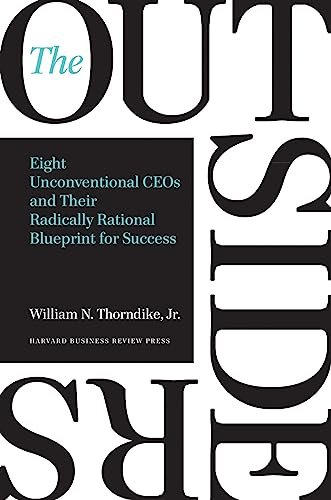
What the book is about
Thorndike looks at eight leaders and the companies they ran, including Berkshire Hathaway, General Dynamics, Teledyne, Capital Cities, and The Washington Post Company. He asks a practical question: what did these leaders do with the cash their businesses created?
The common thread is capital allocation. That is a business term for deciding where money should go. A company might invest in its current operations, buy another business, pay down debt, pay dividends, or repurchase its own shares. The best choice depends on the price and the likely result—not on what is fashionable.
Main ideas
- Think like an owner. Treat company money as if it were personal money.
- Focus on value per share. Total sales can rise while each shareholder’s slice gets smaller.
- Cash flow matters. Cash flow is money actually moving through the business.
- Keep the organization lean. Avoid unnecessary layers and expensive corporate habits.
- Use different tools at different prices. Acquisitions, debt, dividends, and buybacks can be smart or foolish depending on price.
Simple explanations of key terms
Capital allocation
Imagine a family receiving extra money. They could repair the house, pay off a loan, save it, or buy something useful. Capital allocation is the same decision inside a company: choosing the best home for extra money.
Cash flow
Cash flow is money moving through the business. Positive cash flow means more cash comes in than goes out.
Per-share value
Suppose a pizza is cut into ten slices. The whole pizza can get bigger, but your slice matters too. Per-share value measures how much progress belongs to each share.
Share repurchase
A share repurchase is when a company buys some of its own shares. If shares are cheap and the business is healthy, each remaining share may represent a larger piece. If shares are expensive, the same action can waste money.
What it gets right
The book’s strongest lesson is that running a business and investing are closely connected. A CEO is also an investor when deciding what to do with company cash. Good operations alone are not enough; money must be redeployed wisely.
It also teaches patience. The leaders often ignored short-term applause and concentrated on long-term value.
What to be careful about
Past success does not make every decision repeatable. These companies operated in particular industries, markets, and time periods. A buyback can destroy value when the stock is overpriced, and an acquisition can fail even when the idea looks good.
A book about unusually successful CEOs naturally highlights winners. Investors should study numbers, competition, debt, and price rather than copy a famous leader without checking the facts.
Bottom line
The Outsiders is valuable for investors, business owners, and anyone who wants to understand where corporate wealth comes from. Strong leaders do not just earn money; they decide carefully what happens to it next.