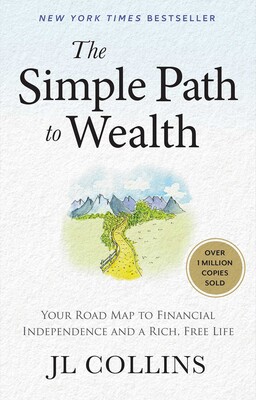
The Simple Path to Wealth by JL Collins is a plain-language guide to saving, investing, and gaining more control over your time. The book grew from letters Collins wrote to his daughter and became an important book in the financial independence movement. Its central promise is simple: a few good money habits can beat a complicated plan that is hard to follow.
What the book is about
Collins argues that most people do not need to predict the next hot stock or build a fancy portfolio. They need to spend less than they earn, avoid expensive debt, and invest regularly in a broad, low-cost index fund. An index fund is a basket that owns small pieces of many companies at once. It is like buying a whole fruit basket instead of betting everything on one apple.
Main ideas
- Keep it simple. A simple plan is easier to understand and more likely to survive busy days and scary market headlines.
- Make saving automatic. Move money to savings or investments before you can spend it. This reduces the need for willpower.
- Use low-cost investments. A fee is money taken from your investment. Small fees can quietly eat a large amount over many years.
- Think long term. The stock market can fall sharply. Collins says investors should expect bad periods and avoid selling in panic.
- Value freedom, not just money. Financial independence means your investments and savings can cover your needs, giving you more choice over your work and time.
Key terms in simple language
Index fund
An index fund follows a market list instead of trying to guess the winners. A total-market fund can own thousands of companies, spreading risk across many businesses.
Expense ratio
This is the yearly percentage an investment company charges to run a fund. A lower expense ratio leaves more of your return in your account.
Compounding
Compounding means your gains can earn gains of their own. Like a snowball, money can grow faster when it stays invested for a long time.
Financial independence
This is the point where work becomes a choice rather than the only way to pay for life. It does not require a mansion; it requires enough reliable resources for your needs.
What the book gets right
The strongest lesson is behavioral. Many investors lose money not because they cannot understand a chart, but because fear makes them sell low and excitement makes them buy high. Collins also correctly emphasizes fees, diversification, and patience. These ideas are supported by long-running evidence that broad diversification and low costs matter for ordinary investors.
What to be careful about
The book favors a U.S.-focused stock-market approach, especially a total-market index fund. That can be powerful, but it is not identical for every person or country. Taxes, account rules, age, job security, health needs, and the ability to tolerate losses all matter. Stocks can fall, sometimes for years, and past returns are not promises about the future.
Do not copy a specific investment without checking your own situation. An emergency fund, suitable debt plan, and a mix of investments that you can actually hold through a downturn may matter more than finding the perfect fund.
Bottom line
The Simple Path to Wealth makes a strong case for boring, low-cost, long-term investing. Its most useful message is not a magic ticker symbol. It is that a clear plan, steady saving, broad diversification, and calm behavior can do much of the heavy lifting. For many beginners, simplicity is not a compromise; it is the feature that makes the plan work.
Sources
- Simon & Schuster publisher page
- Barnes & Noble book listing
- U.S. SEC Investor.gov: index funds
- U.S. SEC Investor.gov: expense ratios
Related reading: Personal Finance Fundamentals is a useful next step for beginners who want to build a simple money system.