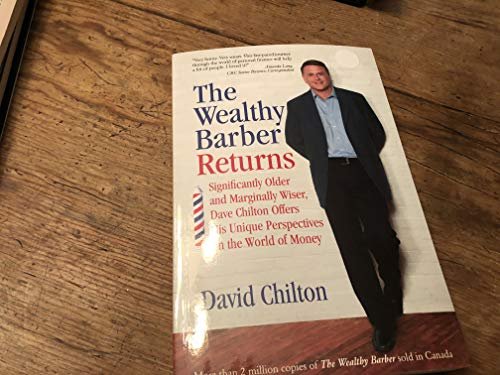
The Wealthy Barber Returns is a friendly personal finance book by David Chilton. It does not try to sound fancy. It tries to sound useful. Chilton talks directly to the reader about spending, saving, debt, and the small choices that quietly shape a financial life. The tone is warm and funny, but the message is serious: simple habits beat money stress. [1][2][3]
In plain words, the book says: pay yourself first, keep life simple, and do not let careless spending steal your future.
Book facts
| Author | David Chilton |
|---|---|
| First published | 2011 |
| Publisher | Financial Awareness Corp. |
| Main topics | Personal finance, saving, debt, retirement planning, and money habits. |
| Style | Short chapters, plain language, humor, and direct advice. |
| Why readers liked it | It turns money into an easy conversation instead of a scary lecture. [1][2][3] |
What the book is about
The Wealthy Barber Returns is the sequel to The Wealthy Barber. Unlike the original, which used a story and a barber-shop setting, this book is mostly Chilton speaking in his own voice. The advice is still aimed at ordinary people, especially Canadians who want a better handle on their money without reading a thick, dry textbook. [3][4]
The book’s heart is the idea that money problems are often behavior problems. People do not always fail because they earn too little. Sometimes they fail because they spend too much, delay saving, or keep making small choices that add up to big trouble.
Main ideas explained simply
Pay yourself first
Save a set amount before you spend on extras. Treat saving like a bill that must be paid first.
Keep fixed costs under control
Fixed costs are the bills that show up every month, like rent, car payments, and subscriptions. High fixed costs make it hard to breathe.
Avoid expensive investing mistakes
The book warns against high-fee products and sloppy advice. A small fee can quietly eat a lot of money over time.
Think long term
Big money goals take years, not days. The book pushes patience instead of excitement.
Simple explanations of key terms
RRSP
An RRSP is a Canadian retirement savings account. In simple words, it helps you save for later and can delay some taxes until you take the money out.
TFSA
A TFSA is a Canadian account where investments can grow without tax, and withdrawals are also tax-free. It is one of the easiest tools for flexible saving.
ETF
An ETF is a basket of investments you can buy like a stock. It can help you spread risk without picking dozens of individual stocks one by one.
Load
A load is a sales charge on some mutual funds. It is extra money paid to sell the product. Chilton is careful about this kind of fee because fees can hurt returns.
What the book gets right
- Money behavior matters. Most people do not need a perfect spreadsheet. They need better habits.
- Saving is more powerful than hoping. If you keep a piece of each paycheck, you give yourself options later.
- Humor helps. A money book is easier to learn from when it does not feel like punishment.
- It speaks plainly. That makes the ideas useful for beginners and busy people.
What to be careful about
Some advice is tied to Canada, so readers in other countries will need to translate the terms. RRSPs and TFSAs are not universal. Also, tax rules and financial products change over time, so a good idea in one year can need a refresh later.
The book is strong on common sense, but it is not a full technical manual. If you need exact tax or investing advice for your own situation, you still need current, local guidance.
Kid-simple version: the book gives you a map, but your own road may still have different signs.
Bottom line
The Wealthy Barber Returns is a short, friendly reminder that money gets easier when you stop making it complicated. Save first, spend carefully, keep fees low, and let time do some of the work. That is not flashy advice, but it is the kind that can actually stick.
Sources
- [1] Chat Noir Books product page
- [2] Goodreads
- [3] Google Books
- [4] Wikipedia