Value Investing: From Graham to Buffett and Beyond explains how investors can look for stocks that seem cheaper than the businesses behind them. Bruce C. N. Greenwald and his co-authors build on ideas from Benjamin Graham and show how those ideas connect with the way Warren Buffett and other investors study companies.
What the book is about
Value investing starts with one simple question: What is this business really worth? The market price is the number shown on a screen. The value is an estimate of what the business, its assets, and its ability to make money are actually worth. Sometimes the price is below the value. A value investor tries to find those situations and waits patiently.
The book comes from Greenwald’s Columbia Business School value-investing course. It covers how to search for opportunities, study a company, estimate value, build a portfolio, and reduce the chance of a permanent loss. The first edition appeared in 2001; Wiley published a substantially rewritten second edition in 2020.
Main ideas
- Price and value are different. A stock price can change every day even when the business changes very little.
- Start with what is easiest to trust. The balance sheet shows what a company owns and owes. It is often a useful starting point before making guesses about distant growth.
- Look for earnings power. Earnings power means the money a business can make in normal conditions, not just during one unusually good year.
- A durable advantage matters. A company with a strong brand, low costs, or loyal customers may be able to earn good profits for a long time.
- Growth is valuable only when it earns enough. A company can grow quickly and still destroy value if the growth costs too much or produces weak returns.
- Risk means more than daily price movement. The serious danger is paying too much or suffering a lasting loss of capital.
Simple explanations of key terms
Intrinsic value
Intrinsic value is an estimate of what an asset is worth based on the cash, assets, and profits it may produce. It is not a perfectly exact number. It is more like a careful range than a magic answer.
Margin of safety
A margin of safety is a cushion. If you estimate that a business is worth $100 per share, you might want to buy only when the price is much lower. That way, a mistake in your estimate does less damage.
Balance sheet
A balance sheet is a financial snapshot. It lists what a company owns, what it owes, and what is left for the owners.
Earnings power
Earnings power means the profits a company could reasonably make after temporary problems and unusual events are removed. It asks, “What can this business normally earn?”
Competitive advantage
A competitive advantage is something that helps a company defend its profits, such as a trusted brand, a network of users, or a lower-cost way to operate.
What it gets right
The book’s strongest lesson is that investing is not a popularity contest. A famous company can be a bad investment if its price is too high. A boring company can be a good investment if its finances are sound and the market price leaves room for error.
It also makes growth more realistic. “Fast growth” sounds exciting, but growth helps owners only when the business can reinvest money at attractive returns. This is a useful correction to judging a company by sales growth alone.
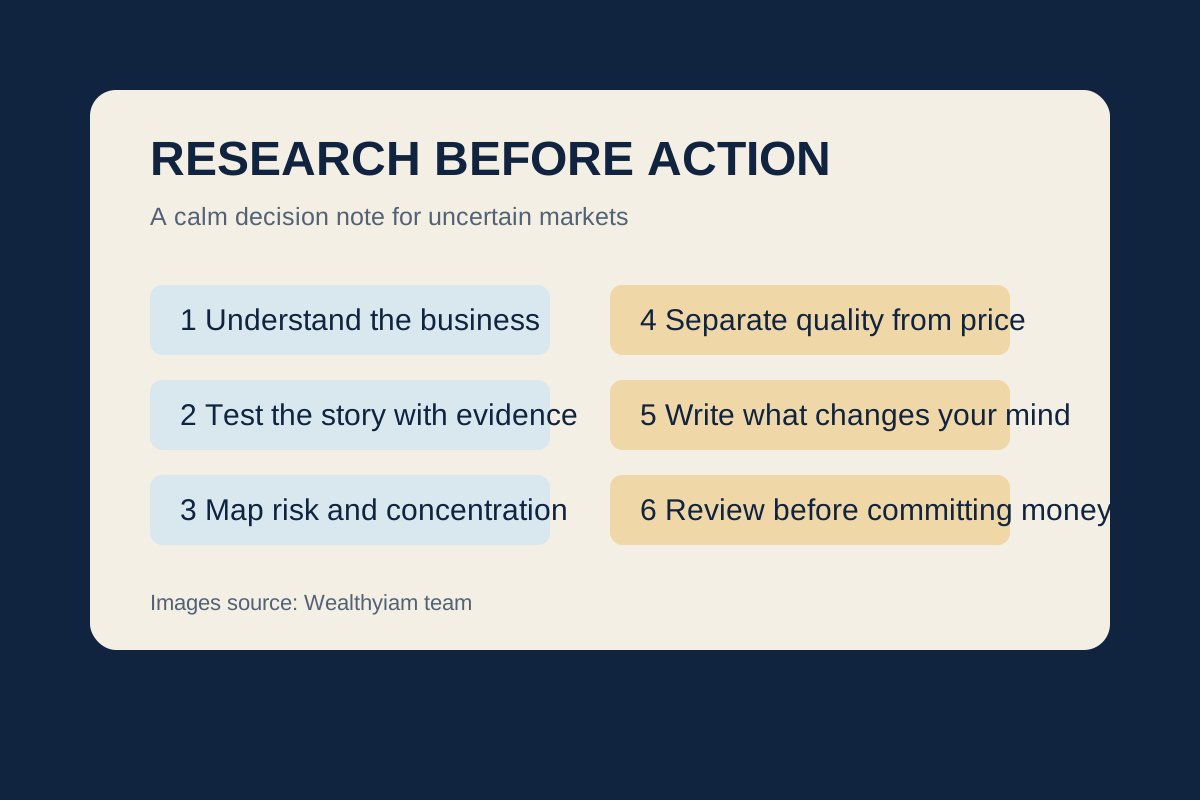
Another strength is its focus on research. Instead of chasing headlines, the reader is asked to understand the business, its industry, its balance sheet, and the reasons its profits may last.
What to be careful about
Value investing is not a guaranteed bargain machine. A stock can look cheap and become cheaper because the business is getting worse. This is called a value trap: the low price is not an opportunity but a warning.
Estimating value also requires judgment. Future profits, interest rates, competition, and management decisions are uncertain. A detailed spreadsheet can look precise while still being built on weak guesses. Beginners should remember that a simple, diversified, low-cost fund may be safer and more practical than trying to analyze individual companies.
The book is more technical than a beginner guide. Read it slowly, with company reports and basic accounting terms nearby. The ideas are useful, but they do not remove the need for patience, diversification, and careful risk control.
Bottom line
Value Investing: From Graham to Buffett and Beyond teaches a durable way to think: buy a piece of a business for less than a careful estimate of what it is worth, keep a cushion for mistakes, and avoid permanent loss. Its central habit is simple but demanding—do the work before you buy, and let price discipline protect you from excitement.
Sources
- Wiley publisher page
- Columbia Business School book record
- Columbia Business School: Value Investing’s Long Run
- Google Books listing
Related reading: For a fuller beginner roadmap, see Investing Basics.