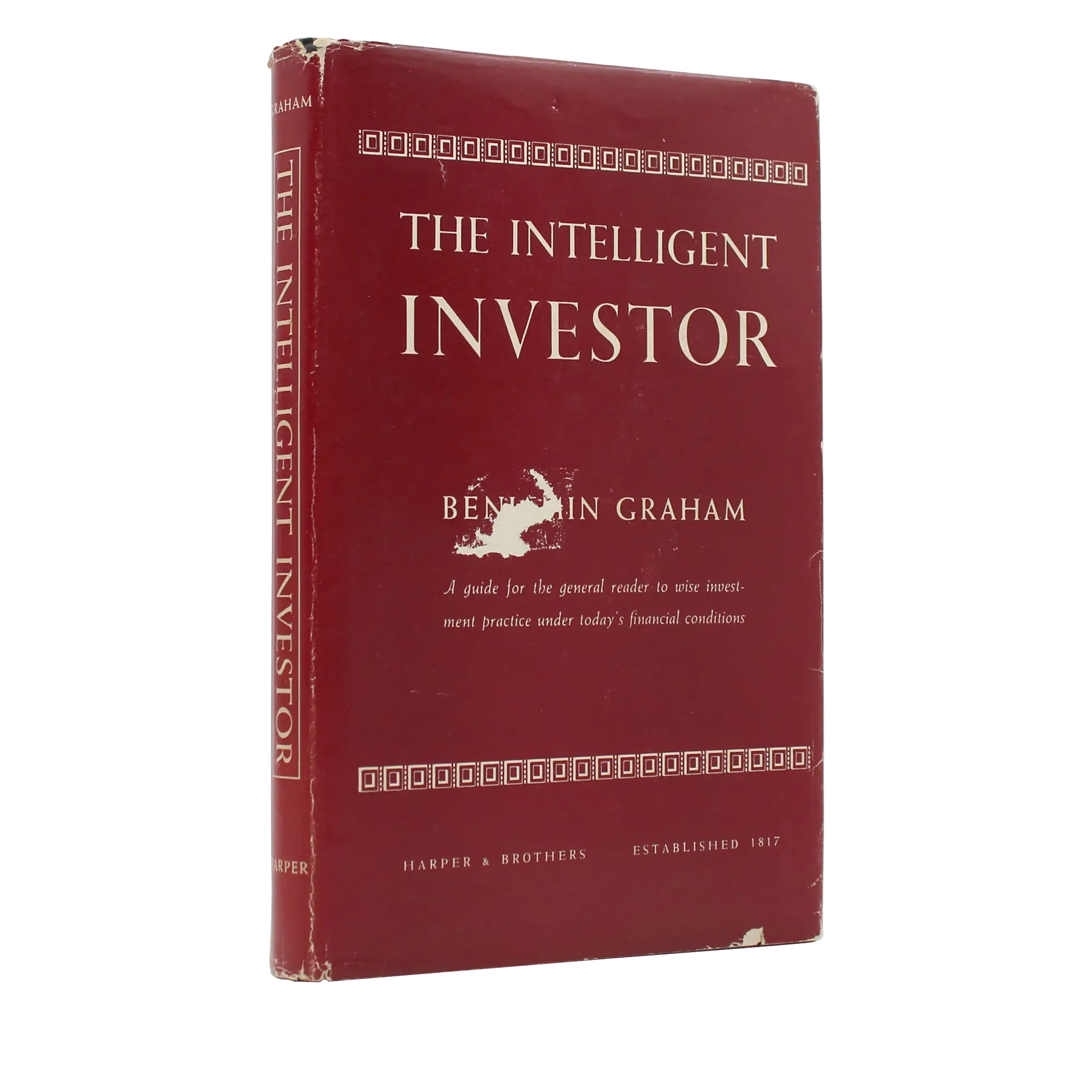
The Intelligent Investor is Benjamin Graham’s classic book about how to invest with a cool head. The book does not promise fast riches. Instead, it teaches readers how to avoid big mistakes, pay attention to value, and stay calm when the market feels wild. That is why people still read it many decades after it first came out. [1][2][3]
In simple words: do not let fear, hype, or greed drive your money choices.
Book facts
| Author | Benjamin Graham |
|---|---|
| First published | 1949 |
| Original publisher | Harper & Brothers |
| Best-known later edition | 2003 revised edition with commentary by Jason Zweig and a preface by Warren Buffett [1][2] |
| Main topic | Value investing, margin of safety, risk control, and long-term discipline. [1][2][3] |
| Why it matters | It turns investing from guessing into a careful habit built around patience and safety. [1][2] |
What the book is about
Graham’s main point is that stocks are not lottery tickets. A stock is a small piece of a business. If you want to do well, you need to think like a careful owner, not like a gambler. The book gives two big paths: the defensive investor, who wants a simple and low-stress portfolio, and the enterprising investor, who is willing to do more homework for the chance of better results. [2][3]
The most famous character in the book is Mr. Market. He is a made-up person who shows up every day with different prices. Sometimes he is cheerful and offers a high price. Sometimes he is scared and offers a low price. Graham says you should not copy Mr. Market’s mood. You should use his prices when they help you, and ignore him when they do not. [2][3]
Simple explanations of the key ideas
Margin of safety
This means buying something for less than you think it is worth. It gives you a cushion. If your guess is a little wrong, you are still safer.
Intrinsic value
This is the business’s real worth, based on what it can earn and own, not just what the crowd says the price is today.
Defensive investor
This is a person who wants a calm plan, broad diversification, and fewer decisions. The goal is steady results, not dramatic wins.
Enterprising investor
This is a person who studies more and tries to find bargains. Graham still warns that this takes work, patience, and self-control.
Steps to apply the book
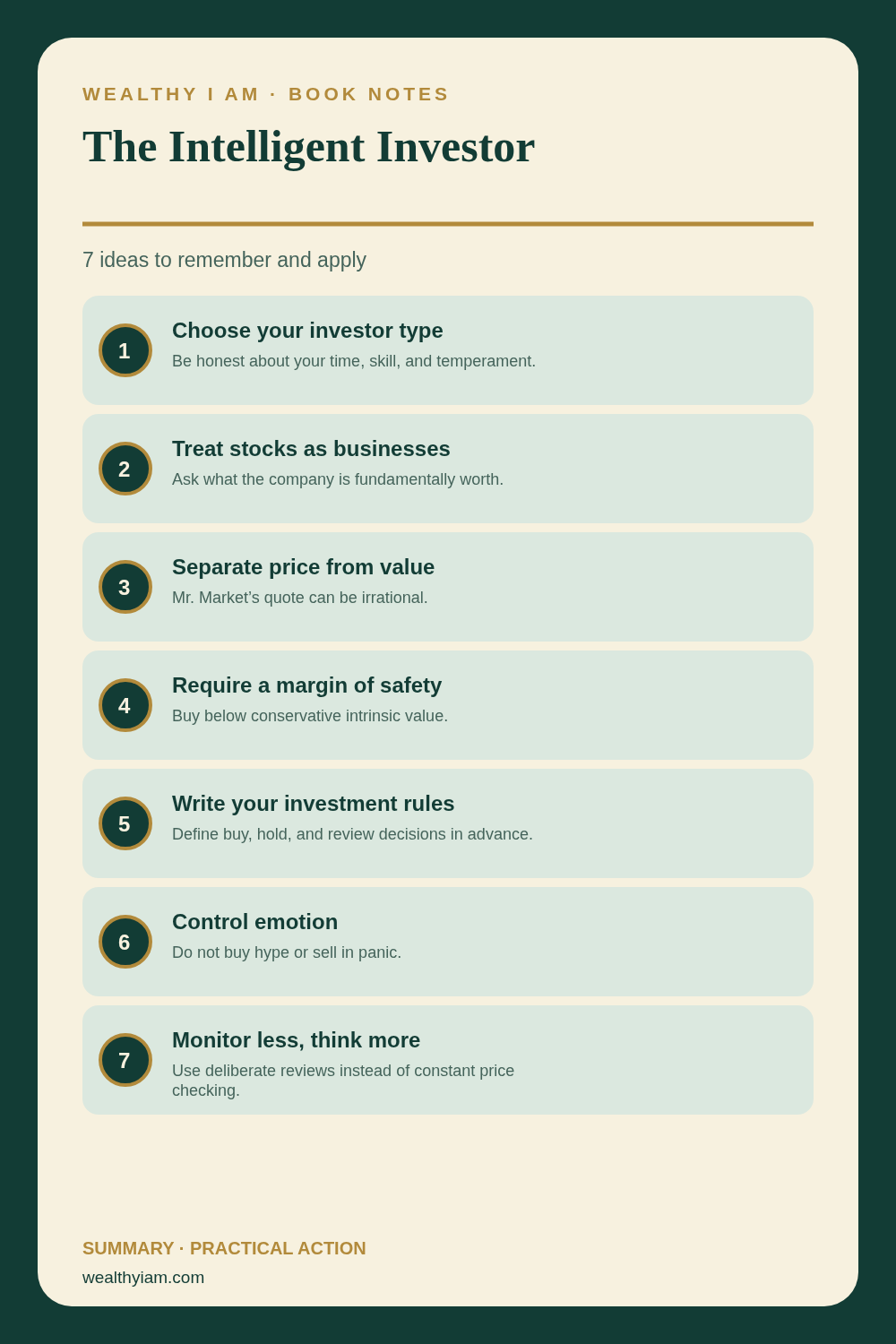
- Decide if you are a defensive investor or an enterprising investor. Be honest. The wrong path makes investing harder than it needs to be.
- Before buying anything, ask: What is this business really worth? Do not confuse a high price with a good business.
- Only buy when there is a margin of safety. That means leaving yourself a cushion if things turn out a little worse than expected.
- Write a simple rule for when you will buy, hold, and review. Then stop checking the market every few minutes. Graham wants discipline, not panic.
- Keep your emotions out of the driver’s seat. If fear or excitement is pushing you, pause before you act.
What the book gets right
- Prices are not the same as value. A thing can be cheap or expensive for reasons that have nothing to do with its real worth.
- Emotions hurt investors. People often buy when they feel excited and sell when they feel scared.
- Fees and mistakes matter. Small costs and bad trades can quietly eat returns over time.
- Patience is powerful. Long-term thinking usually beats panic and guesswork.
What to be careful about
The book is a classic, but it is old. Some examples and market details come from another era. Also, Graham’s style can feel strict, and not every reader will want to follow the more hands-on parts of the book. The main lesson is still useful, though: avoid reckless moves, know what you own, and build a buffer between you and disaster. [1][2]
Kid-simple takeaway: do not jump into the water before you know how deep it is.
Bottom line
The Intelligent Investor is not exciting in a flashy way. That is part of its power. It teaches that good investing is usually boring, careful, and patient. If you want a book that helps you think more clearly about risk, price, and the long game, this one still belongs on the list. [1][2][3][4]
Sources
- [1] HarperCollins, The Intelligent Investor product page.
- [2] Wikipedia, The Intelligent Investor.
- [3] Goodreads, The Intelligent Investor.
- [4] Open Library, The intelligent investor.
Related reading: For a fuller beginner roadmap, see Investing Basics.
Wealthy I AM Action Card
Wealthy I AM Pinterest Copy
TITLE
The Intelligent Investor: Why Margin of Safety and Patience Matter Most
DESCRIPTION
A clear, original guide to Benjamin Graham’s classic investing book: value investing, margin of safety, Mr. Market, and why calm habits matter more than clever.
KEYWORDS
The Intelligent Investor book summary, Intelligent Investor lessons, personal development, wealth building, productivity books
ALT TEXT
Wealthy I AM visual summary of The Intelligent Investor: Why Margin of Safety and Patience Matter Most
ARTICLE URL
https://wealthyiam.com/the-intelligent-investor-margin-of-safety-patience/