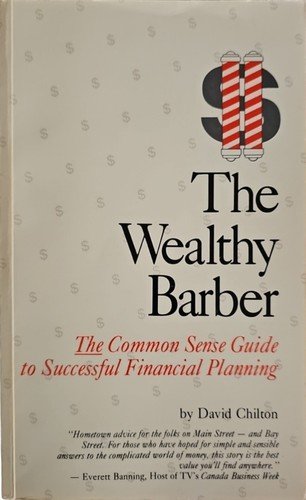
The Wealthy Barber is a short, friendly money book by David Chilton. It teaches one big idea in a very simple way: pay yourself first, then build a habit of saving and investing before the money slips away. The original book was first published in 1989, and later editions kept the same plain-spoken style while updating the advice for new readers. [1][2][3]
What the book is about
The book uses a barber shop story to teach personal finance. Three young adults visit Roy, the wealthy barber, and learn basic money lessons one step at a time. The idea is not to impress readers with fancy math. It is to help ordinary people make better choices with normal incomes.
Chilton’s message is calm and practical: you do not need to be rich to begin. You need a plan, steady habits, and patience.
Main ideas in plain words
- Save first. Put money aside before you spend it on extras.
- Use about 10% as a target. The book keeps returning to the habit of saving a slice of each paycheck for the long term.
- Protect your family. A will and life insurance can stop money trouble from turning into a family crisis.
- Debt can trap you. High-interest debt, especially credit cards, eats future freedom.
- Home buying should be a choice, not a race. A house can be useful, but it is not magic. It can also be expensive.
Simple explanations of key terms
Asset: something that puts money in your pocket over time. A savings account, an investment, or a business can be an asset if it helps you grow money.
Liability: something that takes money out of your pocket. A credit card balance or a costly purchase that keeps draining cash is a liability.
Compound growth: money growing on top of money. If you keep investing and do not keep taking everything out, the growth can build on itself like a snowball.
RRSP: a Canadian retirement savings account. Think of it as a tax-helped bucket for future money.
Life insurance: money protection for the people who depend on you if you die.
What it gets right
The biggest strength of the book is that it respects normal people. It does not assume you are a stock picker or a math expert. It starts with habits: save, avoid waste, protect yourself, and keep going.
It also gets something important exactly right: many money problems are not knowledge problems alone. They are habit problems. If you spend everything you earn, no clever trick can rescue you for long.
What to be careful about
Some parts of the book are tied to the time and place where it was written. Tax rules, retirement accounts, and housing costs can change. So the book is best read as a guide to thinking, not as a rulebook that never changes.
Also, the book’s advice is simple on purpose. That is a strength, but it can feel too basic if you already know a lot about money. Even then, the basics matter. Many people lose because they skip the basics, not because they lack advanced tricks.
Bottom line
The Wealthy Barber is one of the easiest personal finance books to recommend to beginners. It says, in plain language, that wealth usually comes from steady saving, careful spending, and patience — not from hoping for a lucky break.
If you want one short book to help you build better money habits, this is a strong place to start.