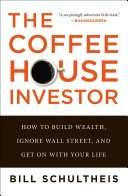
The Coffeehouse Investor is a plain-spoken book about making money matters less stressful. Bill Schultheis says most people do not need to guess the market, chase hot stocks, or watch financial news all day. A better path is to keep costs low, spread money around, and stay calm for the long run. [1][2][3]
The book’s message in simple words: build a quiet plan, stick with it, and spend more of your life living.
Book facts
| Author | Bill Schultheis |
|---|---|
| First published | 1998 |
| Publisher | Portfolio / Penguin Random House |
| Length | 224 pages in the later edition |
| Topic | Simple investing, personal finance, and index funds |
What the book is about
Schultheis wrote the book after working in finance. He wanted to help people who felt lost in the stock market. His answer is not fancy. He says to use a simple plan, avoid expensive investing mistakes, and stop trying to outsmart everyone else.
The book also makes a life point: if money takes less of your attention, you get more time for family, friends, work you enjoy, and rest.
Main ideas
- Do not put all your eggs in one basket. Spread money across different investments so one bad choice does not ruin everything.
- There is no free lunch. In money, big promises usually come with big risk, big fees, or both.
- Save for a rainy day. Keep an emergency fund so a car repair or job loss does not force you to sell investments at the wrong time.
- Ignore market noise. Short-term predictions are usually more guesswork than wisdom.
- Keep investing boring. Simple plans often beat complicated ones because they are easier to follow.
Simple explanations of key terms
Index fund
An index fund is like a basket that copies a whole market slice, such as the S&P 500. Instead of trying to pick one winning stock, you own many at once.
Diversification
Diversification means spreading your money around. It is like not planting only one crop in a field. If one crop fails, the others may still grow.
Asset allocation
Asset allocation is the mix of stocks, bonds, and cash you choose. Stocks can grow more, but they can also swing more. Bonds and cash usually move more slowly.
Rebalancing
Rebalancing means bringing your mix back to the plan you chose. If stocks grow too much, you may sell a little and move it into the parts that fell behind.
What it gets right
- It respects how hard it is to beat the market after fees.
- It reminds readers that behavior matters as much as math.
- It makes saving and investing feel normal and doable.
- It links money with life quality, not just bigger account balances.
What to be careful about
The book is old, so some examples and market ideas come from another time. Also, its calm style can make investing sound easier than it always is. Real life still brings risk, inflation, job loss, and panic selling.
So the best way to read it is as a strong starting point, not a complete plan for every person in every situation.
Kid-simple version: the book gives you a map, but you still need to look at the road.
Bottom line
The Coffeehouse Investor is a good book for someone who wants a quieter money life. Its advice is not flashy, but it is useful: diversify, keep fees low, save steadily, and do not let Wall Street steal your attention.
Sources
- [1] Penguin Random House
- [2] Google Books
- [3] Goodreads
- [4] Bogleheads