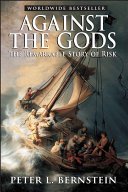
Against the Gods is a book about risk. But more than that, it is a book about how to think when life is unsure. Peter L. Bernstein shows how people slowly learned to measure chance, use probability, and make better choices when the future cannot be known for sure.
The big idea is simple: you cannot remove uncertainty, but you can learn to respect it. That lesson matters in investing, business, insurance, and everyday life.
What the book is about
Bernstein walks through the history of risk from ancient gambling and early number systems to modern finance and portfolio theory. He explains how people moved from superstition, where bad luck was blamed on gods, toward a world where chance could be studied with math.
The book does not read like a quick money guide. It is a history lesson, a finance book, and a thinking book all at once. That is why it has lasted so long. It helps readers see that markets, insurance, and investing all live inside uncertainty.
Main ideas in simple language
- Risk is the chance of a bad surprise. It is not just danger. It is also uncertainty about what will happen next.
- Probability means “how likely.” If a coin has a 50% chance of heads, that is a probability.
- Probability helps, but it is not magic. A good guess is still only a guess. Real life can still go wrong.
- People are not perfectly rational. Fear, greed, and pride often push people into bad decisions.
- Numbers are tools. They help us compare choices, but they cannot fully remove judgment.
Simple explanations of key terms
Probability
Probability is a way to talk about chance. It is a number that says how likely something is to happen. Think of it like a weather forecast. It does not promise rain or no rain. It just tells you the odds.
Risk
Risk is the possibility that the result will be worse than hoped. In money, that can mean losing capital, getting lower returns, or being forced to sell at the wrong time.
Uncertainty
Uncertainty means you do not know what will happen. Some uncertainty can be measured. Other uncertainty is messy and cannot be captured well by formulas. Bernstein is very good at showing the difference.
Insurance
Insurance is a way of sharing risk. Many people pay a little so that the few people who have a big loss can be helped. That simple idea changed modern life.
What the book gets right
- It treats uncertainty as normal, not as a flaw in the system.
- It shows that modern finance grew out of real human needs, like trade, safety, and planning.
- It warns readers not to trust tidy models too much when the real world is messy.
- It connects history, math, and behavior in a way that makes finance feel human, not cold.
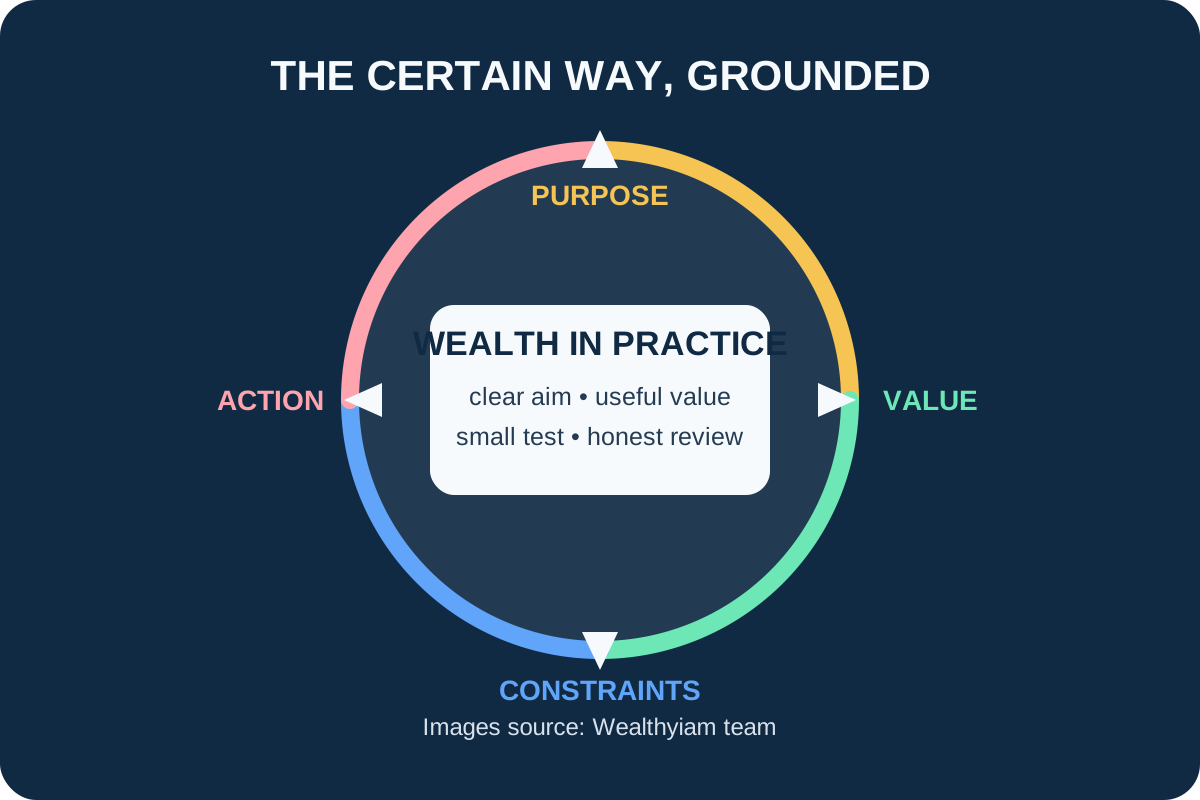
A helpful takeaway: when the future is unclear, the goal is not to predict perfectly. The goal is to make decisions that can survive being wrong.
What to be careful about
This is not a step-by-step investing manual. It is richer than that, but also less direct. Some chapters are dense and may feel slow if you want quick tips.
The book also reminds readers that models can fail. A formula can look smart and still break when people panic, when markets change, or when the world surprises everyone.
So the safest way to use this book is as a guide to better thinking, not as a promise that numbers will save you from every loss.
Bottom line
Against the Gods is one of the best books ever written about risk. It teaches a simple truth in a deep way: life is uncertain, and smart people do not pretend otherwise. They learn the odds, stay humble, and keep making careful choices anyway.
If you want to understand why probability matters in money, markets, and everyday judgment, this is a book worth reading.