If a market story makes you feel that prices can only rise—or that one alarming headline means everything is about to collapse—you need more than a prediction. You need a way to examine leverage, expectations, incentives, and liquidity before you act.
What readers want from The Great Crash of 1929
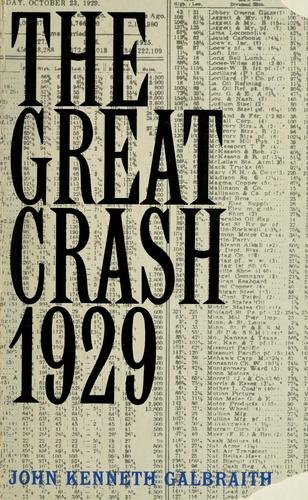
John Kenneth Galbraith’s The Great Crash of 1929 is a historical account of the speculation, breakdown, and aftermath surrounding the 1929 U.S. stock-market crash. This draft uses the book as a lens for a practical question: how can a reader study a financial boom without assuming the next boom or bust will look identical?
The short answer is this: treat market excitement as a risk-assessment problem, not a forecast. Look for borrowed money, crowded expectations, weak evidence, and the gap between an asset’s price and the cash or usefulness people can reasonably expect from it. Then decide what loss, delay, or uncertainty you can actually tolerate.
This is a Wealthy I AM educational synthesis, not a chapter-by-chapter reconstruction or a prediction about current markets. The seven lessons below are editorially organized applications; they are not presented as Galbraith’s exact numbered framework.
Why this book still matters for money decisions
Market history cannot tell you the next price movement. It can, however, make recurring behaviors easier to notice. During periods of enthusiasm, people may explain away expensive prices, treat rising prices as proof of quality, or assume they can exit before other participants do. Those patterns matter because leverage and optimism can turn a manageable mistake into a forced sale.
The book’s historical subject also has limits. The 1929 market, its institutions, its laws, and its economy were not the same as today’s. A historical analogy is a prompt to investigate, not proof that a current asset is in the same situation.
The honest curiosity gap: what history can—and cannot—tell you
A reader may reasonably ask: if the crash happened almost a century ago, how can it help with a current decision? The answer is not hidden ticker advice. It is a repeatable inspection habit. The useful question is not “What is the next 1929?” but “Which conditions would make my decision fragile, and what evidence would challenge my excitement?”
Seven practical lessons from The Great Crash of 1929
1. Rising prices are not the same as rising value
A price is what someone is currently willing to pay. Value is a judgment about the usefulness, cash generation, or other economic benefit an asset may provide over time. A rising quote can reflect improved fundamentals, but it can also reflect competition, fear of missing out, or easy credit. Price alone cannot distinguish those explanations.
Wealthy I AM application: Before buying, write two separate sentences: “The price is rising because…” and “The underlying value may improve because…”. If the second sentence is vague, pause. This is a decision aid, not a valuation model or a guarantee of avoiding losses.
2. Borrowing can make a small error much larger
Leverage means using borrowed money to increase exposure to an asset. It can magnify gains, but it also magnifies losses and may force a sale when the borrower cannot meet a requirement. The historical lesson is not that every use of credit is reckless; it is that a strategy that works only while prices rise can be less resilient than it appears.
Action: Map the obligation before the opportunity. Record the interest rate, repayment dates, collateral or margin terms, income needed to service the debt, and what happens if the asset falls or income stops. For an investment, consult the current account and loan documents and a qualified professional where necessary.
3. Crowded confidence can hide untested assumptions
When many people repeat the same explanation, disagreement may feel irrational. But consensus is not verification. A popular story can contain assumptions about demand, competition, regulation, refinancing, or future growth that have not been tested.
Action: Write the bullish case in one paragraph, then list three conditions it requires. For each condition, name an observable signal that would weaken it. This is a practical skepticism exercise, not a claim that contrarian decisions automatically outperform.
4. Liquidity is part of risk
Liquidity is how easily an asset can be sold or converted to cash without a substantial price concession. An asset may look attractive on paper but be difficult to exit during stress. This matters for investments, property, private businesses, and any plan that depends on cash arriving on schedule.
Action: Ask: “If I needed cash sooner than planned, who would buy this, how long might a sale take, and what costs or price reduction could occur?” Keep an emergency reserve appropriate to your circumstances rather than assuming every asset can serve as immediate cash.
5. Incentives shape the story people tell you
A promoter, lender, seller, analyst, or manager may have a different objective from yours. That does not prove the information is false. It means you should understand what each party gains if you buy, borrow, hold, or act quickly.
Action: For every important claim, identify the speaker, the evidence, the omitted downside, and the decision they want from you. Prefer primary documents and dated disclosures for material facts. Treat marketing copy as a starting point for questions, not as independent proof.
6. A diversified plan can reduce dependence on one forecast
Diversification means spreading exposure across assets or risks that do not all respond identically to one event. It cannot prevent every loss, and it does not make an unsuitable investment suitable. It can reduce the damage caused by being wrong about one company, sector, property, or macroeconomic story.
Action: List your major exposures, including employment income, business revenue, housing, debt, and investments. Look for hidden concentration. A portfolio can contain many names while still depending heavily on one industry or economic outcome. Asset allocation should reflect your goals, time horizon, and ability to absorb losses; this is general education, not individualized advice.
7. A written process is more reliable than a mood
Excitement and fear are information about your state of mind, not conclusive evidence about an asset. A written process creates a record of what you believed before the result was known. That makes it easier to distinguish a sound process from a lucky outcome.
Action: Before a material decision, record the thesis, evidence, assumptions, downside, time horizon, liquidity needs, and what would cause you to review it. Revisit the note on a schedule rather than every time the price changes.
A five-step market-risk screen you can use today
This is an original Wealthy I AM workflow inspired by the book’s historical subject. It is not presented as Galbraith’s exact method.
- Name the decision. Write exactly what you are considering: buying, holding, borrowing, selling, or waiting.
- Separate facts from stories. Put confirmed information in one column and interpretations or forecasts in another. Mark unknowns instead of filling them with confidence.
- Test fragility. Identify debt, dependence on uninterrupted income, illiquidity, concentration, and assumptions that must all hold.
- Choose a review trigger. Define a fact—not merely a price movement—that would make you recheck the decision. Examples include a change in debt terms, a loss of a key customer, or a material shift in the original thesis. These are hypothetical illustrations, not predictions.
- Set a cooling-off period. For a non-emergency decision, wait long enough to reread your assumptions without the pressure of a sales message or a rapidly moving price.
A clearly hypothetical illustration
Suppose a hypothetical investor is considering an asset promoted as a “rare opportunity.” The investor writes down that the case depends on continued revenue growth, cheap financing, and a quick resale. The screen reveals three separate risks: the value depends on one forecast, the debt leaves little room for delay, and the proposed exit depends on another buyer’s enthusiasm. The screen does not prove the asset is bad. It reveals what must be investigated before action.
Mistakes to avoid when applying the book
- Turning a historical parallel into a timetable. The book does not provide a reliable date for a future crash.
- Confusing caution with certainty. Saying “this is risky” is not the same as knowing what will happen.
- Using leverage because a gain looks obvious. A plausible upside does not remove repayment obligations.
- Treating one historical narrative as a complete market theory. Compare the account with current primary sources and other serious analysis.
- Calling a process diversification. Holding several similar assets may leave the same underlying risk untouched.
- Mistaking a lucky result for a good decision. Review the reasoning, not only the outcome.
Frequently asked questions
Is The Great Crash of 1929 a personal-finance guide?
No. It is a historical work about the 1929 crash and surrounding financial conditions. Wealthy I AM’s applications—such as documenting leverage and liquidity—are modern educational extensions, not personalized instructions from the book.
Does the book predict the next stock-market crash?
No reliable historical book can provide a precise current-market forecast from analogy alone. Use the history to generate questions about risk and incentives, then verify present facts independently.
Should I sell investments after reading it?
Not on the basis of a book summary. A decision depends on your objectives, time horizon, taxes, liquidity needs, and risk capacity. Consider your written plan and seek qualified, situation-specific advice when appropriate.
What is the best beginner takeaway?
Before acting on an exciting story, write down what must be true, what could go wrong, how quickly you may need cash, and what evidence would change your mind.
One low-risk next step
Choose one pending financial decision and complete the five-step screen on one page. Do not trade, borrow, or change a long-term plan merely to complete the exercise. Use the page to identify one fact worth verifying and one assumption worth discussing with an appropriately qualified professional.
Conclusion
The Great Crash of 1929 is most useful when read as a warning against overconfidence, not as a market-timing manual. Its historical subject invites readers to look beyond rising prices and persuasive stories toward leverage, liquidity, incentives, concentration, and the assumptions supporting a decision. The Wealthy I AM synthesis is deliberately modest: name the decision, separate facts from forecasts, test fragility, define a review trigger, and cool down before acting. That process cannot eliminate uncertainty, but it can make uncertainty visible before it becomes expensive.
Source and scope note
Book identity and broad subject were checked against the Open Library work record and edition record. No quotation, chapter-level claim, current statistic, current price, return forecast, tax conclusion, or legal conclusion is used. This article is general education, not individualized financial, investment, tax, or legal advice.