If your money plan is a collection of intentions—earn more, spend less, invest someday—you may not lack ambition. You may lack a clear next action. The Science of Getting Rich offers a forceful answer from 1910: Wallace D. Wattles argues that purposeful thought, useful work, and action taken in a “Certain Way” can lead to prosperity.
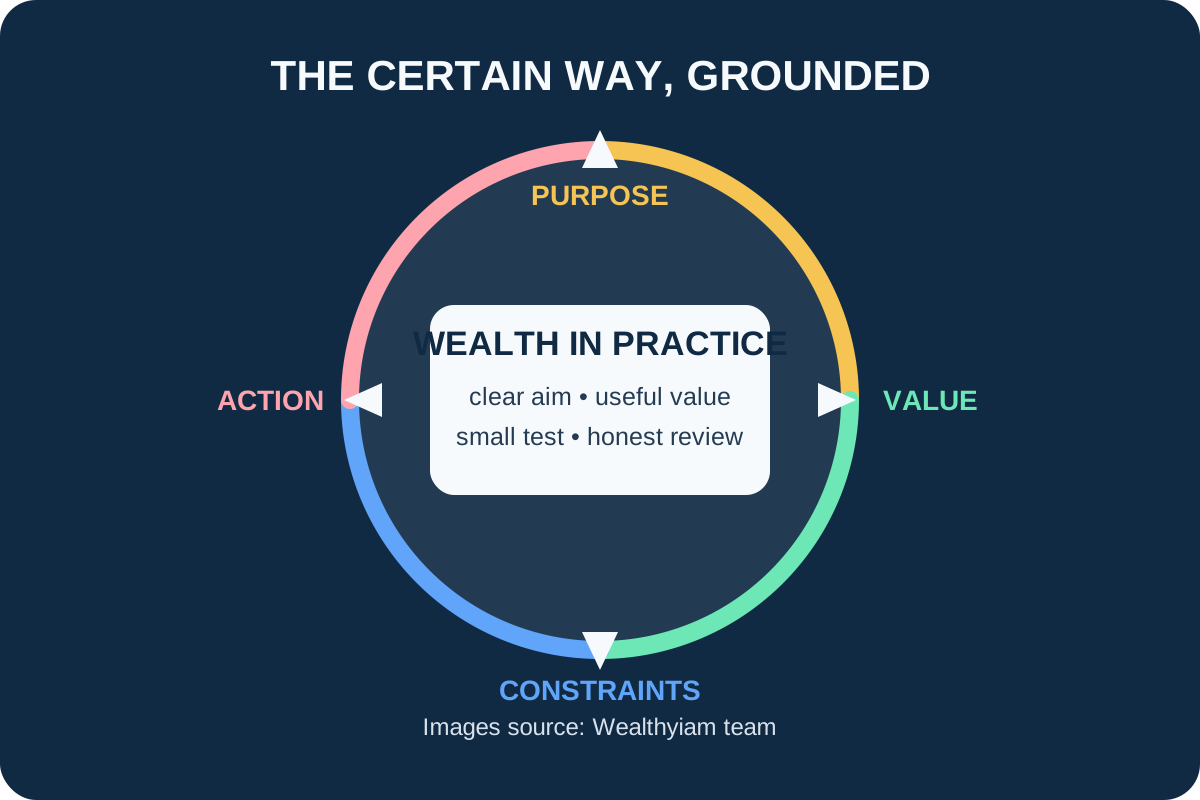
The book is best read today as motivational philosophy, not financial science. Its language about thought shaping material results belongs to the New Thought tradition; it does not establish that visualization causes wealth. The most useful modern reading is to turn a defined aim into constructive, repeatable action while accounting for debt, income, health, market risk, luck, and structural constraints.
What is The Science of Getting Rich about?
Wattles rejects a purely competitive view of wealth and urges readers to focus on creation, gratitude, clear purpose, and effective action. He also makes metaphysical claims that modern readers should not confuse with tested evidence. Positive thinking may influence attention or persistence, but it cannot guarantee income, eliminate risk, or make every opportunity sound.
The seven lessons below are Wealthy I AM’s modern applications of the book’s recurring ideas. They are not Wattles’s chapter titles or an exact numbered framework.
1. Turn a wish into a specific financial job
“I want to be rich” cannot tell you what to do next. A financial job can: build an emergency reserve, evaluate expensive debt, learn a marketable skill, or test a small service offer.
Write one outcome, a time horizon, and the next controllable step. For example: “For four weeks, I will review cash flow every Friday and evaluate one recurring expense.” This is a planning exercise, not a promise that a particular result will follow.
2. Create useful value instead of displaying wealth
A grounded translation of Wattles’s emphasis on creation is to distinguish value from appearance. Value is a product, service, skill, or decision that solves a real problem. Display is a signal of success. They can look similar, but only the first describes a contribution.
Ask three questions: Who is helped? What changes for them? What evidence shows that they value the change? Improve the usefulness of what you deliver before taking on lifestyle costs meant mainly to signal success.
3. Pair an opportunity scan with a constraint scan
The book encourages an expansive view of opportunity, but scarcity is real: time, cash, energy, and attention are limited. List three assets you can use—knowledge, relationships, tools, or available time—and three constraints, such as debt, caregiving, unstable income, or health needs.
Then choose a small experiment that fits both lists. This keeps optimism from becoming reckless borrowing or an unrealistic side-hustle promise.
4. Make ordinary action repeatable
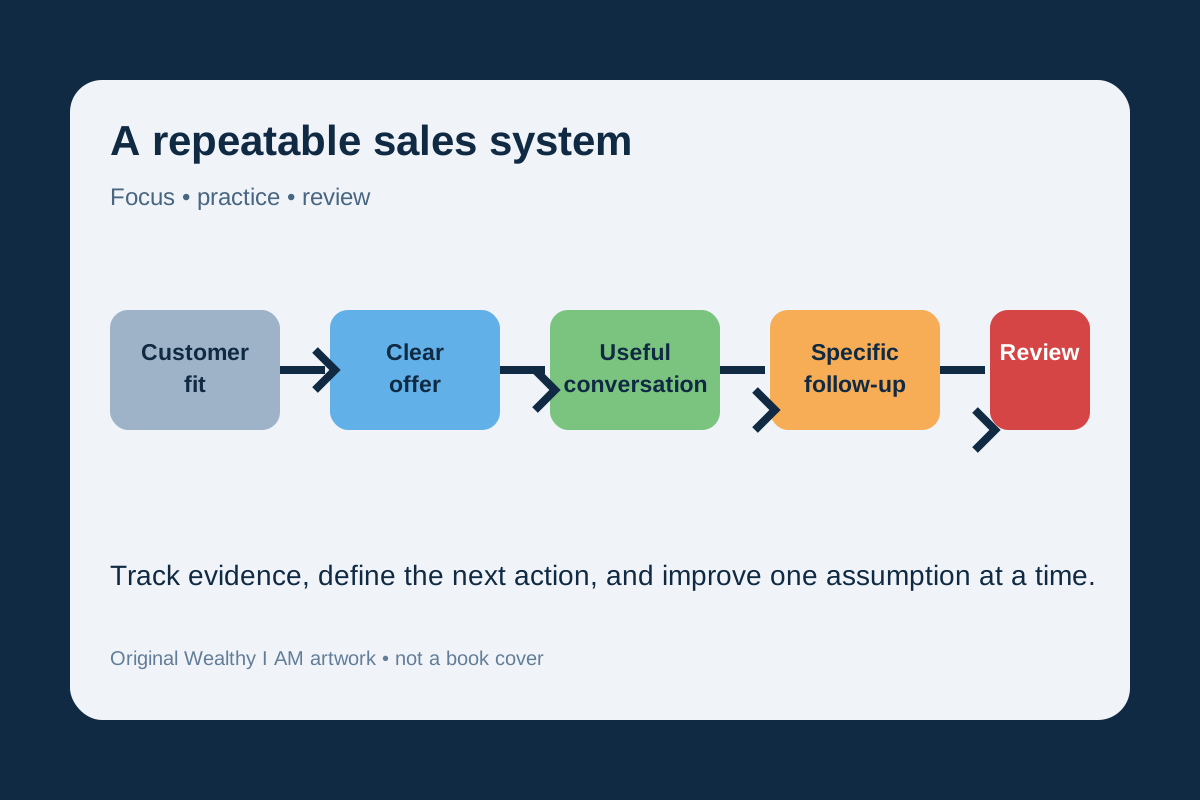
Wattles repeatedly connects thought with action. A modern financial routine might be a weekly review, a spending plan, a customer conversation, or a written investment policy. None is dramatic, but each can produce information.
Use a simple loop:
- Choose one action.
- Record what happened.
- Compare the result with your expectation.
- Adjust the next step.
Consistency is not stubbornness. If an action damages sleep, health, safety, or financial stability, modify or stop it.
5. Understand leverage before using it
Leverage is any resource that can multiply output: borrowed money, software, distribution, or other people’s time. It can also multiply losses, obligations, and coordination costs. This is a modern application rather than a formula stated by Wattles.
Before committing money or signing an agreement, record fixed costs, variable costs, cancellation terms, a plausible downside scenario, and the cash that must remain available. If the plan works only when every assumption is favorable, it is fragile.
6. Treat gratitude as a behavior, not a forecast
Gratitude is central to Wattles’s method. It may help a reader notice available resources or maintain perspective, but it should not be presented as a causal wealth formula.
Once a week, record one resource and one responsibility. Turn each into a small action. A professional relationship might prompt a useful question; a responsibility to protect short-term savings might prompt a review of where that money is held. The action matters more than the mood.
7. Measure resilience as well as income
Income matters, but it is not the only sign that a financial system is improving. You can also track liquid savings, expensive debt, essential obligations, skill growth, long-term contributions, and dependence on a single income source.
A monthly dashboard might include cash on hand, essential expenses, high-cost debt, long-term contributions, and one capability under development. These measures do not guarantee wealth, and investment values can fluctuate. They simply make progress and fragility easier to see.
A 30-minute “Certain Way” money reset
This is an original Wealthy I AM exercise inspired by the book’s action-oriented philosophy, not a method stated verbatim by Wattles.
- Name the problem. Identify the decision creating the most financial friction.
- Write the facts. Record verifiable income, essential costs, debts, liquid savings, and deadlines relevant to that decision.
- Choose one useful outcome. Pick something within your control, such as completing a spending review or gathering account terms.
- Design a low-risk test. Decide what you will do for seven days and what evidence you will collect.
- Set a stop condition. Revise the test if it requires unaffordable debt, missed essential bills, unsafe work, or sacrificed sleep.
- Schedule a review. Compare the result with the original facts before expanding the plan.
Mistakes to avoid
- Blaming yourself for every outcome. Effort matters, but wages, markets, health, obligations, policy, timing, and luck matter too.
- Confusing confidence with competence. Confidence can encourage learning; it cannot replace due diligence.
- Using optimism to justify debt. Borrowing can magnify losses and may carry fees, changing rates, collateral risk, or legal consequences.
- Treating anecdotes as proof. One person’s success does not show that the same action will work in different circumstances.
- Measuring only appearances. Higher gross revenue or a larger purchase does not necessarily mean greater financial resilience.
Frequently asked questions
Is The Science of Getting Rich a finance book?
It is better described as a New Thought and motivational work about prosperity. It does not provide a modern system for taxes, investing, insurance, debt management, or consumer protection.
Does positive thinking create wealth?
The book argues for a causal role for thought, but it does not provide reliable evidence that thought alone produces financial outcomes. Mindset may affect behavior; results still depend on action, resources, constraints, risk, and circumstances beyond one person’s control.
What is the most useful lesson for a beginner?
Turn a broad desire into one specific financial job, verify the relevant facts, and choose a low-risk next step. Clarity is more useful than an oversized promise.
Should I follow every recommendation in the book?
No. Consider its historical and philosophical context. Test practical ideas against reliable current information, and seek qualified advice for material legal, tax, investment, or safety decisions.
A measured next step
Carry forward the invitation to act, not the certainty. Choose one financial fact to clarify, one useful action to test, and one risk you will not ignore. Building wealth is a process of decisions under uncertainty, not a reward promised by a mindset.
Start the 30-minute reset and revisit it after seven days. If it exposes a debt, tax, investment, legal, or safety issue you cannot assess confidently, pause and consult an appropriately qualified professional.
Sources and further reading
- Project Gutenberg: The Science of Getting Rich full text — primary text used to verify the book’s publication context and recurring themes.
- Open Library: The Science of Getting Rich work record — bibliographic and catalog context.