A child asking for an expensive toy is not just a shopping problem. It can be a chance to practice a money decision: What is this for? What would we give up? How can we be generous without pretending money is unlimited? Many parents want their children to become confident with money, but they do not want every conversation to become a lecture, reward system, or source of shame.
Short answer: Ron Lieber’s The Opposite of Spoiled makes the case for talking about money openly and connecting those conversations to family values. Parents can apply that idea by offering age-appropriate choices, explaining trade-offs plainly, and helping children practice spending, saving, giving, and work. This article is a summary and practical interpretation, not individualized financial, tax, legal, or parenting advice.
Who this guide is for
This guide is for parents and caregivers who want calmer, more useful conversations about money. It does not prescribe one allowance system or promise that a particular routine will produce financially successful adults. Instead, it turns the book’s themes into small decisions children can practice with adult support.
What problem does the book help parents solve?
Children notice money even when adults avoid discussing it. Without an explanation, they may hear rules about purchases, work, or generosity without understanding the values and limits behind them.
The Open Library record describes Lieber’s book as a practical guide to money conversations and identifies topics including allowance, chores, spending, saving, giving, part-time jobs, and college costs. Its listed table of contents also includes chapters on starting money conversations, allowance debates, materialism, giving, work, and deciding how much is enough.
That evidence supports the book’s broad premise: money is not only a technical subject. It is also a way to discuss patience, generosity, perspective, and family priorities. The five-part structure below is a Wealthy I AM synthesis of those themes, not Lieber’s official framework.
Five money ideas children can practice
1. Spending: wants are choices, not character tests
Spending is the most visible part of money, so it is often where conflict begins. Instead of labeling a purchase—or the child—as good or bad, ask what the child wants the item to do. Is it for play, convenience, belonging, collecting, or solving a problem?
A useful family rule might be: “You may choose how to use this part of your money, and we will talk about safety, legality, and household boundaries.” That preserves some agency without turning every request into entitlement.
Try this: Before a nonessential purchase, use a 24-hour pause. Ask the child to note the price, what they already own that serves a similar purpose, and one thing they would give up by choosing this item. Waiting will not eliminate every regretted purchase; the point is to make the trade-off visible.
2. Saving: make a future choice visible
Saving means choosing not to spend all available money now. Younger children may understand this more easily when the future purpose is concrete: a book, gift, outing, or larger item. Older children can compare a short-term goal with a longer one.
Avoid presenting saving as moral superiority. Spending some money on a small pleasure is not necessarily failure. The lesson is that several goals may compete for the same limited amount.
Try this: Use two labeled containers or digital categories: “now” and “later.” Let the child decide the split within an agreed range. Review it monthly. Is the later goal still important? What changed? What would they do differently next time?
3. Giving: combine generosity with thought
Giving can help children connect resources with other people’s needs, but it should not force them to perform virtue or disclose private family finances. Invite children to notice causes, people, or communities they care about, then discuss what a contribution can and cannot do.
A family might set aside a small giving amount, volunteer time, or contribute useful items. None is automatically best. The useful practice is intentionality: choosing a value and directing a scarce resource toward it.
Try this: Ask, “Who would this help, and how do we know?” The question encourages thought without assuming that every donation has the intended effect.
4. Work: connect effort with contribution, not worth
Conversations about work can distinguish household responsibilities, optional paid tasks, learning, and unpaid contributions. If every helpful action has a price, children may begin to see family life as a series of transactions. If adults never explain how work and income connect, children may miss an important part of financial life.
The arrangement should fit the child’s age, abilities, household needs, culture, and applicable law. No single chores-and-allowance system is suitable for every family.
Try this: Make one short list of ordinary responsibilities shared by the household and another of optional projects with clear expectations. If a project is paid, agree on the task and amount first. Pay for completing the task—not for being a “good” child.
5. Conversation: explain enough without oversharing
Children benefit from truthful explanations, but truth does not require every adult detail. A parent can say, “That is outside this month’s plan,” or “We are paying for housing and food first,” without sharing account balances or making the child responsible for adult worries.
Use plain definitions. A budget is a plan for where money can go. A trade-off is what you give up when you choose something else. A value is a priority that helps guide a decision.
Try this: Hold a short monthly money conversation. Discuss one upcoming choice, one thing the family is saving for, and one question the child has. Keep it brief enough that it does not become an interrogation.
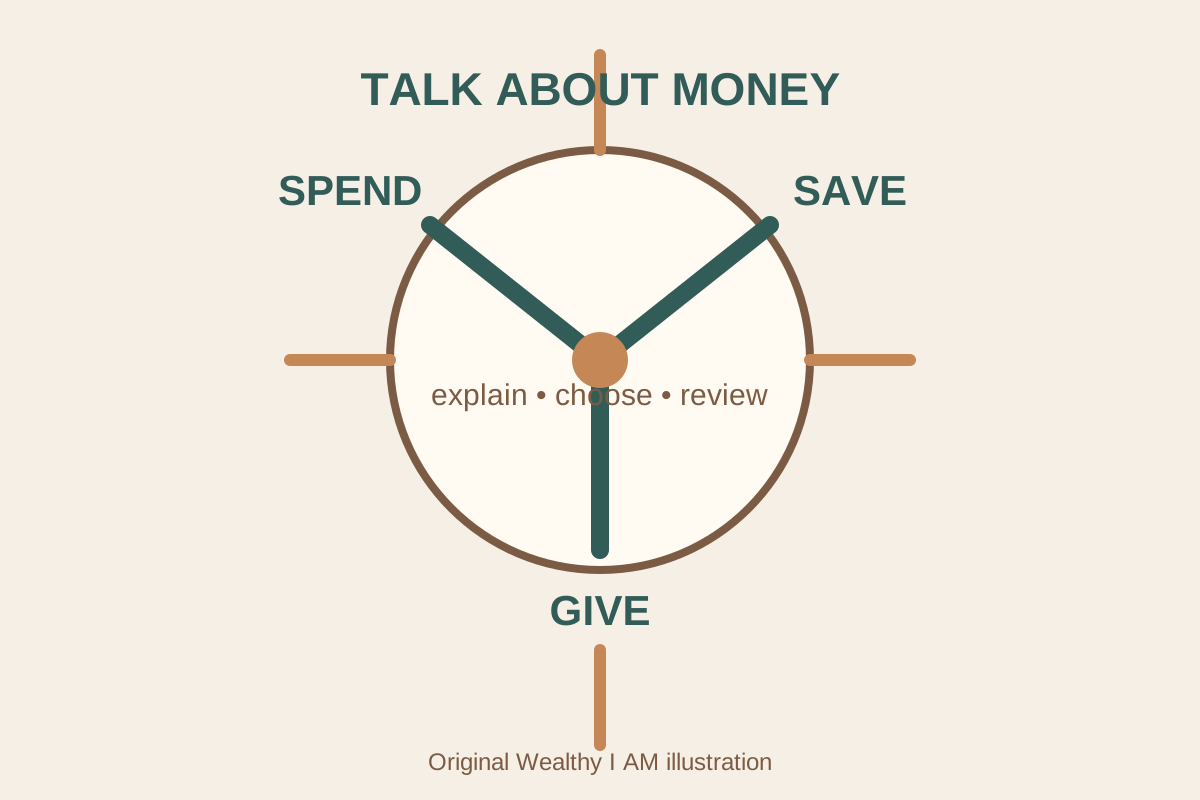
An original practical framework: explain, choose, review
The following three-step loop is a Wealthy I AM application, not a named method from the book.
- Explain the constraint. State the amount, deadline, safety boundary, or family priority in simple language.
- Offer a real choice. Give two or three acceptable options rather than an unlimited menu.
- Review the outcome. Later, ask what worked, what surprised the child, and what they would change.
Imagine a child has €20 and wants a €15 game. The parent might explain that the child can buy it, wait, or choose a less expensive activity and keep more for a later goal. There is no guaranteed perfect choice. The value lies in making the trade-off visible and revisiting the decision without ridicule.
Mistakes to avoid
Turning every purchase into a morality play
A purchase can be unwise without making the purchaser irresponsible. Focus criticism on the decision and its consequence, not the child’s identity.
Using money to control affection or obedience
Do not make love, belonging, or essential care conditional on saving or compliance. Household limits can be firm without making a child fear rejection.
Copying another family’s allowance system
A method that works in one household may not fit another. Income, caregiving, culture, age, disability, local prices, and family goals vary. Treat a system as something to test and adjust, not a universal rule.
Making children responsible for adult financial stress
Honest boundaries are appropriate; making a child feel responsible for rent, debt, or relationship conflict is not. Share the information needed to understand a decision while protecting privacy and emotional safety.
Treating one book as a complete curriculum
A book can provide a useful lens, but it cannot replace context. Families may need age-appropriate educational resources or qualified help for complex legal, tax, disability, benefit, or financial questions.
Is The Opposite of Spoiled worth reading?
Parents and caregivers who want a less secretive, less shame-based way to discuss money are the clearest audience. The book may also help adults who disagree about allowance, spending limits, work, giving, or how much children should know about family priorities.
It is less suitable for readers seeking a universal formula or guaranteed outcome. Children’s habits develop within relationships, circumstances, and opportunities that no single framework can control.
Frequently asked questions
What is the main lesson of The Opposite of Spoiled?
The public book record presents money conversations as opportunities to teach both financial behavior and family values. The practical takeaway is to discuss money openly enough for children to understand choices, limits, and priorities.
Should children get an allowance?
Allowance is one of the book’s core topics, but the public record does not establish one policy as right for every family. If you use an allowance, define its purpose, boundaries, and review date.
How much should a child save?
There is no universally suitable amount. Choose a small, understandable target that fits the child’s age and the household’s circumstances, then review it rather than treating it as a permanent rule.
How can parents discuss money without revealing private finances?
Explain the constraints and priorities relevant to the child’s question without sharing sensitive details. “That is not in our plan this month” can be both truthful and sufficient.
Is this financial advice?
No. This is general education and a book-based parenting framework. Financial, tax, legal, and benefit decisions depend on personal circumstances and current rules; seek qualified advice where appropriate.
Sources and further reading
- Open Library work record for The Opposite of Spoiled by Ron Lieber.
- Open Library title-and-author search record.
- Image source: Open Library Covers API. The publisher must verify reuse terms before publication.
A calm next step
Choose one upcoming money decision—not every decision—and use the explain, choose, review loop. Let the child make a bounded choice, then discuss the result later without shame. The aim is not to produce a flawless spender or saver. It is to make money a subject the family can examine together rather than a mysterious test of status or worth.