If investing feels like a choice between doing nothing and guessing which stock or market trend will win, the real problem may be process—not a lack of tips. Beginners need a way to decide what to own, how much risk to accept, and what to do when markets become uncomfortable.
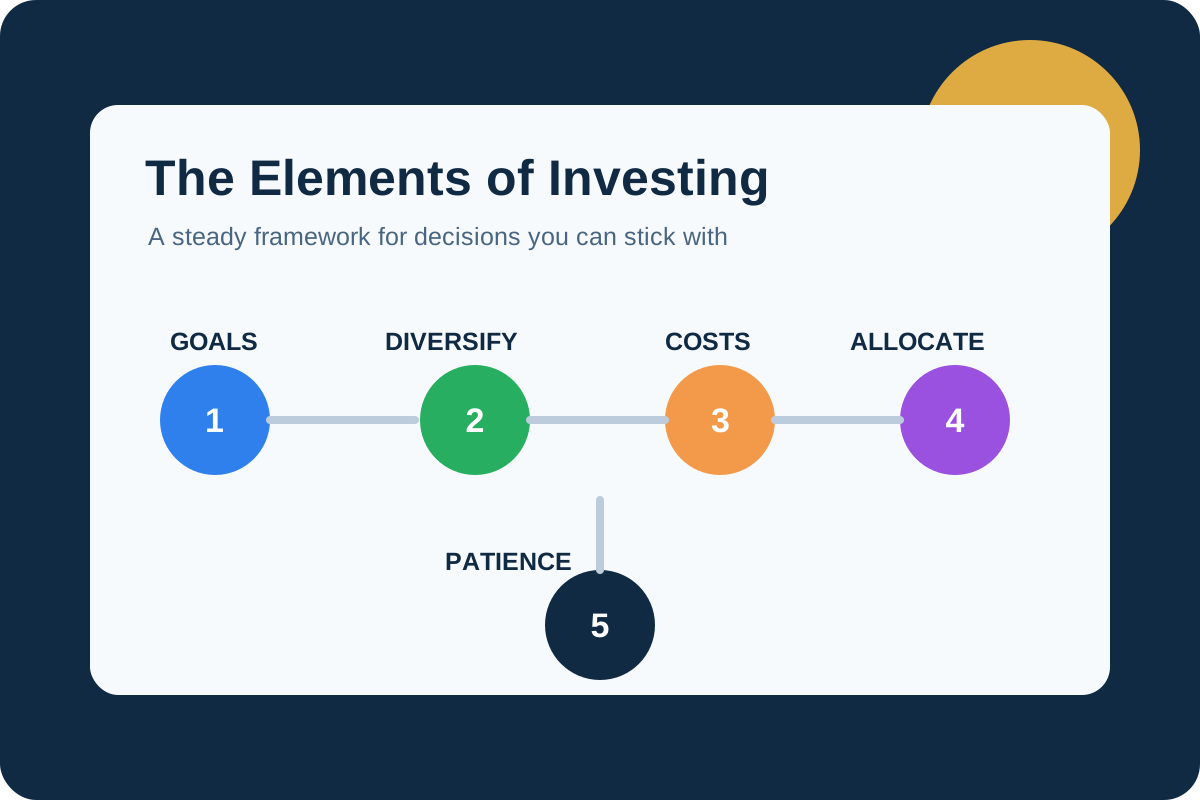
Short answer: The Elements of Investing: Easy Lessons for Every Investor presents a disciplined foundation built around saving, diversification, asset allocation, low costs, and patience. The practical Wealthy I AM application is simple: define the goal, match risk to the time horizon, spread exposure, control avoidable costs, and write rules before emotions arrive. This is general education, not individualized financial advice, and no method guarantees a return.
The book is an investing primer by Burton G. Malkiel and Charles D. Ellis. The lessons below are a Wealthy I AM synthesis of the available work record and broad description—not a claim that the authors use this exact numbered structure.
Who this book may help—and what it cannot decide for you
This book may suit a beginner who wants a durable framework rather than predictions. It can also help an experienced investor audit whether a portfolio still reflects a stated goal.
It cannot determine your emergency-fund needs, tax position, insurance coverage, debt priorities, legal obligations, or suitable investments. Those depend on jurisdiction, income stability, time horizon, liquidity needs, and ability to tolerate loss. A diversified portfolio can still decline, and past market performance does not establish future results.
The core idea: make the process more reliable than your mood
Investing means putting money into assets with the expectation that they may produce income, growth, or both over time. Uncertainty is unavoidable. A sound process does not remove all risk; it tries to make the risks understandable and reduce avoidable ones.
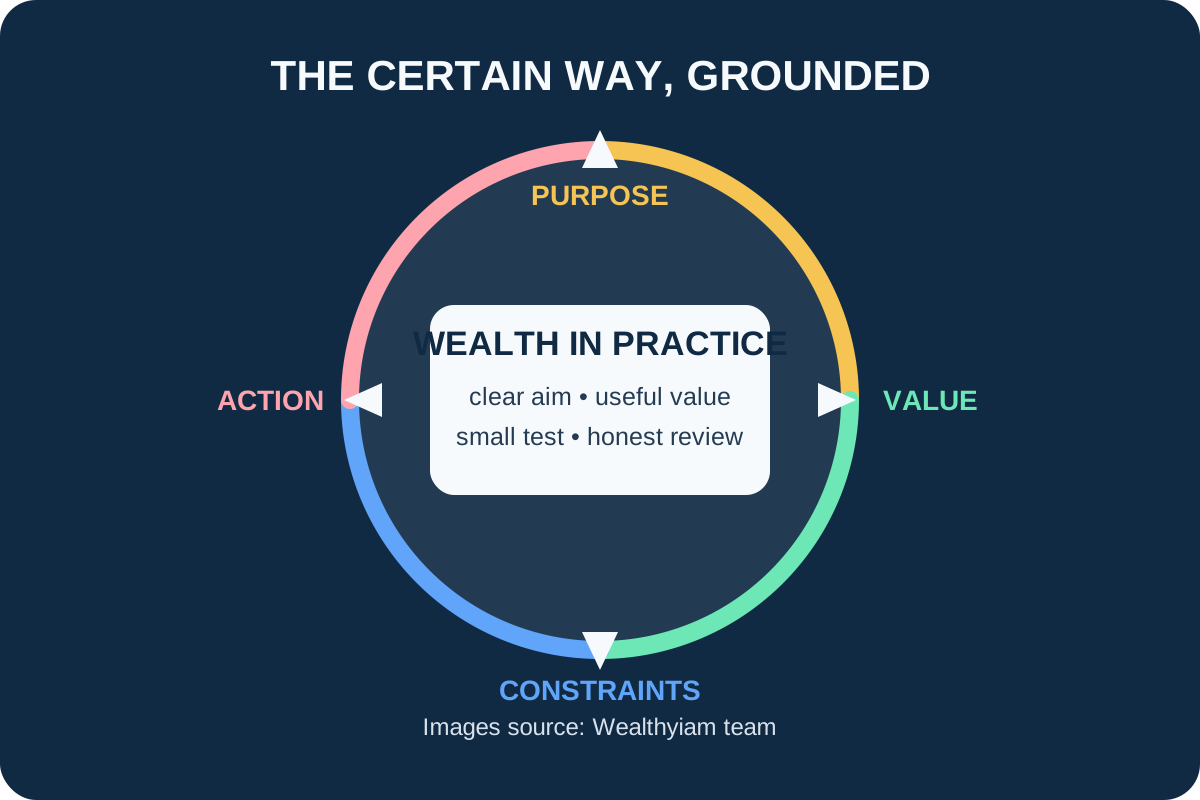
Use five questions: What is this money for? When might I need it? Which mix of assets fits that horizon? Am I concentrated in one company, sector, country, or asset type? Which costs and decisions can I control? What rule will I follow when prices fall? This sequence is less glamorous than forecasting, but it gives you something to do before and after a decision.
Five practical lessons from The Elements of Investing
1. Start with a goal and a time horizon
A retirement account, possible home purchase, and emergency reserve do not have the same job. The time horizon is the period before money may be needed; a shorter horizon generally leaves less time to recover from a decline.
Try this: label each account with its purpose, approximate need date, and the consequence of a loss then. If a loss would force a sale at a bad time, the money may need a more liquid and less volatile home. This is a planning prompt, not a universal allocation rule.
2. Use diversification to reduce concentration
Diversification means spreading money across investments whose results are not perfectly linked. It can reduce damage from one company or narrow area performing badly, but it cannot eliminate market loss.
A portfolio may appear diversified while funds overlap heavily. List broad categories, regions, large single positions, and exposure created by employment or property. A business owner may already be concentrated in one industry through income; that matters when considering household assets.
3. Keep costs visible
A fund expense ratio is a recurring percentage charged for operating expenses. Trading spreads, account fees, advisory fees, taxes, and other charges can also reduce what remains invested. The effect depends on the account, product, jurisdiction, and time period.
Record every cost you can find, what service it pays for, and what trade-offs it creates. A cheaper option is not automatically better if it changes risk, liquidity, tax treatment, or support. The point is to avoid paying for something you do not understand or use.
4. Write an allocation policy before a crisis
Asset allocation is the division of a portfolio among categories such as shares, bonds, cash, or other assets. It is a risk decision, not a personality test. The appropriate mix depends on goals, horizon, capacity for loss, and the account’s role.
Create a short policy with purpose, target mix or permitted range, review schedule, and conditions that justify a change. Keep “the market fell” separate from a genuine change in goal or risk capacity. Rebalancing may involve costs and taxes, so consider account and local rules.
5. Practice patience without ignoring evidence
Long-term investing does not mean ignoring evidence forever. It means refusing to turn every price movement into a new strategy. Set a review date and define what information would change your policy. During the interval, record any urge to trade and the evidence you would need before acting.
A 30-minute portfolio foundation check
This is an original Wealthy I AM worksheet, not a quoted method from the book:
- Name the job of the money: goal, approximate need date, and flexibility.
- List exposures: accounts, categories, concentrated positions, property, and business or employment concentration.
- Record costs and constraints: fees, trading costs, tax considerations, liquidity limits, and withdrawal penalties.
- Stress-test in words: complete “If this portfolio fell materially, I would…” If the answer is “sell because I need the money,” revisit the account’s role.
- Write one change rule: review on schedule unless goal, horizon, cash needs, or risk capacity changes.
- Choose one fact to verify: holdings, fee schedule, tax rule, or liability date.
A hypothetical reader might discover that three funds overlap and that near-term money is invested beside retirement assets. The exercise does not predict a better return; it makes concentration, timing, and unanswered questions easier to see.
Mistakes to avoid
Confusing diversification with safety
Spreading holdings does not protect against every decline, inflation, currency movement, interest-rate change, or loss of purchasing power.
Treating a principle as a product recommendation
A book’s discussion of diversification or low costs does not identify a particular fund, broker, account, or asset for you. Product suitability requires current, jurisdiction-specific information.
Changing the plan because of one outcome
A good outcome can come from luck, and a poor outcome can follow a sensible decision. Review process, assumptions, and goal—not only the latest result.
Ignoring cash needs and high-cost debt
Investing while lacking accessible reserves or carrying expensive debt may create avoidable pressure. Map the trade-offs before committing money.
FAQs
Is this book suitable for a complete beginner?
It is positioned as an accessible foundation for saving, diversification, allocation, costs, and discipline. Verify current account, tax, and product information before acting.
Does it recommend a specific portfolio?
The available work record supports a broad primer description, not a complete edition-specific reconstruction of every recommendation. Do not treat this summary as a substitute for the relevant edition or current guidance.
How much should I invest in stocks?
There is no responsible universal percentage. Consider goal, horizon, liquidity, other assets, ability to absorb loss, and local context. Qualified advice may be appropriate for individualized planning.
Is a low-cost fund always best?
No. Cost matters, but so do diversification, risk, tracking, liquidity, tax treatment, service, and fit with the goal.
What should I do when markets fall?
Check whether your goal, horizon, cash needs, or risk capacity changed. Avoid an impulsive change solely because prices moved; if the plan no longer fits, investigate carefully.
A cautious next step
Before buying, selling, or switching anything, write one sentence describing the job of the money and one sentence describing the risk you are accepting. Verify fees, holdings, liquidity, and tax implications from current authoritative sources. If you cannot explain the decision in plain language, pause.
Conclusion
The Elements of Investing offers an antidote to the belief that wealth requires constant prediction. Its broad lesson is to build around goals, diversification, allocation, costs, and patience, then review without letting every headline rewrite the plan. These steps may improve decision quality, but they cannot guarantee financial success.
Sources / Further reading
<small><a href="https://openlibrary.org/works/OL15596423W" rel="noopener">Open Library: <em>The Elements of Investing: Easy Lessons for Every Investor</em> by Burton G. Malkiel and Charles D. Ellis</a> — work identity, authors, and catalog record.</small> <small><a href="https://covers.openlibrary.org/b/id/11391829-L.jpg" rel="noopener">Open Library Covers API image source</a> — exact-title cover asset and provenance; reuse rights should be checked before publication.</small> <small>General financial education only. Verify current authoritative guidance for your jurisdiction and consider qualified advice for investment, tax, debt, insurance, or legal decisions.</small>