Search intent: A practical summary and review for readers who want to understand Guy Spier’s investing lessons without treating a memoir as a guaranteed stock-picking system.
If you understand investing theory but still make rushed money decisions, the problem may be your environment, incentives, and habits—not a lack of intelligence. Guy Spier’s The Education of a Value Investor combines memoir with reflections on mentors, temperament, independent thinking, and ethical success.
Quick answer: The most transferable idea is to improve the setting around a decision before trying to become more clever. The seven lessons below are a Wealthy I AM synthesis of broad themes, not a claim that Spier presents this exact numbered framework. This general education is not individualized financial advice; value investing—buying an asset when you believe its market price is below its underlying worth—can lose money.
Who this book may help
This book may interest readers who want a memoir-based perspective on investing discipline, ethical ambition, and the habits that shape financial decisions. It is less useful as a standalone valuation course or a current guide to markets, taxes, or portfolio construction.
What the book is about
Spier describes a movement from status-seeking finance toward a more reflective approach to investing and life. The book emphasizes mentors, temperament, limiting noise, and aligning money with values. It is not a complete valuation textbook, and copying one investor’s path cannot reproduce his circumstances or results.
Seven lessons for calmer money decisions
1. Change the environment before blaming willpower
An environment includes the people, media, incentives, and routines surrounding a decision. If every conversation rewards constant trading, patience becomes harder.
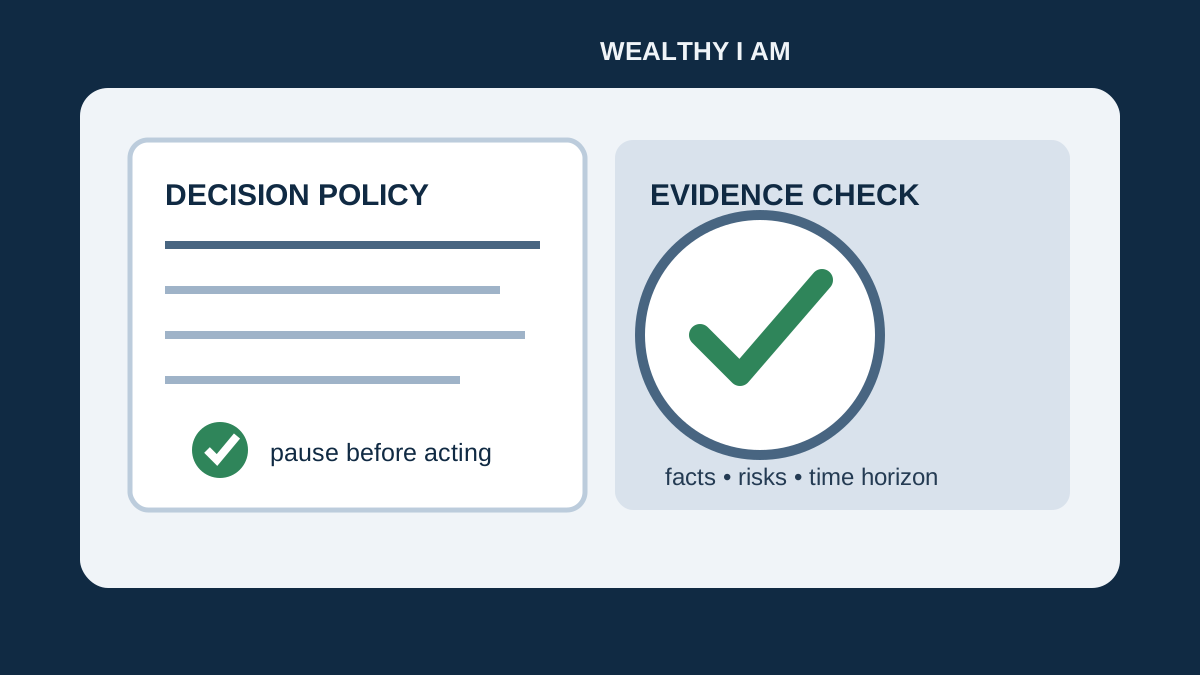
Try this: Write an investment policy stating your time horizon, acceptable risks, diversification boundaries, and review conditions. It will not remove uncertainty, but it can reduce impulsive changes.
2. Treat temperament as an investing asset
Temperament is how you respond to uncertainty, losses, excitement, and social pressure. Good analysis can still produce a poor decision when fear or envy takes over.
Try this: Before acting, record the decision, supporting evidence, weakening evidence, and time horizon. Review the note later rather than trusting memory alone.
3. Learn from mentors without outsourcing judgment
A mentor’s approach reflects a particular era, capital base, temperament, and opportunity set. Learning is not delegation.
Try this: Translate a borrowed idea into your own words and list its assumptions and downside. If you cannot explain the mechanism, you borrowed a conclusion rather than a process.
4. Remove decisions that can damage your plan
Fewer decisions do not guarantee better outcomes. The useful goal is removing low-value choices that invite noise and unnecessary activity.
Try this: Use a cooling-off period for non-routine actions. Check fees, taxes, liquidity, concentration, and whether a headline—not a changed long-term fact—is creating urgency.
5. Seek independent thinking, not a contrarian identity
Independent thinking means forming and updating a view from evidence. It is not disagreeing merely to appear distinctive.
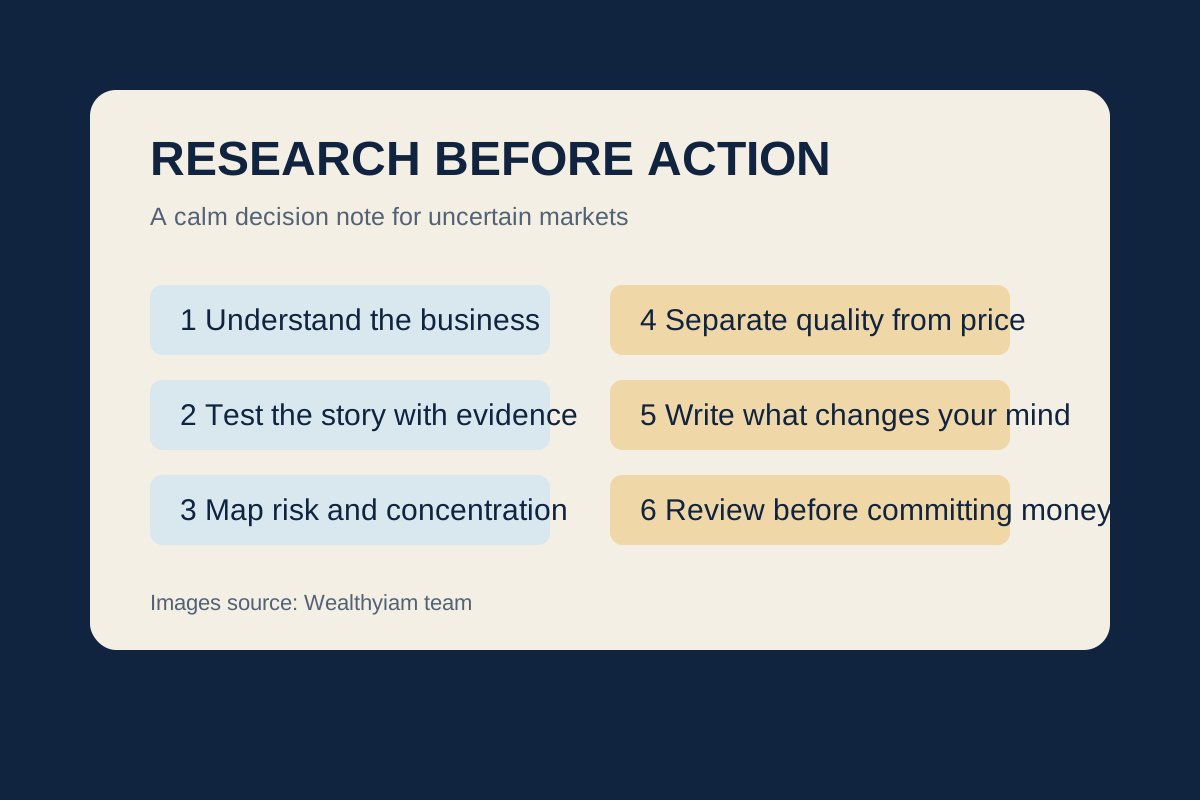
Try this: Add a disconfirming-evidence section to every research note. Ask what the strongest opposing case is and what would change your mind.
6. Connect financial choices with the life you want
Wealth is not only a score. Money may support autonomy, relationships, meaningful work, or generosity, but those benefits depend on choices outside an investment account.
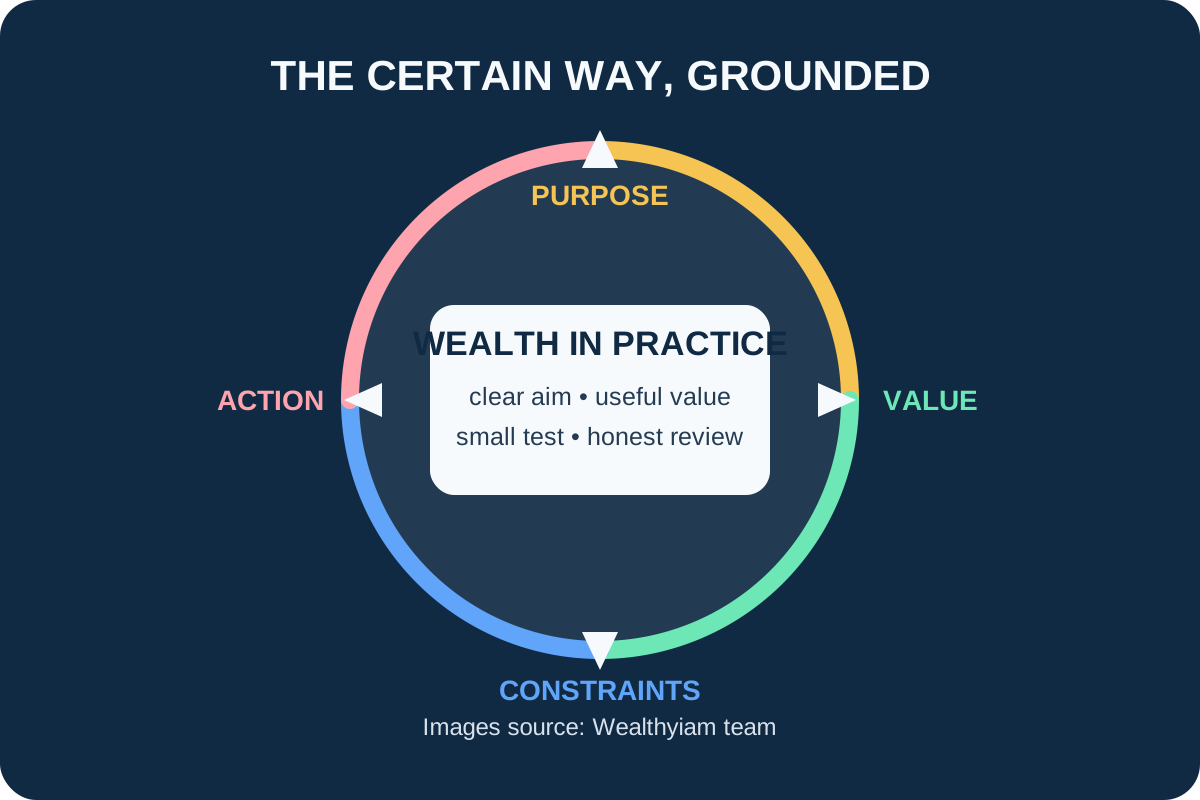
Try this: Define the job your money is meant to do. Separate near-term reserves, long-term capital, and optional goals. Liquidity and stability may matter more than maximizing a theoretical return for a particular goal.
7. Make ethics part of the process
Ethical success includes considering how money is earned, how decisions affect others, and whether incentives encourage conduct you can defend. Ethics does not remove commercial risk.
Try this: Ask who benefits if a decision is made quickly, what conflicts may affect the information, and what you would be uncomfortable explaining later.
A 30-minute decision-environment audit
This is a Wealthy I AM application, not a quoted framework from the book.
- Name the decision and why it feels urgent.
- Separate verified facts, interpretation, and predictions.
- Record liquidity needs, concentration, loss potential, fees, taxes, and time horizon.
- Write the strongest reason not to proceed.
- Identify a headline, salesperson, social comparison, or incentive affecting your judgment.
- Choose a review date and specify what evidence would change your view.
Your output can be a short business or fund description, three to five value drivers, key assumptions, what a current price would need to imply if you are evaluating a security, and one fact that would change your mind. This does not predict returns; it makes reasoning auditable.
What the book does not prove
A memoir can illustrate a transformation without proving that the transformation caused financial success. Personal accounts also have selection effects: readers hear from an author, not everyone who tried a similar path. Luck, fees, taxes, access to capital, historical conditions, and risk capacity differ.
Value investing is not synonymous with safe. A business can be misjudged, a price can fall, and a thesis can take longer than an investor can wait. Consider a qualified financial, tax, or legal professional for advice about your circumstances.
Mistakes to avoid
- Copying a public investor’s portfolio or personality without considering your goals.
- Confusing patience with refusing to update evidence.
- Treating a book as current market, tax, or legal data.
- Calling every uncomfortable choice independent thinking.
- Turning an ethical process into a promise of returns.
Frequently asked questions
Is this a step-by-step stock-picking guide?
Not primarily. It is a memoir and reflection on becoming a more disciplined value investor. A complete valuation course requires additional current sources.
What is a beginner’s main takeaway?
Start with the decision environment: written rules, information sources, incentives, and emotional triggers. A simpler process you can follow may beat a complex process you abandon.
Does value investing guarantee better returns?
No. No strategy or book guarantees returns. Outcomes depend on valuation, business performance, price, diversification, time horizon, costs, taxes, and risks that may be invisible in advance.
Can the book help beyond investing?
Its themes can prompt reflection about values, mentors, consumption, and the role of money. That is an interpretation, not individualized budgeting or retirement advice.
A calm next step
Before your next money decision, write the reason, risk, opposing case, and fact that would change your mind. Wait long enough to distinguish urgency from importance. Keep the book’s ideas separate from Wealthy I AM’s cautious educational application.
Sources and image provenance
- Open Library work record: The Education of a Value Investor by Guy Spier
- Open Library search metadata for title and author
- Image: Open Library Covers API, cover ID 10210622. Exact title/author cover matched to the inventory record. Local verification: the publisher’s local verification record, JPEG, 329×500 px, SHA-256 `83ce9d68802af9ac2fa40a85857c2316bac10d19aec03453cbab9e219df633e7`. Publisher must confirm reuse rights and featured-media attachment before publication.