When money feels like too many open tabs
Bills, debt, insurance, saving, and investing can create anxiety even when income is steady. The first useful move is usually not choosing a product. It is making the situation visible.
Start here: build a one-page money map showing reliable take-home income, essential costs, minimum debt payments, accessible cash, protection gaps, and current saving or investing. Then take one small step in the most fragile area.
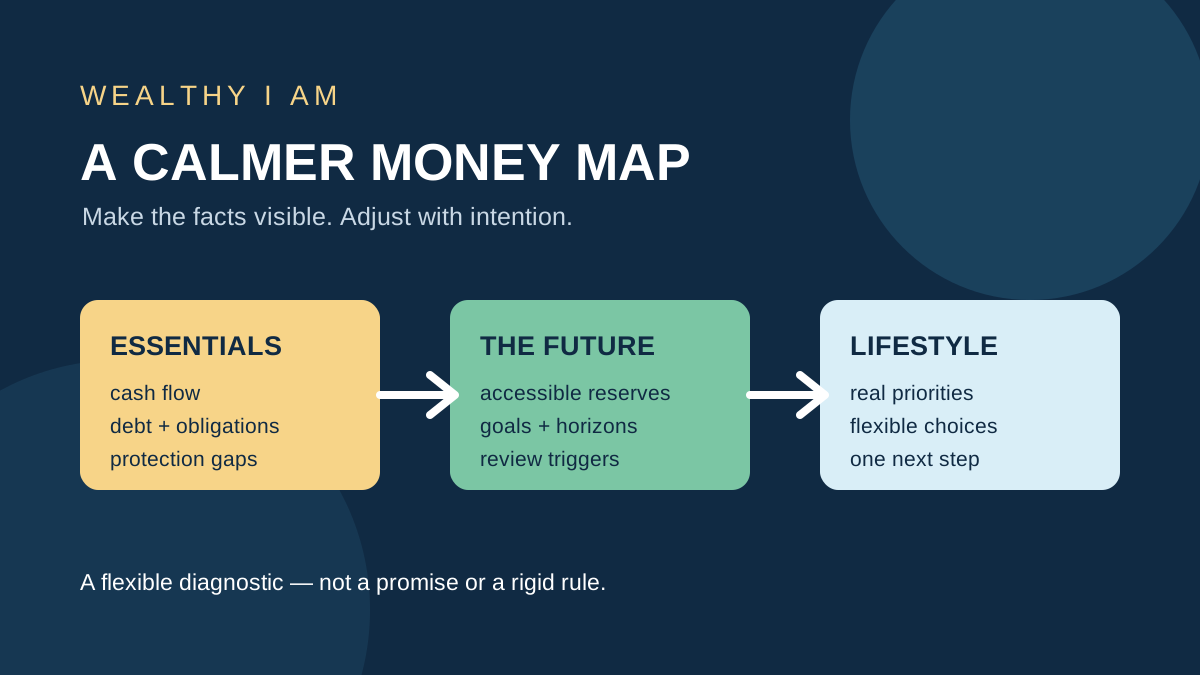
Financially Fearless: The LearnVest Program for Taking Control of Your Money by Alexa Von Tobel is built around a practical organizing idea. The available Open Library description says the LearnVest Program begins by taking stock of your finances and then building a customized 50/20/30 plan for take-home pay: 50 percent for essentials, 20 percent for the future, and 30 percent for lifestyle spending.
That framework is a starting point, not a universal prescription. The seven lessons below are a Wealthy I AM synthesis based on the available source description and catalog record; they are not presented as the book’s exact chapter list. This article is general education, not individualized financial, tax, legal, investment, or insurance advice.
The core idea: a money plan should be visible and adjustable
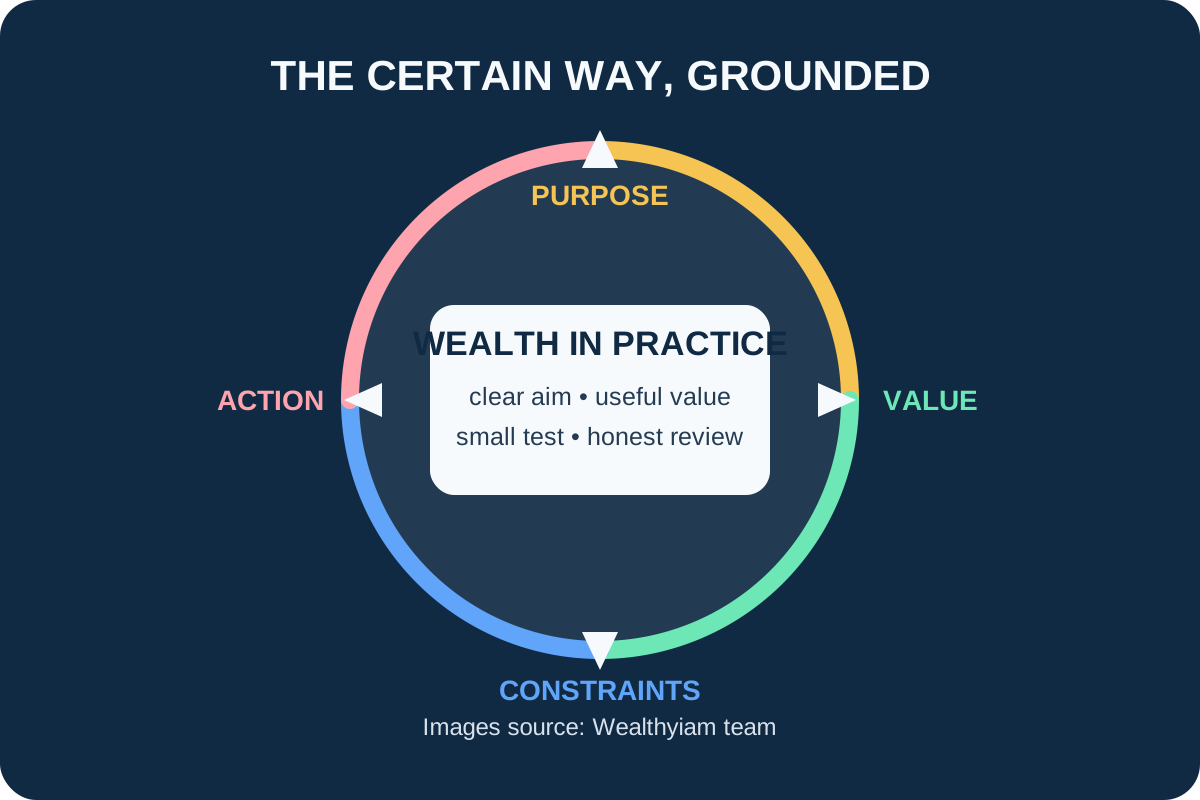
Financial confidence is not certainty. It is knowing which facts matter, what each decision is meant to do, and when to revisit it. A spending plan allocates money. An emergency reserve provides accessible cash for surprises. Insurance addresses selected risks. Investing pursues longer-term goals while accepting uncertainty. These tools have different jobs.
The book description’s 50/20/30 structure is useful because it turns vague intentions into visible categories. Its limits matter too: a fixed percentage may not fit high housing costs, unstable income, caregiving, medical expenses, local taxes, or urgent debt. Use the categories to expose trade-offs rather than to judge yourself against a rigid score.
Seven practical lessons from Financially Fearless
1. Replace money fog with a one-page map
List recurring take-home income, fixed essentials, flexible spending, balances, interest rates, fees, cash savings, and long-term contributions. Mark each item as monthly, annual, or irregular. Do not seek perfect categories; seek a picture you can use.
Action: schedule 20 minutes and find one unknown number, such as a loan rate, annual insurance premium, or subscription total.
2. Use 50/20/30 as a diagnostic, not a command
In the source description, 50 percent of take-home pay covers essentials, 20 percent supports the future, and 30 percent is available for lifestyle spending. Compare your current numbers with those categories, but do not force a household into percentages that ignore its reality.
If essentials consume more than half of take-home pay, the useful question is not “Why did I fail?” It is “Which cost is structural, which is temporary, and which can change?” If 20 percent for future goals is not currently possible, record the actual amount and the next realistic increase. A reviewable plan is more valuable than a perfect-looking plan that repeatedly fails.
3. Treat debt as a trade-off, not a moral verdict
Record balances, rates, minimums, fees, and due dates. Minimum payments protect account standing; extra payments may reduce interest or shorten the payoff period. The appropriate order depends on the debt terms, available cash, and the risk of having no reserve.
Before paying extra, ask how much accessible cash would remain and whether a foreseeable bill could push you back into debt. Check current lender terms, including any prepayment conditions, before acting.
4. Build resilience before chasing returns
A cash reserve can help with an unexpected repair or interruption in income, but its appropriate size varies with obligations, income stability, household support, and personal circumstances. Cash and long-term investments have different purposes.
Name the reserve’s job, where it will be held, and when you will review it. Avoid treating an investment account as guaranteed emergency cash: market value and access can change when the money is needed.
5. Separate protection from prediction
Insurance and risk management address selected disruptions; they are not an investing contest. Consider loss of income, liability, health costs, property damage, and dependence on one earner. Coverage, exclusions, deductibles, beneficiaries, and limits matter.
Ask an appropriately licensed professional what is covered, what is excluded, what you pay first, and when the policy should be reviewed. Do not replace coverage based only on a general article.
6. Fit investing to the goal and its uncertainty
Time horizon means when money may be needed. Risk capacity is how much loss a goal and household can withstand; risk tolerance is how much uncertainty a person is willing to bear. Diversification spreads exposure across holdings, but it cannot remove market risk or guarantee profit.
For each goal, write its intended use, approximate horizon, contribution schedule, acceptable downside, and review trigger. This is a decision aid, not a security recommendation or return forecast.
7. Make review part of the system
Automation can reduce routine decisions, while reviews catch changes in income, bills, rates, beneficiaries, goals, and obligations. Once a month, confirm cash flow, upcoming irregular costs, debt and fees, automatic transfers, and one adjustment for the next month.
Keep a short note explaining why you made a major choice. That record makes it easier to distinguish a changed fact from a passing emotion.
A 30-minute money reset
This reset is an original Wealthy I AM application, not a quoted procedure from the book.
- Collect: open current statements and account summaries.
- Map: record take-home income, essentials, future goals, lifestyle spending, debt, and reserves.
- Compare: use 50/20/30 as a diagnostic and note where reality differs.
- Protect: mark one fragile point, such as no accessible reserve or an unclear beneficiary.
- Choose: take one low-risk administrative step, such as confirming a rate or setting a review reminder.
- Document: record the assumption, action, and revisit date.
The modest scope matters. Better information and one realistic next step are more useful than a confident forecast.
Mistakes to avoid
- Starting with a fund, policy, loan, or app instead of a goal and cash-flow map.
- Treating 50/20/30 as a moral test or a rule that fits every household.
- Ignoring annual, seasonal, medical, caregiving, or tax-related costs.
- Assuming debt payoff is automatically better than retaining enough liquidity.
- Turning a book illustration into a forecast or a guarantee.
- Automating transfers without checking fees, balances, beneficiaries, and changed circumstances.
- Treating general education as personal advice.
Who may benefit from the book?
The book may suit beginners who want a broad organizing framework rather than a narrow investing tutorial. Its visible categories can help readers move from anxiety to a first draft of a plan.
Readers should also recognize the evidence boundary. The public description supports the take-stock-first approach and the customized 50/20/30 framework, but it does not verify every detailed recommendation in every edition. Check current laws, tax rules, product terms, insurance provisions, and personal circumstances before acting.
Frequently asked questions
Is this mainly an investing book?
The available description presents a broader financial-planning program centered on taking stock and allocating take-home pay. Investing is one part of a larger system that also includes spending, future goals, and financial organization.
Must my budget match 50/20/30 exactly?
No. Treat the percentages as a diagnostic starting point. Housing costs, income volatility, debt, health needs, caregiving, and local conditions can make a different allocation more realistic.
Should I pay debt or save first?
There is no universal answer. Consider rates, fees, minimums, liquidity, income stability, and the consequence of needing new debt after using available cash. Seek qualified advice when the stakes are high.
Can automation make me financially secure?
Automation can make a chosen behavior easier, but it cannot guarantee security. Review transfers, balances, fees, beneficiaries, and goals regularly.
Does this article tell me what to buy?
No. It does not recommend a specific investment, policy, loan, or tax strategy.
A calmer next step
Use Financially Fearless as a prompt to build an inspectable system, not as a promise that one formula removes uncertainty. Complete the one-page map this week, compare it with the three broad categories, and schedule the first review. Bring consequential debt, protection, tax, or investment questions to an appropriately qualified professional.
Sources / Further reading
- Open Library work record: Financially Fearless — title, author association, public description, and cover association.
- Open Library author record: Alexa Von Tobel — author identity.
- Open Library Covers API image — image identity and source reference; image-use rights require publisher confirmation before publication.