The reader problem: when does money become enough?
Wealth building can become a race: earn more, buy more, take more risk, and repeat. But a plan that never defines “enough” can leave you with more anxiety than choice.
The short answer: Enough: True Measures of Money, Business, and Life by John C. Bogle asks readers to measure financial success by sound principles, adequate resources, character, and a balanced life—not endless accumulation. It does not promise a return, portfolio, or lifestyle that will make anyone rich.
This is a practical synthesis, not a complete chapter-by-chapter summary. The available catalog record verifies the book’s identity and broad description, but not every example or prescription in the full text. Treat the ideas as prompts for reflection and research, not individualized financial advice.
What does Enough argue?
Bogle’s broad thesis is that success should not be measured only by the size of a portfolio. A sound plan should reflect your long-term interests, your capacity to bear loss, and the kind of life you want money to support.
Bogle is associated with low-cost index investing, but this book also asks a personal question: what does money need to do for you? The answer may include security, freedom, giving, time, or the ability to choose without being driven by status.
Who may benefit from this book?
It may help readers who are:
- building a long-term saving and investing plan without fixating on short-term returns;
- deciding whether to pursue more income or define a realistic target for enough;
- trying to discuss money with a partner or family; or
- willing to test a book’s principles rather than treat them as universal rules.
Seven practical lessons from Enough
These are Wealthy I AM’s editorial synthesis, not Bogle’s verified exact numbered framework.
1. Define “enough” before defining wealth
Enough might mean covering essential expenses, maintaining a cash reserve, protecting time, or having room to give. If you do not choose a meaning, comparison can choose one for you.
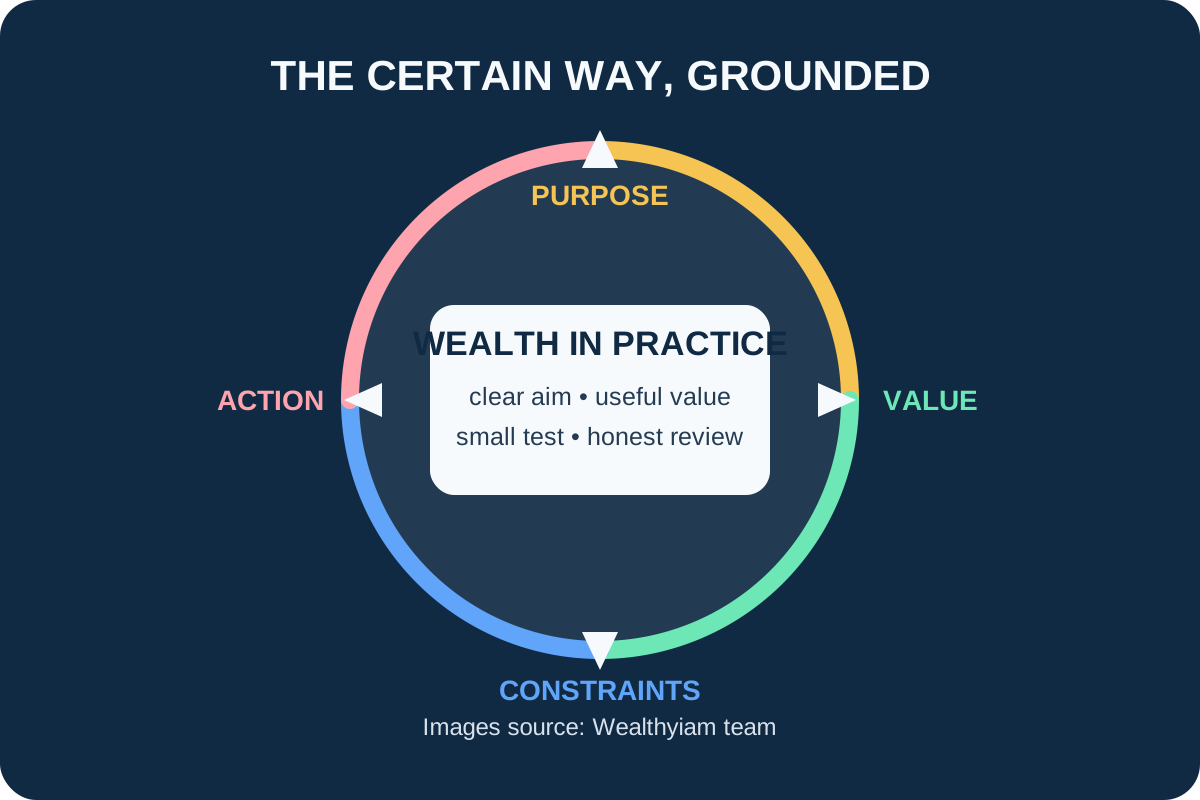
Try it: Write one sentence describing a good life and list five financial constraints you want to respect. This is a decision aid, not a forecast.
2. Start with what you have
A realistic plan begins with available knowledge, time, work, capital, obligations, and liquidity. That is not an argument for lower aspirations; it is a way to avoid building a plan on resources you do not possess.
Separate needs, risk-bearing wants, and long-term options. Keep money needed for near-term obligations distinct from capital that could lose value.
3. Use a repeatable investment process
An investment process is a set of rules for what you buy, how much risk you accept, and what would make you change your mind. Diversification means spreading exposure rather than relying on one asset or story. Costs reduce what an investor keeps, but low cost is not a guarantee against loss.
Practical step: Write a one-page policy covering diversification, costs, contributions where affordable, time horizon, and review triggers. Choose risk you can continue to live with. This is general education, not a recommendation for a specific security.
4. Simplicity can support risk control
Complexity can hide fees, assumptions, tax consequences, and liquidity limits. A simpler plan is not automatically safer, but a plan you can explain and review is less likely to be followed blindly.
List each account or asset type, its costs, time horizon, and the condition that would make you reconsider it. If you cannot explain the plan plainly, study it longer before acting.
5. Judge process separately from outcome
A good outcome can come from luck or a favorable market period. A poor outcome can happen to a careful investor. Reviewing whether you followed your process gives better feedback than judging yourself only by the latest result.
Track one financial outcome and one behavior measure. For example, review savings progress alongside whether you followed your planned allocation. Do not convert a short period into a prediction.
6. Build a plan that survives real life
A financial plan cannot be separated from health, dependents, employment, taxes, legal responsibilities, or changing goals. The same risk may be tolerable for one household and unsustainable for another.
Protect liquidity for losses or obligations that could otherwise force a sale at a bad time. The appropriate reserve depends on circumstances; there is no universal number in this article.
7. Treat “enough” as a review point, not a finish line
Housing, insurance, dependents, health, and future goals can change what you need. Review the plan when life changes. Reaching a target is not permission to stop thinking; it is an opportunity to redirect attention toward meaning, relationships, health, or contribution.
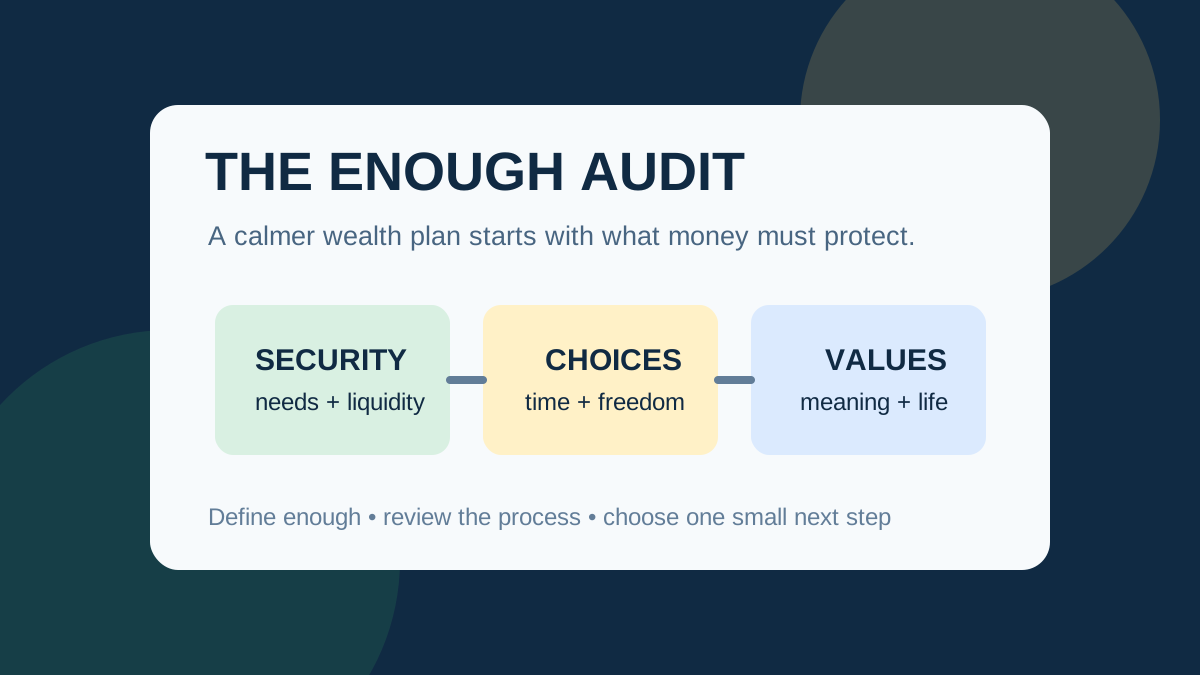
A two-hour “enough” audit
This is Wealthy I AM’s application, not a checklist claimed as Bogle’s. Set aside two hours and produce:
- one sentence defining enough;
- a simple summary of income, fixed outflows, liquidity, and long-term goals; and
- three drivers: what you control, what risks you face, and what needs review.
Then answer: What is the next low-risk change that makes the plan more livable? It might be automating a transfer, removing an unnecessary cost, or setting a review date. It does not necessarily mean buying a new asset.
Mistakes to avoid
- Treating “enough” as an exact number that ignores household needs.
- Treating low-cost indexing as a return guarantee.
- Chasing yield or complicated products without understanding fees, taxes, liquidity, and downside risk.
- Copying a book’s principle without adjusting for your job, health, family, jurisdiction, and goals.
- Confusing a recent investment outcome with proof that a process works.
Frequently asked questions
Does Enough recommend a specific investment?
No conclusion in this article is a security recommendation. Any investment decision needs current research, risk assessment, and consideration of costs.
Is this a budgeting book?
Partly. It is less a step-by-step budget manual than a reminder to define prosperity and test whether your money plan respects that definition.
Does the book provide a personalized tax or retirement plan?
No. Tax rules, retirement choices, and legal obligations depend on current facts and jurisdiction; qualified advice may be appropriate.
A low-risk next step
Take the two-hour audit this week, then share your one-sentence definition of enough with the person most affected by your household plan. Keep the next action small and reversible: review one recurring cost, document one investment rule, or schedule one date to revisit the plan.
Conclusion: let your definition guide your plan
The value of Enough is not a number to copy. It is a way to stop letting status or market noise choose your financial plan. Define what you want money to protect, check whether your process supports it, and make one small, reversible improvement. The next step may be reviewing cash flow—not taking more investment risk.
Sources / Further reading
<small> <ul> <li><a href="https://openlibrary.org/works/OL3928752W">Open Library work record for <em>Enough: True Measures of Money, Business, and Life</em></a> — bibliographic identity and broad context.</li> <li><a href="https://covers.openlibrary.org/b/id/6917229-L.jpg?default=false">Open Library cover image</a> — image source and credit.</li> </ul> <p>This article is general education, not individualized financial, tax, or legal advice.</p> </small>