Search intent: Readers looking for a summary and practical lessons from The Upside of Irrationality who want to understand how predictable decision errors can affect spending, investing, work, and business choices.
The reader problem: You may know the sensible money choice—wait before buying, compare alternatives, keep an investment plan—but still feel pulled toward the immediate, familiar, or emotionally satisfying option. The difficulty is not always a lack of information. Sometimes the decision environment is shaping your choice before you notice it.
The short answer: Dan Ariely’s book examines patterned ways that people depart from simplified classical ideas of rational choice. The useful takeaway is not that you should distrust every instinct. It is that you can design pauses, defaults, comparisons, and incentives that make better decisions easier. The seven lessons below are a Wealthy I AM editorial synthesis, not a claim that Ariely presents this exact numbered framework.
This is a practical reading guide, not a substitute for the full book or individualized financial advice. Open Library verifies the book’s title, author, subtitle, and publication record, but its public work page does not provide a full description. The public record therefore does not establish every chapter detail or support every application below. The themes and applications in this article should be checked against the full book before being treated as a chapter-by-chapter summary; extensions to money decisions are labeled as interpretation.
Image credit: Open Library Covers API; cover identity matched to the exact title and author. Reuse rights should be checked before publication.
What is The Upside of Irrationality about?
The book examines ways actual human behavior can differ from the simplified idea that people consistently weigh costs and benefits. Its subject is not random foolishness. In this article, expectations, motivation, ownership, relationships, and incentives are treated as the book’s broad behavioral themes and as an editorial synthesis—not as a verified list of every chapter or experiment.
That matters for money because financial decisions are rarely made in a vacuum. A purchase can feel different once it is “ours.” A reward can change how work feels. A familiar option can seem safer than an unfamiliar one even when the comparison is incomplete. These observations do not prove that any particular reader will make a particular mistake; they offer prompts for inspecting the decision setup.
Seven lessons for using behavioral insight without blaming yourself
1. Look for the decision environment before judging the decision
The book theme: Choices are influenced by context and predictable behavioral tendencies, not only by abstract calculation.
Plain-language explanation: The same person can choose differently when a deadline, default, comparison point, or emotional state changes. Calling the outcome “irrational” can hide the more useful question: what feature of the situation pulled attention in one direction?
Wealthy I AM application: Before criticizing a spending or investing decision, write down the trigger, the available alternatives, the time pressure, and what information was missing. This turns shame into a reviewable process.
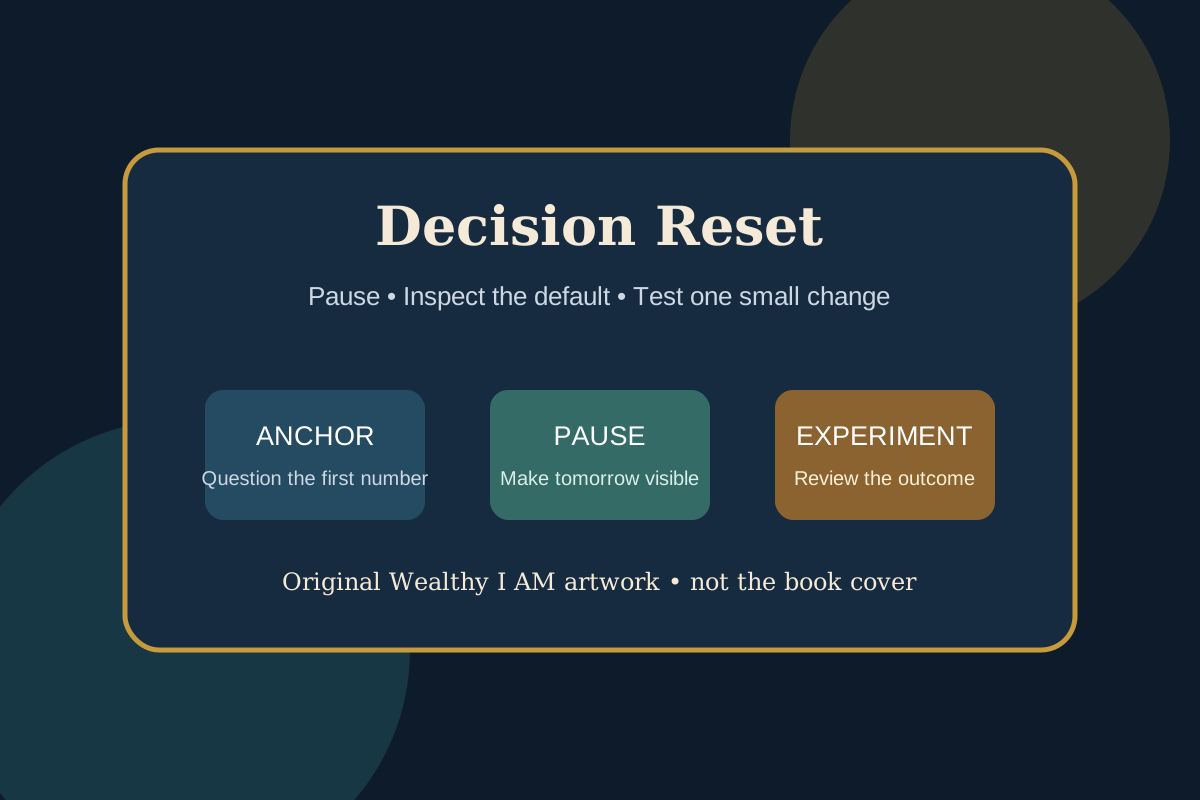
Action: For the next nonessential purchase, record the choice before and after a 24-hour pause. Do not assume the pause will always change the answer; use it to learn what urgency was doing.
2. Treat ownership as a reason to re-check value
The book theme: Ownership is a central behavioral idea discussed in this reading guide. Owning something can affect how it is perceived and how difficult it feels to give it up.
Why it matters: A financial asset, subscription, side project, or business idea can become emotionally valuable because it is yours. That feeling may be meaningful, but it is not the same as an objective assessment of future usefulness, cost, or risk.
Hypothetical example: Suppose you pay for a software subscription for a small project. After three months, the project is paused, but canceling feels like admitting failure. A neutral review would compare the next six months of cost with the specific work the tool is expected to enable. The example is illustrative, not a forecast or a recommendation to cancel any particular service.
Action: When reviewing something you own, ask: “If I did not already have this, would I choose it today at this price and risk?” Add a second question: “What evidence would make keeping it sensible?”
3. Separate a good outcome from a good process
The book application: A behavioral lens can help distinguish the decision from the result that happens afterward.
Plain-language explanation: A risky decision can produce a favorable result by chance, while a careful process can produce an unfavorable result. Looking only at outcomes encourages overconfidence and hindsight.
Wealthy I AM application: After a money decision, save the reasons, assumptions, and limits that existed at the time. Later, compare the result with the process rather than rewriting the past. For investing, this means noting the goal, time horizon, diversification, fees, and what would change your view—without treating a short-term market move as proof of skill.
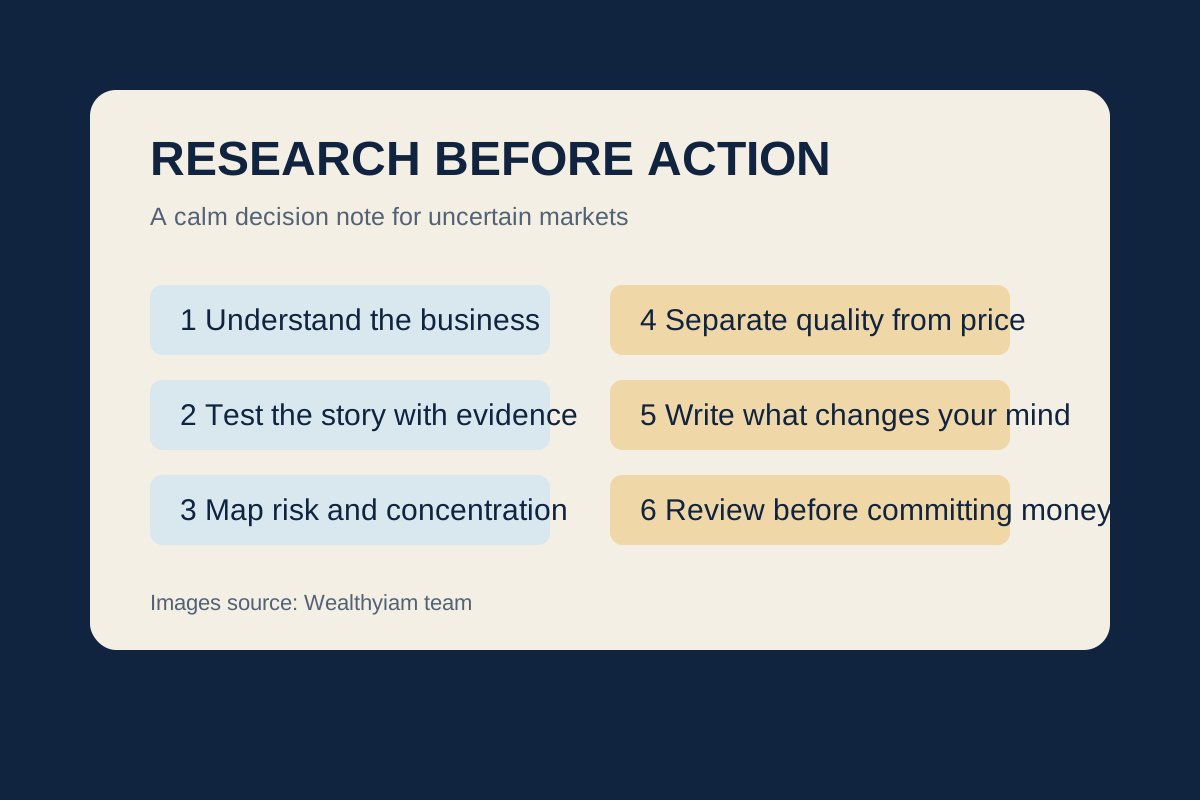
Action: Create a one-page decision note for major choices. Include “what I know,” “what I am assuming,” “what could go wrong,” and “when I will review.”
4. Design incentives that support the behavior you actually want
The book theme: Motivation and incentives are broad themes in this reading guide. Rewards can influence effort and attention, but a reward does not automatically create durable commitment or good judgment.
Why it matters: In a household, team, or business, an incentive can improve one visible measure while weakening an important unmeasured one. A sales target, for example, may need a companion guardrail for customer fit, quality, or compliance. This is a general design caution, not a claim about a specific company or study.
Action: For one goal, define both the desired behavior and the boundary. Example: “Increase outreach” paired with “do not promise outcomes you cannot support.” For personal saving, pair an automatic transfer with a cash-buffer review so the system does not ignore near-term obligations.
5. Use expectations as information, not as evidence
The book theme: Expectations can shape experience and interpretation; this article uses that idea as a cautious synthesis rather than a claim about a specific unverified experiment.
Plain-language explanation: What you expect can affect what you notice and how you explain an outcome. That does not make expectations proof that a product, investment, or strategy works.
Wealthy I AM application: Write the expected benefit separately from the evidence for it. “This course will make me more confident” is an expectation. “I completed two projects using the skill” is observable evidence of practice, though it still does not guarantee income.
Action: Before committing money, list three columns: expected benefit, measurable signal, and disconfirming signal. Revisit them on a fixed date instead of moving the goalposts after the fact.
6. Add a cooling-off rule to decisions that exploit urgency
The book application: The broader lesson is to notice situations where context and emotion may narrow judgment.
Why it matters: Countdown timers, limited availability, social comparison, and emotionally charged appeals can encourage immediate action. A cooling-off rule cannot remove all risk, but it gives you time to check affordability, alternatives, terms, and the cost of being wrong.
Action: Use different pauses for different stakes: a short pause for routine purchases and a longer review for contracts, investments, debt, or business commitments. Check the actual terms and, where appropriate, seek qualified legal or financial advice. Never delay an essential safety or health action merely to follow a money rule.
7. Build decision systems that do not depend on constant willpower
The book application: If behavior follows recurring patterns, changing the setup can be more practical than relying on perfect self-control.
Wealthy I AM application: A system might include a written investing policy, automatic bill payments, a spending category limit, a recurring portfolio review, or a second-person review for an unusually large commitment. These are tools, not guarantees. They must fit income variability, liquidity needs, tax circumstances, and risk tolerance.
Action: Choose one recurring decision and create a default plus an escape hatch. For example, automate a transfer only after confirming that essential expenses and a suitable cash reserve remain covered. Review the setup when income, household needs, or goals change.
A five-minute behavioral money audit
Use this checklist before a meaningful purchase, investment, or business decision:
- Name the decision. What exactly am I choosing?
- List alternatives. Include waiting or doing nothing.
- Identify the pull. Is it urgency, familiarity, ownership, social proof, fear, or a reward?
- Check the downside. What loss, obligation, or opportunity cost could follow?
- Set a review point. What evidence will I inspect, and when?
This audit is a Wealthy I AM application inspired by the book’s behavioral themes, not a verbatim framework attributed to Ariely. It cannot determine whether an investment is suitable or replace professional advice.
Mistakes to avoid when applying the book
- Using “irrational” as an insult. The practical value is pattern recognition, not self-condemnation.
- Treating one anecdote as universal evidence. Human behavior varies by person, context, stakes, and culture.
- Confusing a behavioral insight with a guaranteed result. A pause or default can help a process; it cannot remove market, business, or personal risk.
- Ignoring opportunity cost. Money, time, and attention committed to one option cannot be used elsewhere.
- Overcorrecting into paralysis. A review process should be proportionate to the stakes and leave room for ordinary decisions.
- Copying a book recommendation without updating it. Tax rules, products, laws, and financial conditions can change; verify current information independently.
FAQs
Is The Upside of Irrationality a personal-finance book?
It is better understood as a behavioral economics and decision-making book with applications to work, home, and money. It can help readers inspect decision patterns, but it is not a personalized financial plan.
What is the main lesson for investing?
A cautious interpretation is to improve the decision process: define the goal and time horizon, separate evidence from expectation, consider alternatives, and review risk before acting. The book does not make a particular asset appropriate for every investor.
Can behavioral insight help with spending?
It can provide questions to ask about urgency, ownership, comparison, and incentives. A practical experiment is to add a cooling-off period and compare the purchase with a clearly stated goal and budget.
Does the book prove that people are irrational?
The available source describes systematic departures from rational-choice assumptions. That is narrower than saying every person is irrational in every situation. The evidence boundary matters: consult the full text and its cited research before treating a specific finding as established.
Who may benefit from reading it?
Readers who want a behavioral lens for spending, negotiations, workplace incentives, or business decisions may find the topic relevant. Anyone applying a lesson to debt, investments, taxes, or contracts should check current authoritative information and consider qualified advice.
A useful next step
Pick one recurring money decision—not your entire financial life—and run the five-minute behavioral audit before the next occurrence. Keep the note, review what happened, and adjust the system rather than promising yourself perfect discipline. That is the durable Wealthy I AM advice: make the process more visible, more deliberate, and appropriately cautious.
Conclusion
The Upside of Irrationality offers a useful challenge to the idea that better money choices come only from collecting more information. This article’s synthesis focuses on the patterned influence of expectations, motivation, ownership, relationships, and incentives. The practical extension is to inspect the choice architecture around your decisions, document assumptions, use cooling-off rules, and build defaults with sensible limits.
The book is a lens, not a guarantee. Financial outcomes depend on circumstances, costs, risks, time, and choices that this article cannot assess. Start with one decision audit, then keep what improves clarity without sacrificing flexibility or essential needs.
Sources / Further reading
<small>
- <a href="https://openlibrary.org/works/OL20411846W/The_Upside_of_Irrationality">Open Library: <em>The Upside of Irrationality</em> by Dan Ariely</a> — bibliographic record and evidence boundary for the book identity; the public work page does not provide a full description.
- <a href="https://covers.openlibrary.org/b/id/9079761-M.jpg?default=false">Open Library Covers API image</a> — cover source; reuse rights should be checked before publication.
- Image credit: Open Library Covers API. Identity verified against the exact title and author.
</small>